A useful sourcing decision starts with a written requirement that can be challenged, sampled, inspected, and approved.
How Should Camping Gear Be Packaged for Retail, E-Commerce and Export Shipment?
1. Why camping gear packaging must follow the route
A camping product rarely needs only one box decision. A tent can be displayed on a store shelf, sent through a parcel carrier, packed into master cartons and loaded into an export container. A chair, sleeping bag, cookware set and lantern each have different weak points, product-information needs and handling risks. Effective camping gear packaging begins with the actual route, not a standard carton size.
The commercial risk is straightforward. A light retail pack can scuff, tear or scan badly. A shelf-ready carton may not survive parcel drops. Overbuilt e-commerce packaging increases freight cube, material use and disposal. At export level, weak cartons can collapse under a pallet load, while mismatched carton data can slow warehouse receiving and customs preparation. These issues are usually more expensive to correct after goods leave the factory.
Packaging also carries product information and supports traceability. For US imports, articles of foreign origin generally must be marked legibly with the English name of their country of origin unless an exception applies [1]. In the EU, the General Product Safety Regulation (GPSR) requires product identification and manufacturer contact information, with packaging or accompanying documents used where product marking is impracticable; it also requires clear instructions and safety information where needed [6]. These are packaging-design inputs, not late artwork changes.
This is a procurement and operational guide for US and European camping brands using an OEM/ODM supplier. It explains what to specify, verify and record. It is not legal advice. The importer, brand owner, authorised representative, customs broker and relevant testing or regulatory specialists should confirm requirements for each product, market and sales channel.
2. Quick Answer
Use packaging layers that match the handling path. Specify a retail consumer pack to present the product and carry required identifiers. Add e-commerce protection when the retail pack will move through a parcel network or when a customer requires it. Then consolidate units in a correctly sized master carton and build the pallet and container plan around real weight, compression and destination-handling conditions.
Before production, approve a specification that answers seven questions: What is the sales unit? Which channels handle it? What damage must be prevented? What information must appear? How are cartons and pallets identified? What tests or inspections demonstrate performance? Which shipment records must match the physical load?
| Decision area | Buyer decision | What to define | Risk if omitted |
|---|---|---|---|
| Consumer pack | Shelf retail, online, or both | Format, dimensions, artwork, opening and product retention | Damage, poor presentation or repacking |
| E-commerce layer | Ship in own container (SIOC) or overbox | Void control, corner protection, seal method and parcel route | Returns or excessive material use |
| Master carton | Case quantity and stack performance | Internal fit, board specification, dimensions and gross weight | Bulging, collapse or receiving errors |
| Information | Consumer, safety and traceability content | Languages, identifier, origin marking, instructions and warnings | Relabelling or unsafe first use |
| Identification | Retail and logistics scanning | GTIN, case code, pallet SSCC if required and label position | Checkout or warehouse scan failure |
| Export load | Pallet and container configuration | Footprint, height, restraint, dunnage and wood status | Load shift or phytosanitary issue |
| Evidence | Test and inspection plan | Samples, method, pass criteria, photos and records | No defensible release basis |
3. Buyer context: identify risk before choosing materials
Map the unit load: the product plus every packaging layer travelling together at a particular stage. A two-person tent might have a carry bag, colour-printed retail carton, parcel overbox, master carton of four and stretch-wrapped pallet. A compact stove could have a tray and retail carton but need an additional parcel box only for direct orders. One SKU may follow more than one route, so one physical package is not automatically appropriate for all channels.
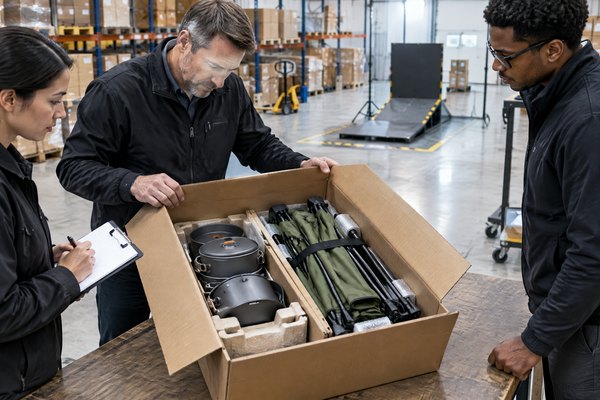
Start with the packed product. Record hard points such as pole ends, chair feet, cookware edges and folded frame joints. Identify pressure-sensitive components, loose hardware, abrasion surfaces and moisture risks. Then map the route: store distribution centre, marketplace fulfilment, parcel carrier, less-than-truckload (LTL), ocean container or air freight. Ask whether the retail pack may ship alone, whether a consumer receives an outer box and whether staff will open cases with knives.
The target is fit for the stated distribution system, not the heaviest package. Low-value textile accessories may need a simple recyclable retail pack and controlled parcel box. A folding chair may need abrasion barriers at metal contact points. A cookware set may need only internal retention to prevent rattling and surface damage.
| Camping product example | Main packaging risk | Pack design direction |
|---|---|---|
| Tent with poles and pegs | Puncture, loose hardware, moisture | Separate hardware from fabric; protect pole ends and show full contents |
| Folding camp chair | Frame abrasion, joint damage, compression | Use internal spacers or edge protection and a carton designed for bulky geometry |
| Sleeping bag or pad | Compression, contamination, size confusion | Control void space; show packed size, care and relevant product information |
| Cookware set | Rattle, denting and scratching | Nest components, secure loose lids and use dividers or pads |
| Lighting or powered accessory | Breakage, missing small parts, product-specific transport issues | Use a protective tray; confirm market and transport requirements before dispatch |
4. Build the packaging architecture from the outside in
A useful architecture separates primary protection, consumer packaging, distribution packaging and transport packaging. Primary protection holds or shields the product. Consumer packaging is the shopper-facing selling unit. Distribution packaging groups sellable units. Transport packaging stabilises cartons on a pallet or in a container. Some materials can serve two purposes, but separating the functions prevents a retail carton from being assumed to provide all transit protection without evidence.
Lock the selling configuration first
Approve the finished configuration before finalising dielines. Record packed dimensions, component count, accessory contents, net weight, retail orientation, shelf footprint and whether a carry bag is reusable or a carton is disposable. Product name, colour, size, capacity, model and pack count must agree across artwork, barcode data, packing list and commercial invoice.
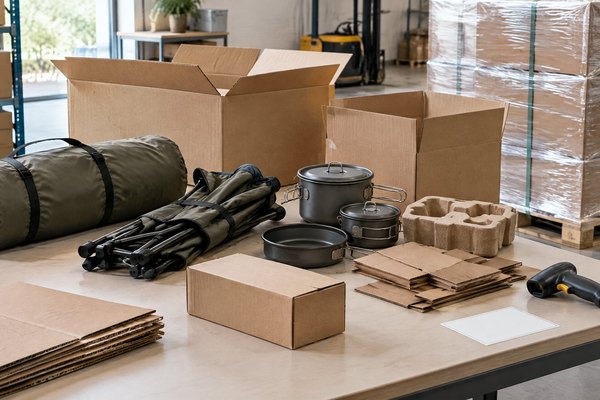
A neutral sample can confirm fit, but it cannot validate final artwork, scan position or language content. Approve a pre-production packaging sample using the final product, accessories and artwork before mass printing. The specification should show the pack-out sequence: how the worker places the product, accessories, leaflet, protection and seals. For a tent, it may require pegs in a sealed pouch, pole tips located away from fabric and instructions visible at opening. Repeatable work instructions are more useful than “pack securely.”
Separate protection from presentation
A printed carton is not automatically a protective shipper. Corrugate, moulded fibre, paper dividers, sleeves or controlled void fill can perform transport functions while the consumer pack presents the brand. This also makes it possible to replace a damaged outer layer without changing retail artwork.
Measure final packs, not only products. Capture length, width, height, net and gross weight for the retail unit, master carton and pallet. These data affect retailer setup, parcel rating, container planning and shipping documents. If a variation has different accessories, confirm whether it needs a different carton quantity, barcode or case label.
5. Retail packaging: protect handling and make the offer understandable
Retail packaging has three jobs: protect the item through store handling, make the offer intelligible and scan reliably at checkout. The right format—carton, sleeve, band, hang tag, carry bag or combination—depends on the product. An open or windowed design may help display, but it can reduce protection and increase risks of dust, theft or missing accessories.
Use verifiable content. The front panel normally establishes the product name, principal variation and intended use. Side or back panels can provide dimensions, packed size, materials, contents, care, setup steps and relevant warnings. Avoid performance claims that are not supported by the approved product specification. Weight limits, thermal claims, weather-use claims and flame-related statements need brand review before print.
Instructions should solve the first-use problem. A tent needs unpacking, assembly, staking, drying-before-storage and a parts inventory. A chair needs unfolding, locking, safe-surface use and folding guidance. Cookware needs first-use cleaning, care and any applicable heat-source limits. Use short, product-specific steps and languages required for the sales markets. Under the GPSR, instructions and safety information should be clear and understandable in the language determined by the Member State where the product is sold, unless safe intended use needs no such information [6].
Plan origin marking and traceability before artwork release
Consider country-of-origin marking on the product, consumer pack and documents as applicable. CBP says US origin marking should be conspicuous, legible and as permanent as the product permits. A different locality shown on the pack can create proximity and comparable-size considerations if it could mislead the purchaser [1]. Determine origin before artwork release, particularly where components, assembly and packing occur in different countries. A brand address does not establish origin.
GPSR Article 9 requires a visible and legible type, batch, serial or other product identifier. It allows the identifier on packaging or an accompanying document where product size or nature does not permit marking. The same provision requires manufacturer contact information on the product, packaging or accompanying document where necessary [6]. The brand should define a lot-code logic and retrieval process before shipment.
6. E-commerce protection: use a route-appropriate pack
E-commerce orders typically experience more touchpoints and less control than shelf retail. A parcel can be conveyed, sorted, dropped, compressed, vibrated and left at a consumer address. An outer box is not always necessary. Some consumer packs may move as SIOC, meaning ship in own container, when channel rules and evidence support the choice. Others need a corrugated overbox with controlled void space.
Classify the route before selecting materials or a test. Will shipments be single-SKU or mixed-SKU? Does a retailer have a named programme? Will the route use small parcel, LTL or both? Is the item rigid, fragile, long, heavy or irregular? What is the final packed weight? Will the consumer package be the shipping surface? The International Safe Transit Association’s ISTA 3L is a research-based, data-driven e-commerce retailer fulfilment protocol that addresses vibration, shock, compression, temperature and humidity for direct-to-consumer paths. It specifically covers packaged products shipped in their own containers through fulfilment and parcel or LTL methods [4]. It is a reference point, not an automatic substitute for a retailer-specific requirement.
Protect the vulnerable interface instead of adding uncontrolled void fill. Use pole-end caps for tents, spacers for chair frames, immobilisation for cookware lids and close-fit corrugate for soft goods. Seals should survive the intended route without creating an unsafe or frustrating opening experience.
Example: one tent, two parcel options. A brand sells a tent in a printed store carton and online. It can compare a reinforced SIOC version with an overbox version that uses plain corrugate and paper void control. The selection should use final packed samples, channel rules, anticipated damage modes, freight-cube effects and a defined test plan—not an assumption that either option is always better.
In-article CTA: review the pack before production
For a new camping SKU or a retail-to-parcel change, email info@camplume.com or submit the product dimensions, channel map, target markets, artwork status and expected carton quantities through the CampLume site RFQ form. Request a project-specific review of pack-out options, carton layout, samples and evidence available for approval. Confirm final compliance, retailer and destination requirements with the responsible parties.
7. Instructions, labels and barcodes: make each layer scannable and usable
Separate consumer-facing information from warehouse-facing information. A retail unit generally needs its consumer barcode and product information. A master carton needs clear case identity and handling data. A pallet may need a unique logistics identifier. Each code should match the order, carton pack-out and receiving system.
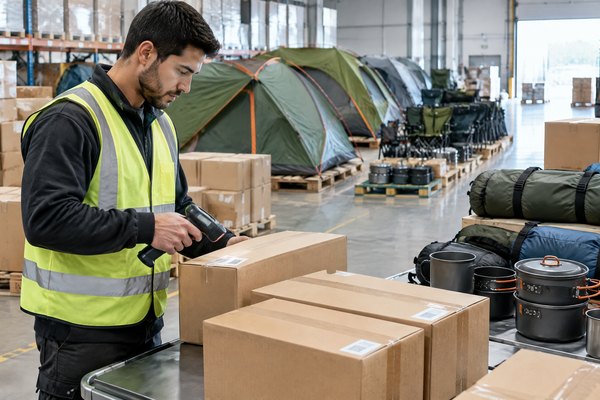
Reserve a flat, smooth, low-glare panel for a retail UPC or EAN. GS1 US recommends high-resolution artwork and printing, dark bars on a light background, a clear quiet zone on both sides and full barcode height rather than truncation. For typical checkout items, it generally places the barcode in the lower-right area of the back panel [3]. Include a scan check in artwork approval and first-production inspection; visual acceptability alone does not prove scan performance.
A master carton may need ITF-14, GS1-128 or a customer-specified case code. Do not duplicate the consumer GTIN if the receiver expects a different trade-item or logistics identifier. GS1 notes that cartons and outer cases commonly use GTIN encodings, while a GS1 Logistic Label identifies a logistics unit with a unique Serial Shipping Container Code (SSCC) [9]. Electronic shipment data, including an advance ship notice where required, must use the same codes as the physical labels.
| Layer | Operational content to define | Approval check |
|---|---|---|
| Product or retail pack | Product name, variation, consumer barcode, origin marking where required, lot/identifier, instructions and safety content as applicable | Artwork and language review, barcode scan and contents check |
| Master carton | SKU/GTIN or case code, quantity, weights, dimensions, carton number and agreed handling marks | Label matches pack-out and remains readable after sealing |
| Pallet/logistics unit | Destination, purchase-order or shipment reference, sequence, handling information and SSCC/retailer label if required | SSCC is unique and scan data match the shipment notice |
| Shipment records | Seller/buyer, product description, quantities, weights, package count, origin and transport references as applicable | Documents reconcile to cartons, pallets and load plan |
A QR code can support access to a product page, video or digital document where appropriate, but it is not a universal replacement for printed safety, barcode or legal information. GPSR recognises electronic solutions such as QR or data-matrix codes for some traceability data while retaining specific product, packaging and accompanying-document duties [6].
8. Master cartons, pallets and wood packaging: design for export conditions
A master carton must hold the specified units without bulging, damaging the retail packs or wasting excessive cube. Select internal dimensions after measuring the finished consumer pack and inserts. Define the pallet pattern next, including board specification, carton closure, case count, layer count, permitted height, total gross weight and any approved overhang. Ask what compression load and handling assumptions support the proposal.
Palletisation should specify footprint, height, cartons per layer, total cartons, edge protection, stretch-wrap method, top protection, corner boards and label locations. Labels must remain scannable after wrapping. For mixed-SKU loads, make the pallet manifest and visible identification unambiguous. For floor-loaded containers, define the row pattern, weight distribution, dunnage, bracing and door-area restraint rather than relying on a drawing alone.
For international loads using raw-wood pallets, crates or dunnage, verify destination phytosanitary rules and the supplier’s evidence before loading. International Standard for Phytosanitary Measures No. 15 (ISPM 15) covers raw-wood packaging material, including dunnage, and addresses quarantine-pest risk. It excludes processed wood packaging made from pest-free material by nature, such as plywood [2]. Confirm marking and suitability for the actual destination; appearance is not evidence of compliance.
For EU-bound packaging, review materials, recycled-content claims, recyclability statements and sorting labels against current market requirements. The European Commission says the Packaging and Packaging Waste Regulation (PPWR) applies to all packaging and packaging waste, begins applying from mid-2026, and aims for recyclable packaging by 2030 with clearer disposal information [5]. Do not copy older environmental claims into new artwork without current brand review.
Plan container loading and moisture controls
The load plan should identify container type, cartons or pallets, load sequence, weight distribution, securing method and access needs. Confirm pallet dimensions and forklift access work with container width. Photograph the first, middle and final loading stages. Consider whether product materials, season, transit duration and route justify specified moisture barriers, desiccants or other controls. Define the material, placement and project quantity rather than applying these inconsistently.
9. Testing, factory verification and shipment inspection: agree the evidence first
Testing has value only when it represents the final product and final shipment configuration. State the objective before selecting the method: validate the retail pack, compare SIOC against overbox, assess master-carton stacking or verify pallet stability. Then lock the sample condition, product configuration, pack-out sequence, route, method, pass criteria and report content.
ISTA 3L may be appropriate for some generalised e-commerce retailer-fulfilment routes, but selection should be confirmed against the retailer, product type, weight and shipment method. ISTA says its protocol covers nine packaged-product types determined by fulfilment handling, outbound method, weight and product category [4]. A project may instead require a retailer programme, bespoke simulation, compression test or an internal drop sequence. A supplier should not call a pack “ISTA tested” unless the final specified configuration completed the named protocol and suitable evidence is available.
A factory packaging verification can check final-product fit, accessory completeness, carton count, barcode scanning and the first pallet pattern. A pre-shipment inspection is a release check before dispatch; it can verify agreed packaging condition, carton marking, quantity, seals, pallet stability and document consistency. Neither automatically establishes regulatory compliance or replaces laboratory validation.
| Stage | Evidence to request | Core question | Release evidence |
|---|---|---|---|
| Packaging concept | Product data, route map and pack sketches | What must the pack prevent, and which channels receive it? | Approved brief and responsibilities |
| Pre-production sample | Final product, accessory set and final artwork | Do fit, instructions, contents and barcode work? | Dated sample approval and scan record |
| Transit validation | Fully packed final configuration | Which route, method and pass criteria apply? | Report or agreed test record linked to the sample |
| First packed carton | Production product and materials | Are pack-out, labels, weights and case count consistent? | Checklist, photos and measured data |
| Pre-shipment inspection | Finished goods, cartons and pallets | Are coding, quantity, load pattern and records aligned? | Inspection report and discrepancy disposition |
Apply change control. A different carton board, insert material, product weight, accessory count, print position or case quantity can change the approved performance assumptions. Record whether sample approval, re-testing, rescanning or new artwork approval is needed before the shipment proceeds.
10. Loading and shipment records: reconcile documents to physical cargo
Shipment records link the factory, carrier, customs process and receiving warehouse. The commercial invoice and packing list must describe the same cargo loaded. The US International Trade Administration describes the export packing list as an itemised record of seller, buyer, transport, quantities, package types, package count, net and gross weights, marks and dimensions. It notes that customs may use it to check cargo and that the commercial invoice should reflect the same information [7].
For EU imports, customs can require a declaration, proof of origin where relevant and advance cargo information. The European Commission notes that an Entry Summary Declaration uses information from exporter-originated documents, including bills of lading and commercial invoices, and that these must reach the responsible party in time [8]. Reconcile descriptions, package counts, weights, origin statements and shipment references before collection. The exact document set depends on the transaction, Incoterms® rule, product, route and destination; confirm it with the importer and customs or freight specialists.
Use a final loading checklist for units per carton, cartons per pallet, total pallets or floor-loaded cartons, gross weights, container and seal numbers, package marks, pallet-label sequence, wood-packaging status and photo log. Capture the load-plan version and deviations. If goods are split between containers, issue a container-level manifest rather than relying only on a total purchase-order quantity.
Example: export-ready chair shipment. The record set could include the purchase order, final packaging specification, carton artwork approval, production lot register, packing list, commercial invoice, carton and pallet manifests, container load plan, loading photos, container and seal number, and inspection report. The buyer should decide which files must be issued before sailing and which are retained for traceability.
11. Frequently Asked Questions
Can one camping gear pack serve retail, e-commerce and export?
Sometimes. A robust consumer pack can move as SIOC if channel rules and evidence support it. Many products need a retail pack plus a protective parcel layer or insert.
Should every master carton carry a consumer UPC or EAN?
No. Define the case identifier required by the receiver. Consumer, case-level and pallet identifiers can perform different functions [9].
Where should country-of-origin marking appear?
Confirm product-specific requirements for the target market. CBP generally expects a legible, conspicuous and durable country name for US imports, subject to rules and exceptions that can affect containers [1].
Are instructions required inside every camping-product pack?
Not always. They are needed when a product cannot be used safely as intended without them. In the EU, the language requirement depends on the Member State of sale [6].
Does ISPM 15 apply to every pallet?
It covers raw-wood packaging material in international trade, including dunnage. Processed wood such as plywood is excluded, but destination requirements still need confirmation [2].
What minimum evidence should precede shipment release?
Define sample approval, pack and barcode checks, carton/pallet reconciliation, condition inspection and shipment records. Add formal transit testing when the product risk, route or customer programme requires it.
12. Conclusion: specify evidence, not assumptions
Effective camping gear packaging makes the retail offer clear, protects the product through its actual channel and creates records that match the shipment. The result is not a generic “export carton.” It is a controlled architecture linking the consumer pack, e-commerce protection, master carton, labels and barcodes, pallet plan, wood-packaging decision, test scope, inspection criteria and shipping documents.
For each SKU, ask the supplier to confirm the proposed pack-out with final products and final artwork, identify the project-specific test or inspection evidence available, and document changes before loading. This gives the brand an approval basis while preserving flexibility across store, parcel and export routes.
For a project-specific camping-gear packaging discussion, email info@camplume.com or use the CampLume site RFQ form with your product list, target markets, sales channels and packaging objectives.
Related CampLume resources
Use these related pages to turn How Should Camping Gear Be Packaged for Retail, E-Commerce and Export Shipment? into a more complete, supplier-ready decision:
- Read: How to Plan Container Loading for Bulky Camping Gear for the next connected sourcing decision.
- Review export packaging and FBA preparation support to compare a suitable CampLume product platform.
- See the CampLume buyer FAQ for concise guidance on samples, MOQ, quality control, compliance and shipment preparation.
Project discussion
Need to apply this guide to a product programme?
Send your product category, target market, estimated quantity, current specification and packaging stage. CampLume will continue the discussion by email.
Email info@camplume.comSources and further reading
References
- 1Marking of Country of Origin on U.S. Imports
- 2Regulation of wood packaging material in international trade (ISPM 15)
- 3Place Barcodes on Products
- 4ISTA 3L Generalized E-commerce Retailer Fulfillment Test
- 5Packaging & Packaging Waste Regulation
- 6Regulation (EU) 2023/988 on general product safety
- 7Common Export Documents
- 8Customs clearance documents and procedures
- 9GS1 Logistic Label Guideline