A useful sourcing decision starts with a written requirement that can be challenged, sampled, inspected, and approved.
How Should You Inspect Camping Gear Before Shipment?
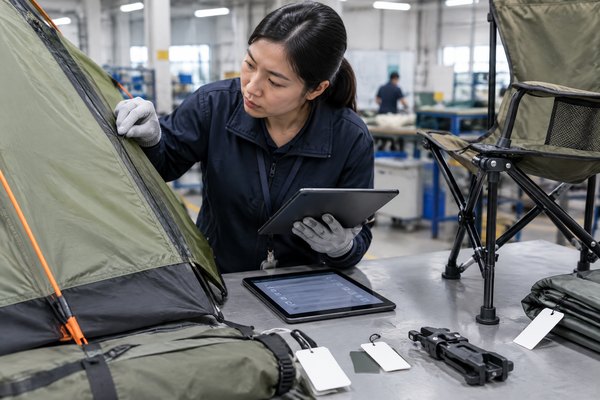
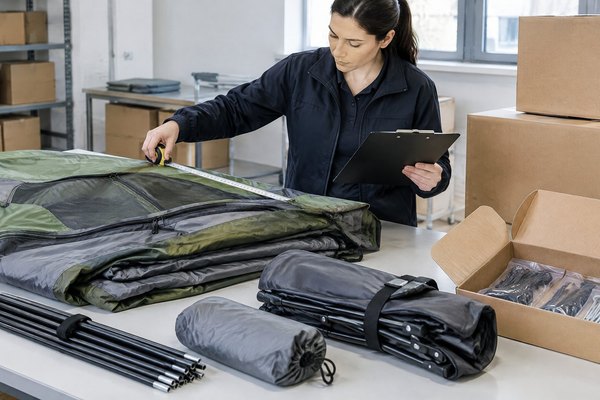
Camping gear pre shipment inspection should be a controlled release process, not a last-day visual check. It begins before materials are ordered, confirms the first production output, monitors high-risk operations, samples finished goods with an agreed method, verifies function and packaging, and releases cargo only when the evidence supports it. A tent can look correct in its bag while still having unsealed seams, mismatched poles, a faulty zipper, incomplete information, or cartons unsuited to its distribution route.
For US and European outdoor brands sourcing through OEM or ODM programmes, inspection supports traceability and product-safety governance. It does not replace design validation, applicable conformity assessment, customs work, or legal advice. EU manufacturers and importers must address applicable requirements, technical documentation, traceability, and appropriate consumer instructions; obligations depend on the product and market. [4] [5] In the US, many consumer products subject to safety requirements require testing and certification, while children’s products have distinct testing and tracking obligations. [2] Use this guide as an operational framework alongside qualified compliance, testing, customs, and logistics advice.
1. Quick Answer: What Should a Camping Gear Pre Shipment Inspection Cover?
Inspect in four connected stages: pre-production approval, in-process control, finished-goods inspection, and shipment-release verification. At each stage, compare the product against one controlled source of truth: the signed specification, approved sample, artwork, bill of materials (BOM), and inspection plan. Record what was checked, the lot or carton selected, method, result, photographs, and decision.
Before handover, verify identity and quantity; workmanship; dimensions and materials; assembly and function; relevant safety features; labels and instructions; inner and outer packaging; carton marks and count; and cargo condition. An agreed AQL-based plan may be used for attribute inspection, but AQL is not a safety pass and does not prove every unit is compliant. Select product- and market-specific tests from the product risk assessment before production.
The decision should be explicit: release, release with agreed corrective action, hold for rework and re-inspection, or reject/cancel under the contract. Do not release because the booking date is close. Retain approvals, reports, test records, corrective-action evidence, packing lists, and lot identifiers so a later complaint can be traced.
| Inspection stage | Primary question | Typical evidence | Decision owner |
|---|---|---|---|
| Pre-production | Are design, components, artwork, and requirements buildable? | Signed specification, golden sample, BOM, material approvals, test plan | Buyer and supplier quality leads |
| First output / in-process | Is the approved product being made consistently? | First-article data, measurements, process checks, defect log | Supplier quality team, with buyer escalation criteria |
| Finished goods | Does the completed lot meet agreed quality and functional requirements? | Random-sample results, AQL plan, function results, carton audit | Named inspector and buyer release authority |
| Shipment release | Does the cargo and document set match the released lot and route? | Final report, packing list, marks, loading evidence | Buyer or authorised release party |
2. Buyer Context: Why Is Camping Gear Higher Risk Than a Simple Soft Good?
Outdoor products are systems rather than single components. A tent can combine textiles, coatings, mesh, webbings, poles, hubs, cords, fasteners, stakes, instructions, and retail packaging. A chair combines a folding frame, seat fabric, hardware, feet, and a locking mechanism. A lantern can add electronics, batteries, seals, charging parts, and transport considerations. A fault can occur at any interface and remain invisible during a quick cosmetic check.
The product also crosses several handling environments: warehouse, container, distribution centre, retail outlet, or parcel carrier. Packaging that is adequate for palletised wholesale supply may be inadequate for individual delivery. ISTA distinguishes integrity screening from general simulations that model transport motions, forces, conditions, and sequences; the relevant test should fit the actual distribution route rather than a generic “drop test” label. [6]
Rank risks by severity, likelihood, and detectability. Severity asks what happens if a fault reaches a user; likelihood asks how often the process may create it; detectability asks whether the planned check will find it. An exposed pole edge, unstable chair lock, or missing warning can be high severity even if uncommon. A slight colour difference may be commercially important, but it requires a different decision route. Do not let an acceptable cosmetic sample hide a safety-critical question.
Separate quality, compliance, and suitability
Quality means conformity to the agreed specification. Compliance concerns legal and regulatory requirements for the product and market. Suitability asks whether the product and packaging perform in intended use and distribution. Final inspection can inform all three, but it cannot establish all three alone. A visual check may show a label is present; a competent market review determines whether the content and language are appropriate. A zipper check can find an immediate fault; it does not establish durability across an intended service life.
Build the inspection plan from the product
Use the purchase order commercially, but use a revision-controlled inspection specification on the factory floor. For each SKU, define identity, approved sample reference, materials and colours, dimensions and tolerances, construction, accessories, labels, instructions, packaging, sample plan, defect classes, functional checks, records, and release authority. “Good workmanship” is not an inspectable requirement. State visible or measurable conditions, such as no skipped stitches, seam opening, contaminated coating, or corrosion under defined viewing conditions. Define how “stable” is assessed for a chair.
3. Establish the Acceptance Baseline Before Materials Are Committed
The first release gate happens before mass production. Reconcile the order with approved physical or digital references. This is the point to identify a substituted mesh, old care label, unapproved artwork placement, or carton dimension that conflicts with the logistics plan. If a prototype is approved, identify it as a golden sample—the controlled physical comparison standard—and ensure it is labelled, dated, protected, and accessible to production and inspection staff.
The baseline should include a product data sheet; an approved BOM naming critical materials and components; drawings or defined measurement points; approved colour, artwork, barcode, warning, and carton-mark references; a risk-based test matrix; and a packaging specification. A measurement point must state where and how to measure, including the tool and positioning for flexible items. The test matrix should name the method, sample, timing, acceptance criterion, responsible party, and required report.
Approve critical inputs and traceability design
A finished sample can conceal input variation. For a tent, assess which of the fabric, mesh, seam tape, coating, poles, hubs, zippers, stakes, and bag are critical. For a folding chair, assess tubing, fabric, locking geometry, feet, hardware, and corrosion protection. Define which substitutions require written approval and fresh validation.
Verify traceability at this stage. EU guidance identifies type, batch, or serial identification and manufacturer contact information as traceability elements, alongside appropriate instructions and safety information. [4] For a US children’s product, permanent tracking information on the product and packaging should allow the manufacturer/importer or private labeler, production location and date, and batch/run or another identifying detail to be ascertained. [3] Confirm applicability for each product; do not copy a label format from another category without review.
Use a pre-production meeting as change control
The supplier’s production, quality, purchasing, packaging, and warehouse teams should confirm the revision, approved components, critical controls, test timing, escalation contacts, and planned inspection date. Give every open item an owner and due date. Treat an alternative component, revised carton, or process change as a formal request: assess the effect on appearance, function, safety, compliance, evidence, and distribution before approving it.
4. Control First Output and High-Risk Production Operations
First-article inspection checks the first completed unit or controlled initial output against the baseline before the line runs at scale. It is more detailed than final sampling because it verifies that manufacturing instructions are being interpreted correctly. Confirm construction sequence, component identity, measurements, artwork, labels, pack-out, and core function. Assemble a tent fully rather than inspecting folded panels; open, lock, fold, and re-open a chair; use a lantern’s intended power path.
Continue with during-production inspection (DUPRO) when enough of the order is complete to reveal repeatable problems and enough time remains to correct them. Timing is project-dependent. Its purpose is to detect production drift caused by new material rolls, machine adjustments, staff changes, or components from another source.
| Process or product risk | What to observe | Objective evidence | Escalation trigger to define |
|---|---|---|---|
| Tent cutting and sewing | Alignment, stitch quality, seam-tape coverage, reinforcements | Measurement sheet, defect photos, line audit | Repeating seam, dimension, or component mismatch |
| Pole and frame assembly | Correct segments, cord tension, burrs, hub engagement | Component-lot record, assembly sample, function video | Wrong set, unsafe edge, or repeated setup difficulty |
| Folding chair assembly | Frame orientation, lock sequence, hardware, fabric tension, feet | First-article record, specified process data, setup result | Locking failure, instability, or wrong hardware |
| Labels and pack-out | Current artwork, language, barcode, instructions, accessory count | Approval reference, scan record, pack-out photograph | Outdated artwork, missing information, mixed accessories |
Put controls where defects are created
End-of-line inspection finds symptoms; production controls address the source. Unsealed tent seams may relate to tape temperature, pressure, speed, cleanliness, or technique. A chair-fabric tear may relate to reinforcement placement, stitching, or frame geometry. For each critical feature, ask the supplier to name the process parameter, work instruction, check frequency, responsible role, record, and corrective action.
A critical control point is a step where loss of control could create an unacceptable safety, performance, or compliance risk. Do not assume a factory’s internal checklist covers the buyer’s retail, technical, or market requirements; compare it with the approved plan.
5. Use AQL Sampling Correctly—And Know Its Limits
Acceptance Quality Limit (AQL) sampling is a method for accepting or rejecting a lot from inspection of a sample for defined defect attributes. ISO 2859-1:2026 describes lot-by-lot acceptance sampling by attributes and AQL-indexed single, double, and multiple schemes. [1] The agreed plan should state lot size, sampling basis, AQL values by defect class, and acceptance/rejection numbers. Use the current agreed standard or buyer procedure, not a memory-based spreadsheet.
AQL makes disciplined random sampling possible when checking every unit is impractical. It is not a claim that a percentage of defects is acceptable to consumers, nor a substitute for risk assessment, process capability, certification, or product testing. A single critical defect can warrant a hold even where the numerical sample otherwise passes. State this in the plan.
Classify defects before inspecting
Definitions must be product-specific, illustrated where useful, and agreed before sampling. The following is an operating model, not a regulatory classification.
| Defect class | Meaning for the buyer plan | Camping-gear examples to define | Response principle |
|---|---|---|---|
| Critical | Immediate or material safety, legal, or severe integrity risk | Exposed sharp edge, failed lock, incorrect hazardous-material information where applicable, missing essential warning | Hold the lot; investigate scope; do not rely on a general AQL pass |
| Major | Material departure from intended use, essential function, or saleability | Tent cannot be pitched; zipper separates; missing pole set; wrong variant in carton | Apply agreed sampling threshold and corrective action |
| Minor | Limited departure not materially impairing use or normal saleability | Defined small trim issue or non-critical appearance variation | Apply agreed sampling threshold and trend findings |
Randomise cartons across accessible locations, production times, colours, and variants. Record carton numbers, lot identifiers, and sample identity to prevent substitution. State if sampling was constrained by warehouse access. For multiple variants, define whether each is its own lot or must receive minimum sample representation.
Write sampling outcomes in plain language
The report should state the lot definition, planned sample, cartons selected, defect results by class, acceptance criteria, constraints, rework required, re-inspection status, and release recommendation. A sample failure should trigger a nonconformance report (NCR) describing the requirement, actual condition, evidence, scope, containment, root-cause investigation, corrective action, effectiveness check, and re-inspection plan. Rework is not complete when asserted; it is complete when evidence verifies control.
Buyer checkpoint: AQL supports a sampled-lot decision. It does not remove the need for 100% checks of features that are safety-critical, legally required, uniquely identifiable, or unreliable to assess by random sampling.
6. Which Functional Checks Matter for Tents, Chairs, Sleeping Gear, and Camp Lighting?
Functional inspection should imitate intended use enough to reveal assembly, operation, and component-interface faults. The method must be repeatable. “Test tent” is not sufficient; an instruction should say to assemble selected units using only included components, follow the approved sequence, observe pole engagement, zipper travel, closure alignment, floor and fly attachment, and record pass/fail against the setup standard. Define the sample, tools, conditioning, operator, cycles where relevant, acceptance condition, and evidence.
For tents and shelters, inspect contents, setup, pole joining and elastic retention, hub engagement, stitching and reinforcement, zipper and vent operation, guy-line and stake attachment, specified seam-tape coverage, bag fit, and disassembly. Water resistance, wind resistance, strength, flame behaviour, and UV durability are distinct performance or laboratory questions with product-specific methods. Visual seam inspection does not prove whole-product weather performance.
For camp furniture, verify assembly, opening and folding, locks, stability, fabric attachment, feet, exposed edges, and accessories. Do not improvise a static or dynamic load test with an arbitrary person or weight. Where a load claim is relevant, confirm a defined method, apparatus, load, duration, conditioning, and acceptance criterion with qualified technical and testing resources.
For sleeping bags, mats, and accessories, inspect dimensions, specified fill or insulation construction, closures, valves, inflation/deflation, repair kits, straps, and labels. For battery-powered lamps, check model, power source, charging interface, controls, battery compartment, supplied accessories, labels, and pack-out. Devices containing lithium batteries can carry transport obligations; US guidance identifies them among outdoors-related hazardous materials. [8] Confirm transport classification, packaging, marks, documents, and carrier requirements for the exact configuration.
7. Is Packaging Inspection Separate from Product Inspection?
Yes. Packaging protects the product, supports accurate fulfilment, carries information where applicable, and affects warehouse efficiency. A product can pass functional inspection but remain unready for shipment because the wrong instructions are inserted, the barcode will not scan, the carton count is wrong, or the pallet pattern does not match the booking.
Inspect the unit pack for SKU, version, accessories, instructions, labels, warning language, barcode, presentation, and protection. Check that a tent bag closes without damaging poles or fabric, chair frames are restrained from scuffing textiles, and abrasive parts are separated as specified. Inspect master cartons for dimensions, specified construction, sealing, arrangement, count, markings, declared weights if used, and reconciliation to the packing list.
Packaging validation must match distribution. ISTA notes that 1-Series tests are integrity screeners rather than simulations, while 3-Series general-simulation tests model damage-producing transport conditions and sequences. [6] Ask which route profile applies—parcel, less-than-truckload, full truckload, international direct import, mixed pallet, or a retailer-specific route. The answer may change cartons, dunnage, pallet stabilisation, or the test protocol.
Verify ship-ready packing and container readiness
Segregate released goods from unreleased or rejected stock. Check carton marks against the booking and packing list. For pallets, examine count, stacking pattern, overhang, stretch wrap or strapping, corner protection, labels, and stability. At container loading, document container number, cleanliness, dryness, visible condition, loading sequence, count, void management, restraint, seal number, and closure. Agree responsibility and evidence for the actual route and Incoterms®.
Photos of a tidy container are not enough. Pair them with counts, identifiers, timing, and a loading checklist. For moisture-sensitive goods, agree the preventive method in advance and record what was used. Send batteries, fuel-related items, aerosols, or other potentially regulated content through the appropriate competent parties for shipment-specific classification and documentation.
8. When Should the Buyer Release, Hold, or Reinspect the Shipment?
Set the release rule before schedule pressure begins. Name a release authority and substitute, list required documents, and state whether cargo may be booked, loaded, or handed to a carrier before written release. Conduct final inspection when the packed, completed quantity represents the shipment but leaves practical time for rework. The percentage is project-dependent and belongs in the plan.
Release when identity, quantity, quality sample, functional checks, packaging, markings, records, and required test evidence meet the agreed criteria, with no unresolved critical issue. A conditional release should be exceptional, written, and limited to a bounded non-safety and non-compliance issue, with an owner and deadline. Hold when evidence is incomplete, product cannot be traced, a critical issue exists, the sample fails, rework is unverified, or documents conflict with the goods.
The release notice should identify the PO, SKU/variant, lot and quantity, inspection date and result, open NCRs, documents reviewed, loading condition, partial-shipment status, and handover authority. A supplier message saying “inspection passed” is not a buyer-controlled release.
Use an exception log and reconcile shipment data
For a marginal issue close to a cut-off, record the requirement, deviation, affected quantity, risk, evidence, disposition, approver, and follow-up in an exception log. Never use a concession to override a safety concern, an unmet applicable legal requirement, or a missing shipment-critical document.
Early reconciliation also supports imports. CBP’s commercial importer guide describes the importer’s responsibility for accurate and timely information under informed compliance and lists commercial-invoice information including merchandise description, package marks and numbers, quantities, charges, and country of origin. [7] Confirm current entry and broker requirements for the shipment; the inspection team should flag inconsistencies, not make customs determinations.
9. What Records Should Be Retained After the Cargo Leaves?
Retained records turn a one-time inspection into a traceable control system. They distinguish design from production issues, isolate a lot if a complaint arises, and improve the next order. Under the EU General Product Safety Regulation, technical documentation should be available to market-surveillance authorities for 10 years after product placement, and it is based on an internal risk analysis. [5] The exact record set and period depend on product, market, and applicable requirements.
Retain the controlled specification revision; sample and approval history; BOM and component approvals; change requests; pre-production, first-article, in-process, and final reports; raw defect data; AQL basis; functional and laboratory records; packaging evidence; NCRs and corrective actions; traceability identifiers; packing and loading records; release notice; and relevant shipping documents. Index files by PO, SKU, version, factory, lot or date, and destination market.
Make records searchable. Use a controlled naming convention such as PO-SKU-REV-LOT-DOCUMENTTYPE-DATE; link photos to sample and carton identifiers; preserve original laboratory reports; restrict editing of final reports; and retain a revision history. Review findings by SKU, component, workstation, supplier, and period. A repeated zipper problem may point to its source or alignment process; a trend prompts investigation, not a conclusion about root cause.
10. A Practical Buyer Checklist for the Day Before Shipment
Adapt this checklist to the tent, chair, sleeping system, lantern, or accessory order. The acceptance criteria must come from the approved product and market plan.
| Release area | Questions to answer before handover |
|---|---|
| Product and workmanship | Does the sampled unit match the SKU, variant, revision, components, and accessory list? Were defined measurements and workmanship findings recorded? |
| Function and sampling | Were the specified setup, folding, locking, closure, inflation, electrical, or assembly checks completed? What lot, sample plan, and defect results support the decision? |
| Information and packaging | Are required labels, instructions, warnings, barcode, identifiers, unit packs, carton marks, counts, and pallet pattern correct? |
| Cargo and documents | Are released goods segregated? Are loading condition, count, restraint, seal, inspection, tests, corrective actions, packing, and written release complete? |
Before release, ask: What exactly is being released? Why does the evidence support release? How would the shipment be traced if a problem is reported? If an answer is unclear, the shipment is not yet controlled.
11. How Can a Brand and OEM/ODM Supplier Work from One Inspection Language?
The buyer supplies commercial and market intent; the OEM/ODM supplier translates it into manufacturable controls; the supplier quality team, buyer, or independent inspector checks evidence against the same plan. This works when all parties use the same revision, defect taxonomy, release gates, and escalation rules. It fails when a buyer assumes the factory knows destination-market expectations, or a factory assumes a generic report is enough for a specific retail channel.
For an initial enquiry, send product category, intended markets, approved or target materials, essential functions, expected labels and instructions, distribution route, packaging concept, requested inspection stages, and known testing or documentation requirements. Ask which elements require engineering confirmation, laboratory support, or carrier review. For a CampLume sourcing conversation, submit this brief through the site RFQ form or email info@camplume.com and request a proposed quality plan that states assumptions, buyer approvals, and project-specific evidence before production is authorised.
The aim is not paperwork for its own sake. It is a release trail connecting the purchase order to the correct physical goods, evidence, and decision.
Frequently Asked Questions
1. What is the best time for a camping gear pre shipment inspection?
Schedule it when the order is sufficiently complete and packed to represent the shipment, but early enough to correct confirmed issues. State timing in the project inspection plan.
2. Is AQL the same as a product safety test?
No. AQL is a sampling framework for defined defect attributes. It does not prove every unit is safe, compliant, durable, or suitable for a particular use.
3. Should every tent be assembled during final inspection?
Not necessarily. Use the agreed sampling plan for general inspection, but consider 100% verification or enhanced control for critical, historically unstable, or hard-to-inspect features.
4. What should an inspector check on a folding camping chair?
Check the agreed components, opening and folding, lock engagement, stability, fabric attachment, exposed edges, feet, workmanship, labels, and packaging. Any load evaluation needs a defined method.
5. Does a passed carton inspection prove the packaging will survive transit?
No. It proves conformity to the packaging specification. Transport performance depends on the actual route and may require suitable package testing or validation. [6]
6. Which files should be kept after shipment?
Keep the approved specification, sample and change history, inspection and test data, NCRs, traceability identifiers, packing and loading evidence, and release documents. Confirm market-specific retention requirements separately.
Related CampLume resources
Use these related pages to turn How Should You Inspect Camping Gear Before Shipment? into a more complete, supplier-ready decision:
- Read: How to Use AQL Inspection for Camping Gear: A Practical Buyer Guide for the next connected sourcing decision.
- Review the CampLume quality-control workflow to compare a suitable CampLume product platform.
- See the CampLume buyer FAQ for concise guidance on samples, MOQ, quality control, compliance and shipment preparation.
Conclusion: Make Shipment Release an Evidence-Based Decision
A reliable camping gear pre shipment inspection starts before cartons are sealed. It translates the product brief into approved inputs, first-output and in-process controls, appropriate AQL sampling, repeatable functional checks, route-aware packaging, written release, and retained evidence. This matters because textiles, frames, hardware, closures, electronics, accessories, instructions, and packaging must work as one system.
For US and European brands, confirm product-specific quality criteria, applicable market and transport requirements, test plan, sample plan, packaging route, records, and release authority before production. Make the final decision from documented evidence, not an approaching departure date.
To discuss a project-specific inspection brief for camping gear, email info@camplume.com.
Project discussion
Need to apply this guide to a product programme?
Send your product category, target market, estimated quantity, current specification and packaging stage. CampLume will continue the discussion by email.
Email info@camplume.comSources and further reading
References
- 1ISO 2859-1:2026 Sampling procedures for inspection by attributes — Part 1: Sampling schemes indexed by acceptance quality limit (AQL) for lot-by-lot inspection
- 2Testing & Certification
- 3Tracking Label Business Guidance
- 4General product compliance
- 5Regulation (EU) 2023/988 on general product safety
- 6Test Procedures
- 7Importing into the United States: A Guide for Commercial Importers
- 8Hazardous Matters July 2023