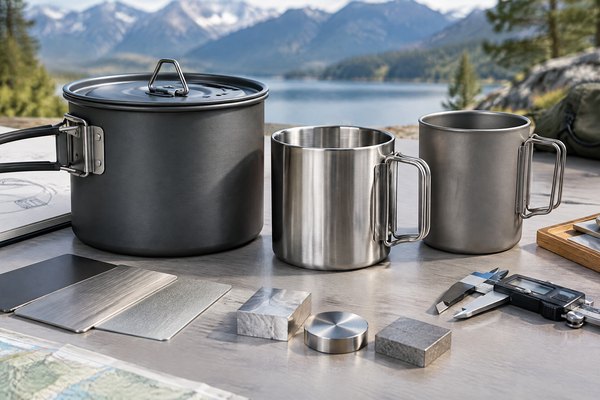
A useful sourcing decision starts with a written requirement that can be challenged, sampled, inspected, and approved.
Direct Answer — In supplier qualification, a camping cookware factory inspection verifies that a potential OEM/ODM can meet your product specification, testing and packaging requirements at scale. Key focus areas are material traceability, functional tests (handles, hinges, folding parts), surface performance (nonstick coating abrasion test), and packing/shipping protection (camping cookware packaging drop test). Use the inspection to confirm processes, test methods and documentation before placing a production order.
Why a Camping Cookware Factory Inspection Matters
A formal camping cookware factory inspection is the point at which product specification meets manufacturing reality. For a buyer or product manager, it answers three questions: can the factory produce the design consistently, will the items perform to the application expectations in the field, and can the factory document materials and process controls required by the destination market?
Common risks uncovered during inspections: wrong alloys or thickness, inconsistent nonstick coatings, weak folding handles or rivets, inappropriate packaging for retail distribution, and missing traceability records. These lead to field failures, customer returns, or regulatory issues depending on the market. Deficiencies are much cheaper to fix in qualification than during or after a production run.
Pre-Inspection Preparation: Specs, Samples and Documentation
Before you walk the floor, prepare a concise supplier brief. The brief should include:
- Product specification (drawings, tolerances, target weight, hardness or alloy grade). Specify if parts are welded, riveted or bolted.
- Golden sample(s) and functional acceptance criteria.
- Test methods and acceptance criteria for each performance attribute (e.g., handle heat resistance threshold in °C, acceptable abrasion cycles for coating).
- Packaging artwork and dimensional packing specification.
- Destination market and any applicable performance expectations or labeling requirements.
Ask the factory to gather documentation in advance: raw material certificates (COA), process flow, in-line inspection points, calibration records for test equipment, and any existing internal test reports. Confirm the scope you will inspect — full site, a single production line or a subcontractor.
Core Inspection Areas And Tests
A practical camping cookware factory inspection focuses on areas that predict real-world performance.
Material and Traceability Checks
- Verify camping cookware material traceability from coil/ingot to finished part. Request batch numbers, supplier COAs and surface treatment records. Randomly cross-check stated alloy or anodizing batch numbers against invoices and mill tests.
- Check incoming material storage, labeling and first-article inspection procedure.
Handles, Hinges and Load Tests
- Inspect assembly fixtures, rivet or weld quality and torque settings on fasteners.
- Witness or request records for the camping cookware handle heat resistance test and the camping cookware load test folding handle. Typical buyer criteria include no deformation, no loosening after set cycles, and maintenance of seal where applicable.
Surface and Coating Performance
- Review the process for nonstick application (pre-cleaning, surface roughness, cure temperature and time). Confirm coating thickness records.
- Require or witness a camping cookware nonstick coating abrasion test. Acceptable cycles and abrasive media depend on your specification — document the test method and pass/fail criteria.
Packaging and Shipping Protection
- Confirm packaging materials, inner protections, corner protection and instructions for retail-ready packing.
- Perform or review the camping cookware packaging drop test results. For multi-pack retail shipping, test both individual unit and packed-case drops.
What To Observe On The Factory Floor
A structured walkthrough reveals whether documented processes are actually followed.
Process Flow and Work Instructions
Check that work instructions are displayed at each workstation and that operators follow them. Look for in-process control points tied to critical-to-quality attributes you defined in your spec.
Tools, Gauges and Calibration
Inspect gauges, go/no-go fixtures and test equipment. Confirm calibration stickers and calibration certificates are current. Uncalibrated test equipment undermines inspection credibility.
Cleanliness, Handling and Storage
Aluminum and stainless cookware can be scratched or contaminated easily. Observe handling methods, storage racks and contamination control (e.g., separate areas for coated vs. uncoated parts).
Packaging And Shipping Tests
Packaging performance influences rate of damage and returns. The inspection should include sampling for the camping cookware packaging drop test and review packaging bills of materials.
- Confirm the carton strength (e.g., BCT, ECT values) and that inner protection prevents metal-to-metal contact for stacked products.
- Witness a drop test on a representative packed carton from production lot. Note the drop height, orientation and acceptance criteria.
- Review packaging labeling and traceability (serial, batch, lot codes) that must remain readable after transit tests.
Using a Camping Cookware Quality Control Inspection Checklist
Use a concise checklist to structure the inspection and to record pass/fail items. A sample camping cookware quality control inspection checklist should include:
- Product specification and golden sample verified
- Raw material COA and batch traceability
- Dimensional inspection (critical dimensions)
- Handle assembly torque and load test results
- camping cookware handle heat resistance test record
- camping cookware load test folding handle record
- Nonstick coating adhesion and camping cookware nonstick coating abrasion test results
- Surface finish and scratch inspection
- Packaging components and camping cookware packaging drop test results
- Calibration and measurement traceability records
- Labeling, instructions and documentation
Record the checklist as evidence of the inspection and attach photos of critical non-conformances. Keep the checklist as part of your supplier qualification file and link it to any corrective action requests.
Sample Review and On-Production Verification
Workflow: approve engineering sample(s), run a pre-production sample batch, perform full inspection on first production lot.
- Golden Sample: Approve final tooling and finish on a physical golden sample. Use it for visual and functional comparison.
- Pre-Production Run: Require a small pre-series (e.g., the first 50–200 units depending on product) to validate line setup.
- First Lot Inspection: Perform dimensional, functional and surface tests on the first full lot. Use AQL or 100% inspection as your contract specifies and document the acceptance levels.
If issues appear at this stage, emphasize change control. Any approved change to material, tooling, or process should be recorded, reviewed and re-tested where necessary.
Decision Table: Quick Buyer Guide
| Issue Observed | Immediate Action | Acceptable to Proceed? |
|---|---|---|
| Missing material COA or batch traceability | Hold shipment; request COA and re-sample | No |
| Handle loosening after 50 load cycles | Require rework of joint or redesign; re-test | No until fixed |
| Minor coating abrasion within spec | Allow production with spot checks | Yes, with monitoring |
| Carton tears during drop test | Improve inner protection or carton grade | No |
| Calibration sticker missing on key gauge | Calibrate immediately and re-inspect | No |
Mid-Article CTA — Request A Sourcing Brief
If you are qualifying a cookware supplier and want CampLume to prepare a targeted inspection plan, email sourcing@camplume.com with a short brief:
- Product name and SKU(s)
- Materials and target alloy grades
- Golden sample photos and spec sheet
- Target market(s) and any regulatory concerns
- Typical order sizes: first order, annual forecast
- Any known past defects or special performance requirements
We will respond with a suggested inspection scope and a sample camping cookware quality control inspection checklist tailored to your product.
Non-Conformance, CAPA And Change Control
When inspections find problems, the actionable workflow is:
- Containment: stop shipment of suspect lots.
- Root Cause: require the factory to analyze root cause (e.g., tooling wear, wrong alloy coil, operator error).
- Corrective Action: specify corrective actions and verification tests — include re-running the camping cookware handle heat resistance test or camping cookware nonstick coating abrasion test as required.
- Change Control: document any changes to materials, tooling or processes. Require sign-off and re-validation of affected characteristics.
- Preventive Action: agree follow-up audits and increased sampling frequency until the issue is stable.
Document each step and attach test evidence to the batch release package before shipping.
Final Acceptance, Shipping Preparation And Documentation
Before shipment, confirm:
- Final inspection records match your acceptance criteria and checklist.
- Packaging meets the camping cookware packaging drop test standard you agreed.
- Traceability labels are applied to cartons and inner packaging where required.
- Required documentation is included (packing list, commercial invoice, COAs, test reports, and any customs or regulatory documents applicable to the destination market).
Shipping preparation should include a QA sign-off and a shipping hold to prevent release until documentation and re-tests are complete.
FAQ
Q: How deep should material traceability go for camping cookware? A: It depends on product risk and market. At minimum, traceability from mill batch to finished parts with COA is recommended. For higher-risk products or specific buyer policies, require supplier-to-subsupplier traceability and receiving inspection records.
Q: Do I need to perform the camping cookware nonstick coating abrasion test on every batch? A: Not necessarily. Many buyers use batch-sampling frequency based on historical performance and risk. Increase frequency after changes in raw material, coating supplier, or if prior batches failed.
Q: What is a reasonable protocol for the camping cookware handle heat resistance test? A: Define the intended use (e.g., stove-top, open flame) and set a temperature threshold and exposure duration. Require the factory to document method and acceptance criteria; witness the first test where possible.
Q: Can the factory run packaging drop tests in-house or should these be third-party? A: In-house testing is acceptable if the factory has valid test procedures, calibrated equipment and documented results. For critical retail channels or certification, consider third-party lab validation.
Q: How do I handle a supplier that refuses to share COAs or test records? A: That is a red flag. Require traceability and testing as part of contract terms. If a supplier refuses, consider alternative partners or add contractual verification clauses.
Q: Should I require 100% inspection for folding handles? A: Requirement depends on the design’s criticality and historic failure rates. For new designs or high warranty risk, 100% functional check of folding handles or a higher sampling level is prudent until the process stabilizes.
Conclusion and Next Steps
A structured camping cookware factory inspection protects your brand and reduces downstream costs. Focus on material traceability, functional tests such as camping cookware handle heat resistance test and camping cookware load test folding handle, coating durability verified by the camping cookware nonstick coating abrasion test, and packaging validated by the camping cookware packaging drop test. Use a documented camping cookware quality control inspection checklist to make decisions, and treat inspection findings as input to corrective action and change control.
Ready to qualify a supplier? Email sourcing@camplume.com with your brief (product specs, market, sample photos and forecast). We will return a tailored inspection scope and a sample checklist that aligns with your product and destination market requirements.
Final CTA: Email info@camplume.com with your product category, target market, estimated quantity, current specification and packaging stage. Request a documented response that identifies assumptions, open evidence and the next approval gate.
Related CampLume resources
-
Read: How to Choose Camping Cookware Materials for a Private-Label Range for a connected sourcing decision.
-
Explore CampLume cookware options to compare a relevant product platform.
-
See the CampLume buyer FAQ for concise guidance on samples, MOQ, quality control, compliance and shipment preparation.
-
Discuss an OEM or ODM brief with CampLume when product configuration, custom branding or packaging needs to be scoped.
Project discussion
Need to apply this guide to a product programme?
Send your product category, target market, estimated quantity, current specification and packaging stage. CampLume will continue the discussion by email.
Email info@camplume.comSources and further reading