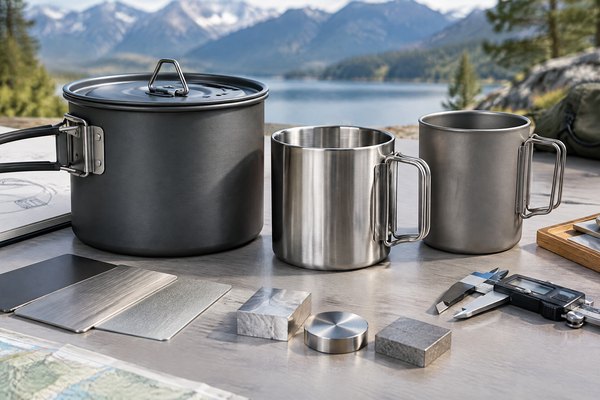
A useful sourcing decision starts with a written requirement that can be challenged, sampled, inspected, and approved.
Direct answer
If you are qualifying a vendor for camping cookware, treat camping cookware REACH compliance as a product-level requirement that must be verified with a combination of documented supplier controls, third-party test reports (where necessary), and a documented change-control workflow. For EU/UK importers and outdoor brands, require clarity on SVHC screening, relevant registration or authorization status for substances used in coatings or alloys, and camping cookware food contact testing or migration tests where cookware meets the definition of food-contact articles. Confirm the exact requirement for the destination market before you accept a supplier.
Why REACH Matters for Camping Cookware
REACH (and the UK equivalent) regulates chemicals that can be manufactured or placed on the market. For camping cookware—pots, pans, kettles, plates, mugs, and multi-piece outdoor kitchen sets—concerns commonly involve:
- Substances of Very High Concern (SVHCs) in coatings, anodized surfaces, or solders
- Restricted substances in metal alloys and surface treatments
- Impurities or additives that could migrate into food-contact surfaces
From a buyer-qualification perspective, REACH is about risk control and traceability. You need to know which materials and suppliers control the chemical inputs and how they document that control.
Documents and Tests You Should Request
When qualifying a camping kitchenware supplier, collect a package of documents and tests that match the product construction and destination market. Typical items:
- Supplier Declaration of Conformity for REACH (signed and dated)
- Bill of Materials (BoM) with trade names and CAS numbers for additives or coatings
- Third-party test reports where applicable (SVHC screening, migration or extractables testing)
- Material Safety Data Sheets (SDS) for chemical treatments and coatings
- Traceability records linking finished parts to material batches
If you will be marketing as food-contact or selling in markets where food-contact testing is mandated, request camping cookware food contact testing (migration/non-intentional release) that is relevant to the construction (stainless steel, aluminum, ceramic coating, silicone handles).
What to look for in test reports
- Identification of the test standard used (e.g., EN, ISO, or national standards) — do not accept unlabeled “in-house” tests
- Limits of detection and whether they meet your acceptance criteria
- Samples linked to production batches or representative pilot-production samples
Supplier Qualification Workflow (Practical Steps)
Below is a practical workflow you can apply to qualify a camping cookware supplier. It maps to the buyer activities you will perform.
1) Product specification and requirements
- Define product function and materials (e.g., hard-anodized aluminum pot with PTFE-free coating; 18/8 stainless steel mug; enameled steel kettle)
- For each material layer, list required attributes: alloy grade, surface finish, coating system, and maximum allowed concentrations for specific substances (e.g., lead, cadmium, certain phosphates)
- State whether the product will be sold as "food contact" in your market and any extra test or documentation requirements from retailers
2) Initial supplier assessment and sample review
- Request a technical pack: BoM, material certificates, process flow chart, and recent quality inspection reports
- Order pre-production samples and test units for camping cookware food contact testing or SVHC screening
- Evaluate functional fit: heat distribution, coating adhesion, ergonomics, and user-safety features
3) Factory testing, inspection, and acceptance criteria
- Define factory-internal tests that the supplier must perform (coating adhesion, visual inspection, dimensional control)
- Reserve the right to witness factory tests or to review factory lab records
- For materials under REACH scrutiny, require third-party SVHC screening or validated manufacturer statements linking alloys/coatings to supplied SDS
4) Packaging and shipping preparation
- Define packaging that protects finishes and prevents cross-contamination (e.g., barrier films for coated surfaces)
- Require compliance statements for packaging materials if your retailer requires recyclability or chemical limits
- Specify shipping preparation: palletisation, labeling, and transport documentation to support traceability
5) Documentation handover and regulatory file
- Expect a regulatory file at product handover: signed supplier declarations, test reports, SDS, BoM, and inspection checklists
- Store these documents centrally with a link to the production lot numbers
6) Change control and ongoing monitoring
- Implement a written change-control process: supplier must notify you in advance of material, process, or source changes
- Define requalification triggers: new alloy batch, change in coating supplier, or change in country of origin
- Schedule periodic re-testing based on risk (e.g., annual SVHC screening for coated products)
Country Expectations: France, Germany, UK and How They Differ
Buyers often ask whether a camping cookware supplier France-based or Germany-based has different REACH obligations than a UK supplier. Practical points:
- camping cookware supplier France and camping cookware supplier Germany: Both operate under EU REACH. Buyers should request the same product-level documentation: SVHC screening where applicable, material declarations, and food-contact testing when the article meets food-contact definitions.
- camping cookware supplier UK: The UK now operates under UK REACH. Many technical expectations are identical, but you should confirm whether the supplier’s declarations reference EU REACH or UK REACH and whether they have linked registrations if required.
You must confirm the applicable requirement with your legal or regulatory team because obligations can vary by product use, importer role, and whether the supplier is manufacturing within the EU, UK, or exporting into these markets.
What Outdoor Brands and Retailers Expect
If you are working with a camping cookware supplier for outdoor brands, expect stricter traceability and label control than for some commodity items. Retailers and brands often require:
- Full traceability from raw material lot to finished batch
- Evidence of camping cookware food contact testing for any article that touches food
- A clear change-control notification window (commonly 60–90 days)
- Manufacturing and inspection photos that show cleanliness and segregation of food-contact lines
Brands will also ask for chain-of-custody information for coatings and adhesive components.
Practical Testing Guidance and Frequency
Testing should be risk-based. Typical triggers for testing include change in raw material supplier, new coating, or introduction of a new supplier country. Common tests for camping cookware:
- SVHC screening by accredited lab (to check for substances on the candidate list)
- Specific migration tests for heavy metals and regulated substances where the surface is in food contact
- Coating adhesion and abrasion tests to simulate field use
Sample selection and frequency
- Use representative production samples tied to material batch numbers
- For new suppliers, require a full test suite before first production shipment
- For ongoing production, perform periodic re-testing (annual or after material/process change)
Buyer Decision Table (Quick Comparison)
| Supplier Readiness Level | Required Actions | Quick Acceptance Criteria |
|---|---|---|
| Minimal documentation | Request BoM, SDS, and supplier declaration | Provide provisional approval only after third-party SVHC screen |
| Good documentation, no tests | Order camping cookware food contact testing and SVHC screen | Approve after passing tests and sample inspection |
| Full documentation + tests | Audit factory QC and confirm packaging | Approve for production with routine re-testing schedule |
Mid-Article CTA — How to Send a Short Brief
If you want CampLume to start a supplier-qualification conversation, email a one-page brief to sourcing@camplume.com with:
- Product name and use case (e.g., 0.9L stainless steel kettle for boiling water)
- Bill of Materials with known coatings/alloys (or photos of parts)
- Target market (France, Germany, UK, EU-wide)
- Expected annual volume and launch timeline
CampLume is an OEM/ODM camping gear manufacturer; we can review your brief, indicate typical documentation to collect, and outline a production and testing roadmap. We do not provide legal advice — confirm regulatory specifics with your counsel.
Factory Audits, Inspections, and What to Witness
When you conduct a factory audit, include process and product checks that tie to REACH risks:
- Incoming-material control: verify material certificates and lot numbering
- In-process segregation: verify food-contact articles are made in controlled lines with cleanwork practices
- Final inspection: check for coating defects, adhesion, and correct labeling
Ask to witness the sampling and testing procedures if possible. If you cannot attend, request time-stamped photos and raw test data. Keep inspection checklists aligned with your product specification.
Packaging, Labeling and Shipping Documentation
For camping kitchenware supplier packaging, set expectations for:
- Inner packaging that prevents surface damage (e.g., kraft paper, foam, or food-grade liners)
- Clear label data: product name, material description, lot number, and any warnings (e.g., not for microwave)
- Documentation included with the shipment: SDS (if relevant), supplier REACH declaration, and test reports linked to the lot
Shipping documentation should preserve traceability: link the shipment to the production lot covered by the test reports.
Change Control in Practice
Define concrete steps for change control in your supplier contract:
- Notification lead time (e.g., 60 days) for any material/process change
- Mandatory re-sampling and testing if a material vendor changes
- Escalation path for non-conforming changes (stop-shipment right until requalification)
Good change control minimizes surprises and protects your brand.
FAQ
Q: Do I always need camping cookware food contact testing for REACH? A: Not always. REACH focuses on chemicals; food-contact testing addresses migration into food. If the article is a food-contact article, you should review local food-contact rules in addition to REACH and often require migration testing.
Q: Can a supplier declaration replace third-party testing? A: For low-risk items, a declaration may be acceptable temporarily, but third-party testing is best practice for food-contact surfaces or when SVHCs are a concern. Retailers often require independent evidence.
Q: What should I expect from a camping cookware supplier France or Germany compared with the UK? A: Expect similar technical documentation for France and Germany under EU REACH. For UK suppliers, confirm whether they reference UK REACH. Always confirm with legal counsel or your regulatory contact.
Q: How often should I re-test cookware already in production? A: Use a risk-based schedule: annual re-testing for higher-risk coatings/complex assemblies, and re-test immediately after any material or process change.
Q: What are common triggers for stopping a shipment? A: Failed migration tests, undisclosed material changes, missing traceability documentation, or evidence of cross-contamination in the factory are all valid stop-shipment triggers.
Final Conclusion and CTA
To qualify a camping kitchenware supplier quickly and defensibly, require a clear BoM, supplier REACH declarations, targeted third-party tests (SVHC screening and camping cookware food contact testing where applicable), visible traceability, and a binding change-control process. If you represent a retailer, a private-label brand, or are searching for a camping cookware supplier for outdoor brands, standardize the documentation you will accept and make requalification triggers explicit in your purchase agreement.
Send a one-page brief to sourcing@camplume.com with product specs, target markets (France, Germany, UK or EU), and expected volumes. CampLume will review the brief and outline the documentation and testing steps we recommend. We will not provide legal advice — confirm the applicable requirement for your market with your regulatory counsel before launch.
Final CTA: Email info@camplume.com with your product category, target market, estimated quantity, current specification and packaging stage. Request a documented response that identifies assumptions, open evidence and the next approval gate.
Related CampLume resources
-
Read: How to Choose Camping Cookware Materials for a Private-Label Range for a connected sourcing decision.
-
Explore CampLume cookware options to compare a relevant product platform.
-
See the CampLume buyer FAQ for concise guidance on samples, MOQ, quality control, compliance and shipment preparation.
-
Discuss an OEM or ODM brief with CampLume when product configuration, custom branding or packaging needs to be scoped.
Project discussion
Need to apply this guide to a product programme?
Send your product category, target market, estimated quantity, current specification and packaging stage. CampLume will continue the discussion by email.
Email info@camplume.comSources and further reading