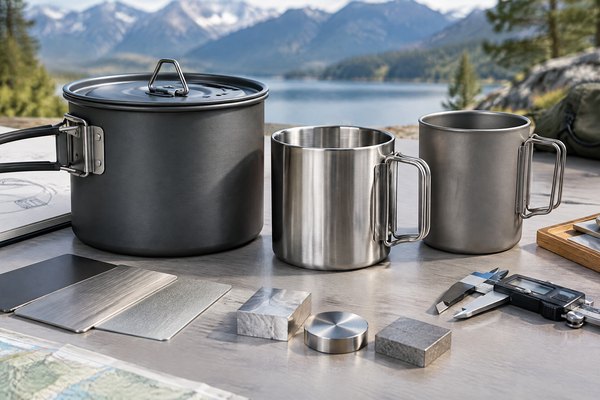
A useful sourcing decision starts with a written requirement that can be challenged, sampled, inspected, and approved.
Direct answer (short): If you need reliable supply of branded or private‑label cookware, choose a camping pot and pan set manufacturer that documents material sources, provides controlled sample runs, supports tooling or customization, and demonstrates consistent QC and export logistics. CampLume is an OEM/ODM camping gear manufacturer; the rest of this guide explains the practical steps and checklist items buyers use in Purchase Preparation and Supplier Qualification.
What Buyers Need To Decide Before Contacting Manufacturers (Purchase Preparation)
Before you reach out, lock down the items that determine feasibility and cost.
Product specification and function
- Define the exact set configuration (e.g., 1 pot + 1 frying pan + lid, nesting design, capacity in liters).
- Specify weight and pack size targets. If you are targeting ultralight users, state gram targets and acceptable material tradeoffs.
- State heat source compatibility (gas, induction, alcohol, solid fuel).
Target market and regulatory needs
- Identify the destination markets (US, UK, EU, DE, FR, etc.). Different markets may require specific food‑contact documentation or labeling — confirm the applicable requirement for each destination.
- Decide whether you need food contact test reports or materials declarations (see the Testing and QC section).
Commercial parameters
- Target retail price and landed cost expectations. This drives material choice and finish level.
- Expected order frequency and annual volumes — distinguish an initial MOQ for first order versus ongoing replenishment.
- Desired lead time and acceptable ramp schedule.
How To Shortlist A Camping Pot And Pan Set Manufacturer (Supplier Qualification)
A structured qualification reduces surprises.
Capability checklist
Ask for documented capabilities: metal forming (deep drawing, spinning), TIG welding or seam welding, laser cutting, anodizing or PVD, and assembly for multi‑piece sets. Also ask whether the vendor works as an OEM or ODM and if they accept private label specifications.
Request samples and case history
Request existing sample sets that demonstrate the construction and finish you want. If they don’t have an exact match, ask for the closest comparable part.
Factory visits and audits
If volumes justify it, perform a factory audit or hire a third‑party inspector. Confirm the factory’s process flow for cutting, forming, finishing, assembly and final packing.
Materials, Construction And Performance: What To Specify
Material and process choices are the primary technical drivers of cost, weight and durability.
Food contact and stainless steel choices
If you specify food grade stainless steel camping cookware, clarify grade (e.g., 304/18‑8 for corrosion resistance, or 316 for salt exposure) and thickness in gauge or mm. Request mill certificates for initial runs when required by your importer or retailer.
Lightweight and titanium options
For ultralight backpacking consumers, consider titanium options. A titanium camping cookware OEM will advise on wall thickness, stamped handles and folding designs that optimize weight while keeping function. If you need mass market ultralight but cost‑sensitive options, ask about lightweight backpacking cookware OEM solutions that use thin anodized aluminum with nonstick coatings.
Coatings, anodizing and nonstick
Specify whether you want bare metal, hard‑anodized, or PTFE/ceramic coatings. Each has different testing requirements and durability expectations. For coated products, include scratch and adhesion testing in the sample plan.
Handles, lids and nesting design
Define handle type (removable, folding, or stay‑cool fixed), locking method, lid fit tolerance and nesting tolerances. Good manufacturing engineering will give you CAD or die drawings for approval.
Customization, Private Labeling And Packaging
Most buyers require at least basic branding and packaging decisions early in the project.
Artwork, printing and marking options
Confirm marking methods for logos: lasering, pad printing, laser engraving or stamped branding. Some finishes (e.g., polished titanium) accept laser engraving better than pad printing.
Private label and OEM workflows
If you want private label camp kitchen equipment, ask suppliers for their private‑label workflow: artwork approval steps, sample branding prints, and lead times for printed packaging. Use a change control process to manage any revisions after first‑run approval.
Packaging and retail readiness
Decide between bulk boxed packing for wholesale or individual retail‑ready boxes with inserts, UPC/GTIN, and multilingual user guides. Packaging choices affect pallet configuration and landed cost.
Mid-article CTA — Send a concise email brief If you want a tailored quote or capability confirmation, email sourcing@camplume.com with a one‑paragraph brief including:
- Product reference (e.g., “2 person camping cookware set wholesale, nesting pot 1.2L + pan 18cm”)
- Target material (e.g., "food grade stainless steel camping cookware" or "titanium")
- Expected first order quantity and annual demand
- Target unit landed price and delivery date A CampLume sourcing specialist will respond with typical lead times, MOQ ranges and a sample plan.
Sampling, Testing, And Quality Control Workflow
A clear sampling and QC plan is essential to move from prototype to volume safely.
Sample phases
- Proto/sample: initial functional sample made with intended processes. Use this to validate dimensions and fit.
- Pre‑production sample: made on the actual production tooling or die, used to establish standards.
- Production sample: taken from the first full production run and retained as reference.
Factory testing and inspection
- Request dimensional check reports, appearance photos, and flatness or warp testing for lids and pans.
- For coated surfaces, require adhesion and abrasion tests. For food contact metals, request relevant migration or composition reports when required by your customer.
- Use in‑process inspection (IPI) and final random inspection with AQL criteria agreed in advance.
Third‑party lab testing
For target markets that require it, arrange third‑party food contact testing (e.g., heavy metals, specific migration). CampLume can work with buyer‑selected labs; confirm test scope before the sample phase.
Change control
Document any post‑approval changes (tooling revisions, material substitutions, or finish changes) in a written change order with sign‑off from buyer and supplier to avoid nonconforming batches.
Mid-Article CTA: Send Your Requirements
If you are evaluating camping pot and pan set manufacturer, email info@camplume.com with your product category, selling market, estimated quantity, current specification and packaging brief. Ask for a documented reply that separates assumptions and deviations from the quotation.
Logistics, Labeling, Documentation And Regulatory Considerations
Plan logistics and documentation early — they impact lead time and cost.
Export packaging and shipping prep
Confirm pack counts per carton, weight and cubic measurements for freight quotes. For sea shipments, ensure palletization complies with carrier and port handling.
Labeling and documentation
Specify labeling needs: country of origin, care instructions, and language requirements. Provide the supplier with final artwork for carton labels and any required barcode (EAN/UPC) numbers.
Regulatory and food contact notices
Depending on where you sell, you may need documentation that materials are safe for food contact. For buyers in certain markets, confirm applicable requirements (for example, migration tests or statement of compliance) with your legal/import team.
Product applications and user instructions
Provide the factory with the final user instructions and icons (e.g., dishwasher safe, compatible with induction) to print on packaging or include as inserts. If the cookware is intended for a specific application (backpacking vs car camping), note that in both packaging copy and functional testing.
Price Drivers And Negotiation Points
Understand what moves cost so you can prioritize.
- Material type and thickness: titanium is significantly more expensive than stainless steel or aluminum.
- Tooling: custom dies and molds add one‑time tooling charges.
- Surface finish complexity: polished, PVD or ceramic coatings increase processing steps.
- MOQ: higher MOQs generally lower per‑unit cost.
- Assembly and accessory inclusion: folding handles, spouts, lids with seals, or carrying bags increase cost and QC complexity.
When negotiating, ask suppliers to quote with a price ladder for incremental volumes and for unit costs with and without retail packaging.
Quick Buyer Decision Table
| Product Type | Typical Order Size | Key Specs Buyers Must Fix | Typical Lead Time | Best Use Case |
|---|---|---|---|---|
| 2 person camping cookware set wholesale | 1,000–10,000 sets | Set list, material (stainless or titanium), packing | 6–12 weeks | Retailers selling entry to mid‑range camp sets |
| Lightweight backpacking cookware OEM | 500–5,000 pcs | Target weight (g), fuel compatibility, foldable handles | 8–14 weeks | Ultralight backpacking brands |
| Titanium camping cookware OEM | 300–3,000 pcs | Grade of Ti, wall thickness, finish | 10–16 weeks | High‑end performance and premium private label |
Practical Checklist For Your First Purchase Order
- Finalize drawings and tolerances; include CAD if possible.
- Approve pre‑production sample and set written acceptance criteria.
- Confirm inspection plan and AQL levels.
- Agree on packaging artwork and sample of final retail box.
- Lock freight terms (FOB, EXW, DDP) and incoterms in writing.
- Establish payment milestones tied to sample approval, tooling completion and shipment.
FAQ (Practical Questions Buyers Ask)
What information should I include in an RFQ for cookware?
Include the set configuration, materials, preferred finishes, target weight, desired MOQ, intended market, and any mandatory tests or certifications. Attach images or a reference sample when possible.
Can a custom camping cookware manufacturer handle private label designs?
Yes. Many OEM/ODM factories handle private label camp kitchen equipment, but confirm their process for artwork approval, minimum order quantities for printed packaging, and lead time for branded samples.
How do you verify food contact safety for stainless steel or titanium?
Request mill certificates, supplier declarations of compliance, and where required, third‑party migration or heavy‑metal testing. Confirm applicable requirements for your destination market before ordering.
Is titanium always better than stainless steel for camping cookware?
Not always. Titanium is lighter and more corrosion resistant, but it is more expensive, can have poorer heat distribution, and scratch differently. Choose based on your target user’s priorities: weight vs cost vs cooking performance.
What are typical defects to watch for during inspection?
Warped lids or pans, poorly fitting lids, inconsistent coating finish, loose welds or rivets, and sharp burrs on edges. Include inspection photos in your acceptance criteria.
How should I manage product changes after the first run?
Use a formal change control process: document the proposed change, get engineering sign‑off, produce a sample, and update the master production and inspection documents before authorizing the next run.
Final Conclusion and Next Steps
Choosing the right camping pot and pan set manufacturer is a mix of clear specifications, staged sampling, documented testing and an agreed quality and logistics plan. If your project needs are: private label camp kitchen equipment, food grade stainless steel camping cookware, or a specialty option such as titanium camping cookware OEM or lightweight backpacking cookware OEM, prepare the technical brief and quantity targets before the first call.
To get an initial feasibility reply and sample plan, email sourcing@camplume.com with a short brief (product spec, material preference, target MOQ, and desired delivery window). CampLume is an OEM/ODM camping gear manufacturer and can provide typical lead times, MOQ ranges, and a recommended sampling and QC workflow tailored to your product and destination market.
If you prefer, include an example SKU spec and target retail price in your brief — that speeds up the first‑round feasibility feedback.
(End of guide.)
Final CTA: Email info@camplume.com with your product category, target market, estimated quantity, current specification and packaging stage. Request a documented response that identifies assumptions, open evidence and the next approval gate.
Related CampLume resources
-
Read: How to Choose Camping Cookware Materials for a Private-Label Range for a connected sourcing decision.
-
Explore CampLume cookware options to compare a relevant product platform.
-
See the CampLume buyer FAQ for concise guidance on samples, MOQ, quality control, compliance and shipment preparation.
-
Discuss an OEM or ODM brief with CampLume when product configuration, custom branding or packaging needs to be scoped.
Project discussion
Need to apply this guide to a product programme?
Send your product category, target market, estimated quantity, current specification and packaging stage. CampLume will continue the discussion by email.
Email info@camplume.comSources and further reading