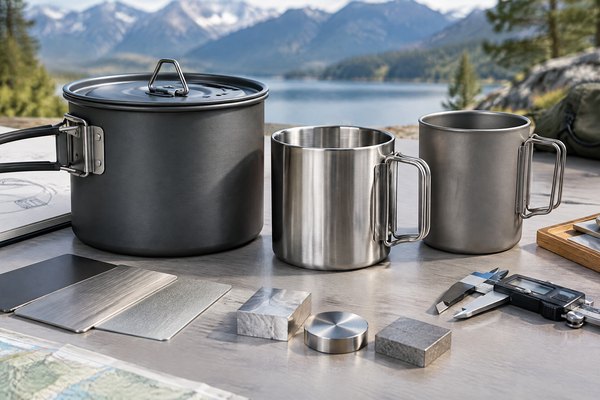
A useful sourcing decision starts with a written requirement that can be challenged, sampled, inspected, and approved.
Direct answer — what this guide delivers
If your buying decision is specifically about choosing a camping cookware retail packaging supplier, this guide gives the practical qualification steps you need: how to turn a product brief into factory-ready specifications, what to inspect on samples, how to verify manufacturing and packaging processes, which tests and third-party inspections to require, and how to manage change control and shipping for retail-ready cookware. Requirements depend on the exact product (materials, coatings, capacity) and the destination market; use the workflows below to avoid late surprises.
Why supplier qualification matters for camping cookware
Outdoor cookware is a functional product sold into demanding use-cases (camping, scouting, expedition kitchens, commercial catering). Mistakes in material choice, coating durability, nestability, or packaging design lead to returns, safety issues, or retailer delistings. Qualification reduces those risks by aligning the buyer, the OEM/ODM camping gear manufacturer, and any packaging supplier on measurable acceptance criteria before bulk production starts.
Key buyer outcomes from a good qualification process
- Repeatable quality that meets your retail display and shelf life needs.
- Packaging that protects nested or modular sets in transit, while meeting retailer merchandising and barcode requirements.
- Clear sampling and inspection gates so problems are caught before full production.
Supplier types and when to choose each
Different buyers have different end uses. Consider which supplier profile you need and include it in your RFQ or RFP.
- Commercial camp cookware supplier — choose when products will be used by lodges, hostels, or commercial camps and must withstand heavy daily use and higher-temperature dishwashing cycles.
- Expedition cookware manufacturer — choose when weight, packability, and specialized alloys are priority for backpackers or alpine expeditions.
- Large group camping cookware supplier — choose when you need high-capacity pots, stackable systems, and more robust handles for groups of 10–100 users.
- Scout camp cookware supplier — choose when simple, durable, low-cost designs are needed for youth programs that value ruggedness and easy cleaning.
Be explicit about the intended use in your RFQ so the OEM/ODM camping gear manufacturer proposes the right materials and processes.
Product specification and sample review workflow
A common cause of disputes is a vague product brief. Translate your commercial requirements into measurable specifications.
H3: Material and finish specifications
Specify base materials (e.g., 300-series stainless, aluminum alloy grade), wall thickness tolerances, handle materials and attachment methods (rivets, welding), and any coatings. For coated products, define coating type, target film thickness, and acceptable color and gloss ranges.
H3: Functional dimensions and nesting
Provide dimensional drawings for pots, lids, and nesting profiles. Include maximum allowable variation for diameter, height, and lip tolerances so lids and nested sets fit reliably. For multi-piece sets, specify assembly order and packing orientation.
H3: Sample review checklist
Ask for: production-intent samples (not prototype if possible), a sample packaging unit (retail carton with inserts), and photographs of in-process tooling or assembly jigs. During sample review, check for dimensional compliance, handle comfort, lid fit, finish, and readability of any laser etching or printing.
Factory testing and inspection you should require
The precise tests depend on material and market, but a combination of factory testing and independent verification is best practice.
H3: Common factory tests
- Dimensional checks against the drawing for a statistically relevant sample. Specify AQL levels in the contract.
- Coating adhesion and visual checks performed on each production batch when applicable.
- Nesting and packing trials to validate carton size and protective inserts.
H3: Camping cookware scratch resistance testing
If you sell coated or anodized surfaces, require documented scratch resistance testing on production-intent samples. Define the method (e.g., pencil hardness or other agreed method) and acceptance criteria. For retail cookware, surface aesthetics matter — document the number and severity of acceptable marks.
H3: Camping cookware third party inspection
Specify at what stage you will require camping cookware third party inspection: pre-production (initial sample), during production (mid-run), and pre-shipment. The inspection scope should include dimensional, visual, functional tests, and packaging verification. Third-party reports are your objective evidence for acceptance or rejection.
Packaging, merchandising and retail requirements
Retail packaging is not just a box — it is part of the product. A camping cookware retail packaging supplier must understand protection, merchandising, and logistics requirements.
H3: Retail packaging options and protective inserts
Decide whether you want custom printed cartons, clamshells, or hang-sell options. For nested cookware sets, internal molded trays (paper pulp, molded foam, or corrugated inserts) prevent abrasion and movement. Include drop-test and vibration criteria in your specification to confirm protection across transit.
H3: Barcodes, labeling and regulatory declarations
Provide the exact barcode (UPC, EAN) and label artwork with placement tolerances. For different markets, confirm the applicable labeling rules (e.g., language, CE/UKCA considerations, or local material declarations) with your compliance team and document them in the specification.
H3: Choosing a camping cookware retail packaging supplier
When you specify packaging, include these evaluation points in your supplier scoring: printing resolution and color matching capability, die-cut and folding accuracy, insert material options, environmental claims (recyclability), and lead time for carton tooling.
Production control, documentation and shipping preparation
Make documentation and process gates part of the contract.
- Production control: Require route sheets that list operation times, QC checkpoints, and responsible staff signatures for critical stages (e.g., welding, coating, final packing).
- Documentation: Ask for inspection reports, material certificates, and a packing list that mirrors the pallet configuration used for shipping.
- Shipping preparation: Specify pallet patterns, carton stacking limits, and any required pallet wrap or banding. For heavyweight multi-piece kits, require internal bracing to avoid deformation.
Include these requirements in your purchase order and insist on sample master cartons before mass production.
Inspection acceptance criteria and change control
Set objective acceptance criteria in the contract and define your change-control process.
- Acceptance criteria: Use drawings with tolerances, AQL levels for cosmetic and functional defects, and pass/fail definitions for tests such as camping cookware scratch resistance testing.
- Change control: Any change to tooling, materials, or packaging must be proposed in writing, accompanied by an updated sample and a risk assessment. Create a sign-off matrix specifying who in your organization and at the OEM/ODM camping gear manufacturer must approve changes.
Buyer decision table — which supplier profile fits your program?
| Buyer Need | Typical Supplier Profile | Why It Fits | Key Qualification Point |
|---|---|---|---|
| Lightweight backpacking sets | Expedition cookware manufacturer | Prioritizes weight, packability, titanium/aluminum alloys | Request weight per piece and nesting efficiency data |
| Heavy-use camp kitchens | Commercial camp cookware supplier | Built for frequent use and harsher cleaning | Ask for cycle-life or related durability test plans |
| Large youth or group programs | Large group camping cookware supplier / Scout camp cookware supplier | Focus on capacity, robustness, and simplicity | Verify handle strength, stackability, and cost per meal metrics |
| Retail shelf presentation | camping cookware retail packaging supplier (specialist) | Expert in merchandising, print, and protective inserts | Require carton test reports and color-match samples |
This quick comparison helps you prioritize which specialist competencies to require in your RFQ.
Sample timeline and key milestones for a typical RFQ to PO
- RFQ issued with full spec and packaging brief (week 0).
- Supplier questions and clarifications (week 1–2).
- Production-intent samples and packaging mock-ups (week 3–6).
- Sample approval and pre-production agreement on inspection plan (week 7–8).
- Tooling and trial run (week 9–12).
- First production run with in-line QC and camping cookware third party inspection at pre-shipment (week 13–16).
Timelines vary by complexity, materials, and whether custom tooling is needed. Confirm work-back schedules with the supplier and include penalties for missed milestones where appropriate.
Mid-article CTA — request a focused brief
If you want a supplier assessment or a formal RFQ template tailored to a cookware line, email a short brief to sourcing@camplume.com. Include:
- Target market and expected annual volume
- Product type (e.g., anodized aluminum backpacking set, stainless family set)
- Packaging preference (retail carton, blister, hanger)
- Any mandatory tests or retailer-specific requirements
CampLume is an OEM/ODM camping gear manufacturer and can respond with typical lead times, recommended test points, and a sample checklist. We do not provide legal compliance advice — confirm the applicable requirement for each destination market.
How to structure your incoming supplier quotes
Ask suppliers to quote separately for tooling, per-unit product cost, packaging, and any finishing or assembly. Require line-item pricing for different packaging options and FOB vs DDP terms. Request an MOQ and pricing tiers by banded volume.
Include contractual obligations for:
- Pre-shipment third-party inspection
- Sampling and approval gates
- Non-conforming material handling
This allows apples-to-apples comparison across commercial camp cookware supplier, expedition cookware manufacturer, and packaging specialists.
Practical checklist for final acceptance
- Production samples match the approved production-intent sample in material, finish and dimensions.
- Camping cookware scratch resistance testing results meet the agreed criteria for coated items.
- Third-party inspection report covers the agreed scope and is signed off.
- Retail packaging meets barcode, artwork and drop/vibration protection requirements.
- Shipping documentation (commercial invoice, packing list, any required declarations) is complete.
If any item fails, require a corrective action plan and re-inspection before shipment.
FAQ
Q: Do I need both factory testing and camping cookware third party inspection? A: Yes. Factory testing is necessary for process control; a camping cookware third party inspection provides independent verification the finished units meet your acceptance criteria.
Q: What is a reasonable AQL for cosmetic defects on retail cookware? A: It depends on your brand positioning. Premium brands typically accept tighter cosmetic AQLs; value brands accept more variance. Define the AQL numerically in your contract rather than relying on subjective language.
Q: How do I verify a supplier’s environmental packaging claims? A: Request material data sheets for carton and inserts, ask for waste and recycling statements, and require on-sample labeling. You can also request a letter describing their recycling sources and processing, but confirm the applicable requirement for your market.
Q: What sample types should I demand before tooling starts? A: At minimum: a production-intent sample and the proposed retail carton with internal inserts. If coatings or special alloys are used, include coated and uncoated samples for testing.
Q: Can the same supplier handle both cookware manufacturing and camping cookware retail packaging supplier work? A: Some OEM/ODM camping gear manufacturers offer integrated packaging services; others subcontract packaging. Specify whether you prefer an integrated supplier or separate specialists and include coordination responsibilities in the contract.
Q: How to protect myself from unexpected tooling changes? A: Require a formal change-control process and a sign-off matrix. For critical tooling, ask for trial runs and an agreed number of free revisions during validation.
Conclusion and final CTA
Qualifying a camping cookware retail packaging supplier is about translating usage and retail needs into measurable specifications, verifying those specs with production-intent samples and objective testing, and documenting acceptance gates in contracts. For retail success, don’t treat packaging as an afterthought — require mock-ups, transit testing, and barcode verification as part of the sample phase.
If you’d like a tailored RFQ template, supplier checklist, or a sample-evaluation worksheet for a cookware line (commercial, expedition, large-group or scout camp programs), email a short brief to sourcing@camplume.com with the product profile, target market, and expected volumes. CampLume is an OEM/ODM camping gear manufacturer and can assist with practical supplier-qualification workflows and sample-check recommendations.
Related CampLume resources
-
Read: How to Choose Camping Cookware Materials for a Private-Label Range for a connected sourcing decision.
-
Explore CampLume cookware options to compare a relevant product platform.
-
See the CampLume buyer FAQ for concise guidance on samples, MOQ, quality control, compliance and shipment preparation.
-
Discuss an OEM or ODM brief with CampLume when product configuration, custom branding or packaging needs to be scoped.
Project discussion
Need to apply this guide to a product programme?
Send your product category, target market, estimated quantity, current specification and packaging stage. CampLume will continue the discussion by email.
Email info@camplume.comSources and further reading