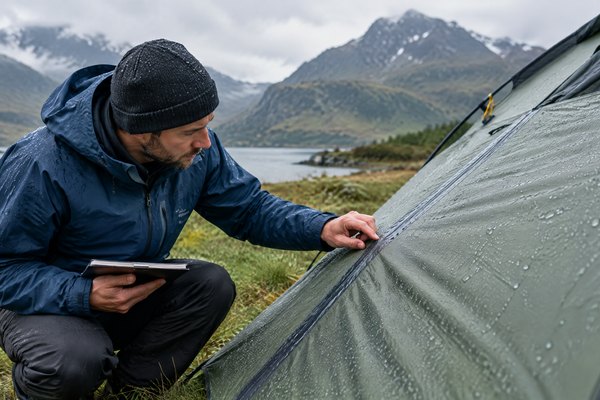
A useful sourcing decision starts with a written requirement that can be challenged, sampled, inspected, and approved.
Direct answer (short)
If you need an outdoor tent manufacturer for private-label or retail products, the minimum path to go from brief to production is: define target market and technical specs, shortlist suppliers who can meet capacity and compliance, run prototypes and lab tests, perform a factory audit or inspection, finalize packaging and logistics, and put a documented change-control process in place. The exact tests and paperwork depend on the product type and destination market; treat CPAI 84, EN ISO 5912 and other standards as destination-dependent requirements to confirm with your importer or testing partner.
Decide Your Product And Market Requirements
Before you approach any OEM camping tent manufacturer, gather the facts a supplier will need to price and plan production. Missing or vague information causes long lead times and rework.
Key inputs to prepare
- Product type and use case (backpacking tent, family dome, bell tent, glamping pavilion, event marquee, inflatable tents). Use clear language such as "4-person freestanding dome for European festival rental".
- Target market and import destination (US, UK, EU, etc.) — this determines labeling and compliance expectations (for example, confirm the applicable flammability or structural standards rather than assuming).
- Target retail price or landed cost and expected wholesale margin.
- Annual and launch order quantities (MOQ expectations) and desired delivery schedule.
- Basic BOM expectations: fabric denier and coating (e.g., 68D polyester 3000 mm PU), pole material (aluminum, steel), floor construction, zippers, vents, seams.
- Required certifications and tests (for example, if you need a CPAI 84 tent manufacturer or an EN ISO 5912 camping tent supplier, say so at RFQ stage).
Why this matters
Suppliers price raw materials, tooling, and labor differently depending on fabric choice, hardware grade, and whether you require third-party certification. If you plan to sell an OEM bell tent manufacturer product or work with an OEM glamping tent manufacturer, specify durability targets and service models (rental vs retail) — rental products need stronger seams and more abrasion-resistant fabrics.
How To Find And Shortlist Suppliers
Search and vet with narrow criteria. For tents there are three useful sourcing channels: specialized tent OEM/ODM manufacturers, textile/awning factories that offer tent lines, and regionally focused manufacturers with market credentials.
What to ask in the first outreach
- Examples of relevant products and sample photos showing seams, pole ends and fly attachments.
- Typical MOQs for that product type and lead time for a first production run.
- Current capacity: monthly completed tent sets for the product class you want.
- Which tests they routinely perform in-house and which they outsource (and whether they can work with your nominated lab).
Keywords and supplier claims to verify
If a supplier lists themselves as a CPAI 84 tent manufacturer or an EN ISO 5912 camping tent supplier, ask for test reports and the exact scope (which model, test date, lab that issued the report). Similarly, if you are specifically looking for an OEM bell tent manufacturer, OEM camping tent manufacturer, OEM glamping tent manufacturer or OEM inflatable tents capability, request recent production photos of those exact product styles and reference specifications.
Product Specification And Design Controls
Create a product specification that is actionable for engineering, purchasing and QC. Specifications should be a mix of objective measurements and functional requirements.
Materials And Coatings
Specify fabric denier, weave, waterproof rating (mm H2O), coating type (PU, silicone, or acrylic), and UV-stabilization requirements. For fabrics intended for rental or glamping, specify higher abrasion and UV resistance values.
Structural Specs And Load Cases
Define pole material, wall thickness, joint designs, expected wind rating and anchoring method. For inflatable tents, include working pressure, redundancy in bladders, and repair procedures.
Flammability, Chemical And Local Requirements
If you expect to sell in markets where flammability testing is expected, state that in the spec. For example, many buyers ask whether the supplier can work with a CPAI 84 tent manufacturer for soft goods intended for the U.S. market, or whether the supplier has experience supplying models that were tested to EN ISO 5912 camping tent supplier criteria for certain European markets. Confirm the applicable requirement with your importer or compliance partner; do not assume a single global standard applies to every tent.
Specification document checklist
- Full bill of materials (fabric, thread, zippers, tapes, poles, valves)
- Technical drawings with seam details and stitch types
- Performance targets (waterhead rating, UV protection, weight, pack size)
- Bill of labor and sewing operations required
- Packaging, labeling and barcode requirements
Samples, Prototypes And Factory Testing
Prototypes and controlled sample review are where most later production issues show up. Plan for at least two iterative prototypes: an engineering sample and a production sample.
Sample Review Checklist
- Check finished seams and seam allowance consistency.
- Inspect internal reinforcements and stress points (guyline attachments, pole sleeves, corner patches).
- Verify hardware fit: zippers operate under load, pole joints seat fully, valves seal for inflatable models.
- Weigh the item and compare to the spec; check pack size and pole length.
Factory Testing And In-House QC
Many factories will run basic in-house tests (waterhead tests, tape adhesion, zipper pull tests) before sending samples. Ask for documented results and photos of test setups. In-house testing reduces iteration time but confirm equipment and test procedure.
Third-Party Testing
For regulatory or retailer programs, you will likely need third-party lab testing. Examples include flammability tests, hydrostatic head tests, or fabric chemical tests. If you require a CPAI 84 tent manufacturer or an EN ISO 5912 camping tent supplier, include the test scope and the lab accreditation requirement in your RFQ.
Mid-Article CTA: Send Your Requirements
If you are evaluating outdoor tent manufacturer, email info@camplume.com with your product category, selling market, estimated quantity, current specification and packaging brief. Ask for a documented reply that separates assumptions and deviations from the quotation.
Factory Qualification, Capacity And Change Control
Visit or audit suppliers before awarding large orders. If an on-site visit is not possible, use a third-party inspection company to perform a supplier audit.
Quality Systems And Capacity
Ask about the factory's quality system (ISO 9001 is common but not universal for small tent factories), production lines dedicated to tents, and the ability to segregate tooling and fabric rolls for your SKU. Request current lead times and a calendar of booked capacity for the quarter you want to ship.
Documentation And Traceability
Insist on documented material traceability (lot codes for fabric rolls and trims) and as-built records for each production batch. These records are essential for root-cause analysis when problems occur.
Change Control
Define a change-control process in writing before first production. At minimum, require: written approval for material substitutions, documented approval steps for tooling changes, and a predefined sample approval step for any engineering changes. For repeat orders, set tolerances that do not require a complete re-approval for minor dimensional changes.
Packaging, Shipping Preparation And Import Documentation
Packaging is part of product performance — poor packing can damage tents in transit and lead to high returns. Document your requirements in the specification.
Packaging checklist
- Inner pack: polybag with desiccant and label details (SKU, batch, country of origin).
- Master carton dimensions and allowed stack weight.
- Palletization pattern and preferred pallet type (EUR, chep, or wooden export pallet).
- Any retail-ready packaging or hangtags and their placement.
Shipping and export documentation
Confirm what the supplier will provide (commercial invoice, packing list, certificate of origin, any specific lab test reports). For some markets and retailers, you may need additional documentation; list those in the RFQ.
Supplier Comparison Table (Buyer Decision)
| Supplier Type | Best For | Typical Strengths | Typical Risks |
|---|---|---|---|
| Small local tent maker | Small runs, fast iterations | Flexible on samples, lower MOQ | Limited capacity, spotty documentation |
| Established OEM/ODM camping tent manufacturer | Retail brands, private label | Production scale, documented QC, experience with OEM bell tent manufacturer or OEM camping tent manufacturer projects | Longer lead times to start, higher MOQ |
| Specialized certified supplier (CPAI 84 or EN ISO 5912) | Compliance-heavy markets | Ready test reports, lab relationships | Higher unit cost, limited design flexibility |
Mid-article CTA
If you want a precise quote and feasibility feedback, email a one-page brief to info@camplume.com with: product type, target market, annual qty, target FOB or landed cost, required tests/certifications (e.g., CPAI 84, EN ISO 5912) and your target launch date. CampLume is an OEM/ODM camping gear manufacturer; we will confirm feasibility and outline the sample and testing plan.
FAQ
Q: How many samples will I need before production?
A: Expect at least two iterations: an engineering sample to validate form and function, and a production sample made with production sewing methods and nominated materials. If you require third-party testing, budget for an extra sample for the lab.
Q: Can a factory substitute trim or hardware during production?
A: Only with your written approval. Define acceptable substitute items, how substitution is documented, and who pays for rework if the substitute fails performance checks.
Q: What tests should I ask for when sourcing a CPAI 84 tent manufacturer?
A: Ask whether the supplier has provided tents for CPAI 84 testing and request copies of test reports for equivalent constructions. Confirm the lab accreditation and test scope; CPAI 84 applies primarily to combustible components in camping tents and similar soft goods—confirm the standard applicability with your compliance advisor.
Q: Are inflatable tents harder to manufacture than sewn tents?
A: They require different engineering controls: welded seams for air bladders, durable valves, and pressure testing. When you request OEM inflatable tents, ensure the supplier has the necessary welding equipment and pressure-test fixtures.
Q: Do I need factory audits for small orders?
A: For small orders you may accept a supplier with strong photo evidence and sample results, but you should still insist on pre-shipment inspection and clear documentation. For ongoing business, plan a supplier audit within the first year.
Conclusion
Choosing the right outdoor tent manufacturer is a practical engineering and supply-chain exercise: define a clear spec, require staged samples and testing, verify factory capacity and documentation, and write a change-control process before you commit. If you need an OEM bell tent manufacturer, OEM camping tent manufacturer, OEM glamping tent manufacturer or suppliers experienced with OEM inflatable tents, make those priorities explicit in your RFQ and request evidence of similar work.
Ready to start? Send a concise one-page brief to info@camplume.com with your product type, target market, volumes, target cost and required tests (e.g., CPAI 84, EN ISO 5912) and CampLume will provide a feasibility response outlining sample steps, estimated lead times, and a factory qualification checklist.
Final CTA: Email info@camplume.com with your product category, target market, estimated quantity, current specification and packaging stage. Request a documented response that identifies assumptions, open evidence and the next approval gate.
Related CampLume resources
-
Read: Inflatable Tents vs Pole Tents: Which Format Fits Your Camping Product Range? for a connected sourcing decision.
-
Explore CampLume tents options to compare a relevant product platform.
-
See the CampLume buyer FAQ for concise guidance on samples, MOQ, quality control, compliance and shipment preparation.
-
Discuss an OEM or ODM brief with CampLume when product configuration, custom branding or packaging needs to be scoped.
Project discussion
Need to apply this guide to a product programme?
Send your product category, target market, estimated quantity, current specification and packaging stage. CampLume will continue the discussion by email.
Email info@camplume.comSources and further reading