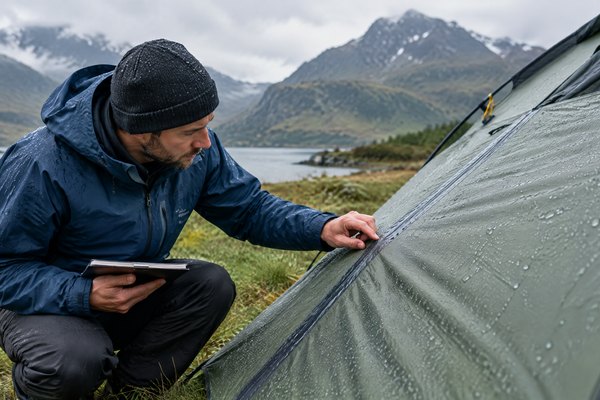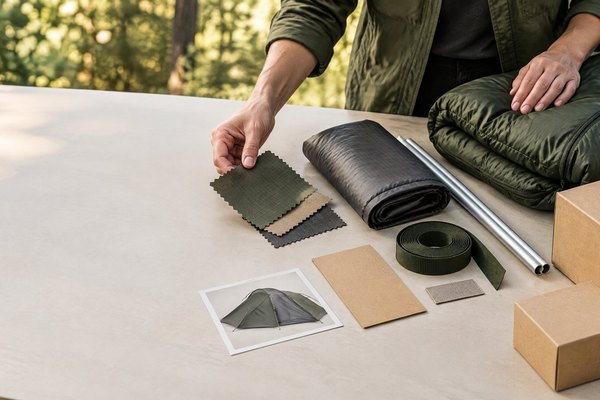
A useful sourcing decision starts with a written requirement that can be challenged, sampled, inspected, and approved.
What Is the Real MOQ for Private Label Camping Gear?
Introduction: the MOQ question is really a production-design question
A private label camping gear MOQ is not a universal number printed on a supplier price list. It is the smallest order configuration that allows a specific product, in a specific material and colour, with specific branding and packaging, to move through a viable supply chain. A tent, sleeping bag, cooler, camp chair and fire-starting accessory can all have very different constraints, even when the finished-unit quantity looks similar.
For US and European outdoor brands, a commercially convenient order may not be operationally buildable. A low finished-goods quantity can still trigger custom webbing, fabric-colour, logo-tool or packaging commitments. Ask not “What is your MOQ?” but “What is the lowest-risk order architecture for this launch?”
MOQ planning also belongs beside compliance and traceability planning. A brand selling a product under its own name or trademark can assume manufacturer obligations under the EU General Product Safety Regulation (GPSR), including an internal risk analysis and technical documentation before placing the product on the market. The documentation must be kept available for market-surveillance authorities for ten years. [2] In the United States, manufacturers and importers of general-use products subject to applicable CPSC rules must certify compliance in writing, and the importer issues the General Certificate of Conformity for overseas production. [1] This article is a sourcing guide, not legal advice; obtain product-specific compliance and customs advice where needed.
Quick Answer
The real MOQ is the highest binding minimum among platform, materials, colour, logo process, packaging and proposed SKU mix, checked against the factory’s ability to run, inspect and pack consistently. It may apply per model, colour, size, logo treatment, printed package or agreed assortment; those commitments are not interchangeable.
Before comparing quotations, establish the base-platform minimum; changes that create a separate minimum; whether each minimum is measured in units or material consumption; which SKUs can share inputs; and what needs approval before production. A purchase order does not replace an approved specification, artwork, packaging proof, sample and inspection standard.
Working definition: A minimum order quantity (MOQ) is the minimum commercially and operationally viable quantity for a defined order configuration. It is not automatically a statement about the supplier’s overall capacity, product quality, or willingness to support a new brand.
Ask for three quotations: a stock-input platform; the same platform with branding and standard packaging; and a fully customised version. For each, request the MOQ, unit price and exact inputs, colours and SKUs that may be combined.
Buyer Context and Risk Framing
Why a headline MOQ can be misleading
A supplier may quote a low chair or dry-bag MOQ while its retail box, woven label or fabric colour has a higher one. Another may quote a higher unit MOQ but let colours share a fabric booking. Ask for the unit of minimum and scope of aggregation.
The risk is committing cash to the wrong inventory shape: too many variants, obsolete packaging or components that cannot be used on a later revision. Treat MOQ as an inventory-risk boundary. The target is the lowest configuration that still supports repeatable materials, verified specifications and replenishment.
Who owns the product decision?
Private label ranges from a stock product with a printed logo to a materially altered product. Under GPSR, a person placing a product on the market under its own name or trademark is treated as a manufacturer. [2] Decide who maintains the technical file, controls revisions, retains evidence and manages changes. Do not assume a generic report covers an altered product, material, user or market.
For US imports, country-of-origin marking must be considered during packaging design rather than after goods arrive. CBP states that every foreign-origin article entering the United States must be legibly marked with the English name of the country of origin unless an exception applies, and that marking should remain legible and conspicuous through handling. [3] It is more efficient to show proposed origin marking on the packaging artwork and product-label drawing during approval than to correct it during shipment inspection.
The Core Decision Framework: Find the Binding Minimum
Start with the product platform
A product platform is a repeatable product design and manufacturing route. For a tent, it can include the pattern set, pole architecture, fabric family, stitching sequence, hardware and pack-out. For a chair, it can include frame geometry, fabric panels and load-bearing joints.
Platform private label changes approved elements such as a logo, hangtag, colour or carton artwork. It usually reduces uncertainty because the supplier has a defined bill of materials (BOM), process flow and packing arrangement. Ask which parts are fixed, what is available and whether changes affect fit, durability, safety or verification.
Semi-custom work changes inputs such as colour, webbing, zipper puller or bundle. Full custom work changes the specification, such as pattern, material, size or hardware. As customisation increases, upstream material and component constraints are more likely to govern MOQ.
| Project route | Typical buyer change | Minimums most likely to matter | Planning question |
|---|---|---|---|
| Platform private label | Logo, hangtag, stock colour selection, carton label | Finished-unit run, decoration, stock availability | Which stock inputs and colours are genuinely available for this order? |
| Semi-custom | New colourway, custom webbing, zipper puller, bundle contents | Fabric or component lot, colour treatment, artwork setup, SKU allocation | Which changes can share one material or component order across the range? |
| Full custom / ODM | New pattern, material build, dimensions, hardware or moulded part | Development, tooling, material conversion, validation samples, production run | What is fixed before sampling, and what evidence is needed after a change? |
Map every input that can set a minimum
Use a minimum map rather than a single MOQ field. List the finished product and each input that cannot be substituted without approval. The real orderable minimum is often the highest non-shareable constraint. A useful planning expression is:
Orderable MOQ = the highest applicable minimum for the selected platform, material, colour, branding, packaging and SKU allocation, subject to approved specifications and production feasibility.
This is a decision model, not a pricing formula. Ask the supplier to state each constraint beside the part name and its basis: units, metres, kilograms, rolls, cartons, print sheets or sets. “MOQ: 500” without that basis is not usable for margin or inventory planning.
Decide whether the order mix is viable
An order mix is the allocation across models, colours, sizes and bundles. A 1,000-unit order split across multiple models, colours and sizes is not one production run if inputs and pack configurations differ. Build the mix from critical material inward: assign platform volume, check colour and size allocation, then confirm which labels, logos, inserts and cartons are shared.
| MOQ driver | Why it changes the minimum | Evidence to request in the RFQ | Buyer control point |
|---|---|---|---|
| Platform and process | Cutting, welding, sewing, assembly and packing may have a viable run threshold. | Platform code, fixed process steps, proposed aggregation rule. | State whether the order may combine variants. |
| Material | Mills and converters may sell by roll, colour, coating run, weight or construction. | Material specification, consumption per unit, stock or conversion status. | Approve substitutions only in writing. |
| Colour | A new dye, coating, powder coat or masterbatch may require a separate lot. | Colour standard, matching method, units or material required per colour. | Reduce initial colour count where demand is unproven. |
| Branding | Embroidery, print, heat transfer, debossing, woven labels and moulded marks use different setups. | Artwork format, location drawing, method, setup and per-design minimum. | Lock artwork version and placement before bulk production. |
| Packaging | Printed boxes, inserts, manuals, polybags and carton labels may each be separate components. | Dieline, material, language versions, print minimum and pack-out. | Design for shared cartons or neutral outer packaging where sensible. |
| SKU order mix | Sizes, colours and bundle contents fragment demand and can create non-shareable components. | SKU-by-SKU allocation and minimum per variant. | Buy depth in fewer launch variants before expanding. |
Customisation can lower unit price and raise total exposure
Consider total commitment, not only unit price. A lower price may require more material, printed packaging or variants than the launch can absorb. Standard components or neutral packaging can reduce early inventory exposure.
Ask for a split between recurring unit costs and one-time or recoverable costs, such as artwork preparation, setup, tooling, samples, plates and inspections. Do not assume a “one-time” cost is optional, refundable or transferable; confirm ownership, retention and reuse conditions.
A useful comparison is cost per sellable unit, not simply factory price per unit. Divide the full committed cost—including unavoidable component residuals, development, testing, inspection, freight-related packaging and expected write-offs—by the units you expect to sell. This can make a smaller, more standardised launch configuration preferable to a larger, highly customised order.
The Six MOQ Variables in Practice
Material: specify the construction, not a marketing shorthand
“Recycled polyester,” “ripstop,” “waterproof” and “aluminium frame” are not complete purchasing specifications. Identify material structure, relevant weight or thickness, coating or finish, colour reference, approved equivalence and the applicable acceptance requirement. A BOM is the controlled list of these inputs.
Material MOQ risk rises with nonstock construction, custom colour or coating, unusual width or a dedicated component. Confirm whether excess material is reserved, charged, discarded or reusable only with written approval. Control substitutions through documented change management.
Colour: treat every colourway as a mini forecast
A colour can affect fabric dyeing, coating, powder coating, webbing, thread, zipper tape, trim and packaging. Identify the colour reference and viewing conditions; digital screens and unapproved photographs are unreliable standards. Confirm whether matching uses a physical standard, an agreed colour-system reference or an approved swatch.
When demand is uncertain, start with one core colour and an optional second that shares inputs. Forecast every colour at component level: two colours can require two independent material commitments even when total quantity is unchanged.
Branding: distinguish decoration from product identity
A logo may be printed, heat-transferred, embroidered, woven, debossed, laser-marked or moulded. Specify the method, logo file version, dimensions, colour treatment, placement, orientation and approval standard rather than approving “logo included.”
Branding must coexist with required markings and product information. For US imports, design origin marking to remain visible and durable. [3] For EU consumer products, build documentation, traceability and safety information into the launch workflow. [2] Verify destination-specific information and language requirements before approving labels or instructions.
Packaging: a separate engineered product
Retail packaging protects, merchandises, carries information and supports traceability. It can be the hidden MOQ driver: a custom box, multilingual manual, insert, sticker and carton label can each have a print minimum.
Keep outer cartons neutral where practical. Consider common product packaging with market-specific labels only where appropriate. Control dielines, material, print version, barcode location, packing count, carton dimensions and required marks. Confirm wording and markings for the destination; this guide does not determine legal packaging compliance.
Scenario Planning: Convert an MOQ Into a Launch Plan
Model choices before requesting a final quote. The following are planning patterns, not CampLume offers, recommended quantities or product-performance claims.
Scenario A: platform tent with brand-led differentiation
A brand wants a two-person tent platform with a logo, neutral carry bag, custom hangtag and carton sticker. Confirm whether the colour, logo, hangtag and sticker have independent minimums.
Preserve the platform’s approved poles, fabric construction and pack-out while limiting bespoke elements. Request one quote for a stock colour plus branding and another for a new colour. If colour is binding, compare a single-colour launch with a two-colour launch.
Scenario B: sleeping-bag range with fragmented sizes and temperatures
A sleeping-bag range can behave like several projects: shell, lining, fill, zipper, hood, stuff sack, label and carton can vary by size or rating. Map units by SKU and shared-input consumption; confirm whether the smallest allocation is viable.
Prioritise depth in limited size and temperature combinations instead of a broad grid of shallow variants. Ask whether stuff sacks, care labels, hangtags or master cartons can be common across variants without compromising the specification or required information.
Scenario C: chair programme with colour and carton constraints
A folding chair has frame, textile panels, webbing, feet, carry bag, label and carton. A powder-coat colour, custom textile, branded bag or printed carton may each set a constraint. Ask whether a common carton with colour-specific label is possible and how residual frame or fabric is assigned.
In every scenario, the supplier’s response should reveal the binding constraint, the remaining constraints and the exact quantities that can be mixed. If the response provides only a number, request a revised quotation table. A professional MOQ discussion makes the source of the number auditable.
Ready to turn a concept into comparable quotes? Send a concise RFQ through CampLume’s site RFQ form or email info@camplume.com. Ask for platform, semi-custom and fully customised configurations, with the applicable MOQ stated for each model, colour, logo method, packaging format and SKU mix.
RFQ Preparation: Give the Supplier Enough to Quote the Real MOQ
An RFQ (request for quotation) enables suppliers to price the same brief. It should distinguish confirmed requirements from open decisions and prevent attractive but non-comparable quotes.
Start with destination markets, launch window, sales channel, expected mix and forecast. Provide a product specification or reference-sample description, including dimensions, use, material and component requirements, colours, branding, packaging, barcodes and languages. State whether you seek an existing platform or design work.
The most valuable RFQ question is: “Please list every MOQ that applies to this quotation, its basis, whether it can be shared across SKUs, and the consequence of ordering below it.” That wording asks the supplier to disclose material, decoration and packaging constraints rather than presenting one undifferentiated number.
| RFQ field | What to provide | What to ask the supplier to confirm |
|---|---|---|
| Product definition | Product type, reference images, dimensions, intended use, target market. | Existing platform availability, fixed features, changeable features and open engineering points. |
| BOM and components | Material construction, hardware, trim, labels and approved alternatives. | Per-unit consumption, component MOQ, stock status, lead-time dependencies and change-control process. |
| Colour and branding | Colour references, logo version, decoration method, placement drawing and finish expectation. | MOQ per colour and per artwork, colour-matching method, sample approval route and permitted variance. |
| Packaging and documents | Dieline or concept, pack count, labels, barcode, manuals and destination languages. | Minimums per printed item, carton configuration, available common packaging options and artwork deadlines. |
| SKU mix and forecast | Units by model, colour, size, bundle and destination; an indicative repeat-order forecast. | What can mix, what cannot mix, residual component handling and price breaks by configuration. |
| Quality and verification | Critical-to-quality points, requested tests, sample requirement and inspection scope. | In-process controls, available evidence, proposed testing scope, inspection timing and remedy process. |
Ask for a quote that can be compared
Require quotes by configuration, not as one blended number. Identify product revision, currency, unit price, minimum by scope, tooling or setup assumptions, packaging, sampling, quality, delivery and payment terms, validity and exclusions. Claims of compliance or testing require evidence tied to the correct version, material and market.
Create a decision log recording the current revision, unresolved choices, owner, evidence and MOQ effect. It prevents different teams from approving different versions and gives the supplier a reference when an input changes.
Factory Testing, Inspection and Shipment Preparation
Build verification into the MOQ decision
Small orders still need verification. Establish a plan before bulk production that names the product revision, test item, method or standard if applicable, sample basis, acceptance criteria, responsible party and report required.
For US general-use products subject to CPSC requirements, a General Certificate of Conformity must be based on product testing or a reasonable testing program. A material change that could affect compliance may require retesting and an updated certificate. [1] Do not treat an old report for a similar product as automatic coverage.
For EU consumer products, GPSR requires design and manufacture consistent with the general safety requirement, plus an internal risk analysis and technical documentation. The record may include risk analysis, mitigations, test reports and relevant standards. [2] Confirm who supplies each record and how the brand accesses the controlled version.
Use samples to answer specific production questions
A pre-production sample is the approved reference for materials, colour, construction, branding, packaging and set-up. For a tent, inspect pole-to-hub fit, seams, zipper, reinforcement, component count and instructions. For a chair, inspect frame finish, fabric fit, stitching, locking action and bag. For a sleeping bag, inspect dimensions, fill distribution, zipper, seams, labels and sack fit.
These are example checkpoints, not universal standards or promises of performance. The buyer should state the observable acceptance criteria and the intended method of verification. If the product needs a laboratory test, name the question the test must answer and ask the laboratory or supplier to confirm the appropriate method for the actual product and destination.
Plan shipment inspection and pack-out checks
A final inspection is a sampling activity, not a substitute for supplier process control. ISO 2859-1:2026 defines acceptance-sampling plans for inspection by attributes and AQL-indexed single, double or multiple sampling schemes. [4] AQL (acceptance quality limit) is an inspection-plan index used to establish sample and acceptance decisions; it is not a promise that every unit is defect-free. Agree the lot definition, inspection level, defect classifications, sample size, acceptance and rejection thresholds, re-inspection process and reporting format before production.
For camping gear, inspect workmanship, component count, operation, dimensions, colour, logo placement, label content, packaging, barcode scan and carton markings. For setup-dependent products, verify that instructions, included parts, orientation markers and packed component list match the approved sample.
At shipment release, compare the purchase order, packing list, carton marks and approved packaging file. For US imports, confirm applicable origin marking; CBP notes that unmarked articles can face additional duty. [3] For solid-wood pallets, crates or dunnage, ask the logistics provider to confirm phytosanitary treatment and marking. ISPM 15 covers raw-wood packaging and dunnage, not processed wood such as plywood. [5]
A shipment packet may include the final invoice, packing list, booking details, carton specification, inspection report, approved-sample record, revision records and agreed testing or compliance documentation. The exact set depends on product, market and shipping arrangement.
Related CampLume resources
Use these related pages to turn What Is the Real MOQ for Private Label Camping Gear? into a more complete, supplier-ready decision:
- Read: How to Negotiate MOQ with an Outdoor Gear Manufacturer Without Compromising Quality for the next connected sourcing decision.
- Review the CampLume private-label process to compare a suitable CampLume product platform.
- See the CampLume buyer FAQ for concise guidance on samples, MOQ, quality control, compliance and shipment preparation.
FAQ
1. What is a normal private label camping gear MOQ?
There is no reliable normal quantity across camping gear. The meaningful MOQ is the highest applicable minimum for the selected product platform, materials, colour, branding, packaging and SKU allocation. Request each constraint separately.
2. Can I combine colours to reach the MOQ?
Sometimes. Colours can be combined only where the supplier confirms that the shared platform and materials permit it. A custom dyed fabric, coated frame or colour-specific packaging may still require its own minimum.
3. Is a logo-only order the same as a custom product order?
Usually not. A logo on an existing platform can use an established production route, while a new material, pattern, component or functional specification can create separate development, validation and sourcing constraints. Confirm the scope in writing.
4. Does a larger MOQ always mean a lower total cost?
No. A larger run may lower the quoted unit price but increase excess material, obsolete packaging, warehousing and unsold inventory risk. Compare total committed cost per expected sellable unit.
5. What should I ask about samples before placing an order?
Ask what sample type will be supplied, which revision it represents, whether it uses production-intent materials and branding, what changes are still open, and which approvals or tests are required before bulk production.
6. Can a supplier’s previous test report cover my private-label product?
Only if the supplier and qualified compliance advisers confirm that it covers the actual product version, materials, intended market and applicable requirements. A material or design change can affect whether prior evidence remains relevant. [1] [2]
Conclusion: Treat MOQ as an order architecture, not a negotiation tactic
The real MOQ is the point where platform, materials, colourways, branding, packaging and SKU mix become viable as one controlled production order. A credible response identifies the binding minimum, permissible combinations, residual or setup costs and required approvals.
Begin with a narrow, commercially coherent launch configuration. Ask for separate platform, semi-custom and fully custom scenarios. Keep the BOM, artwork, packaging and sample approval under revision control. Then attach testing, inspection, traceability and shipment preparation to the same product version. This approach produces a quotation that can be compared and an MOQ that can be managed.
For a project-specific discussion, email info@camplume.com with your product brief, intended markets, target SKU mix, branding requirements and packaging concept. Request that each applicable MOQ be stated by its exact basis.
Project discussion
Need to apply this guide to a product programme?
Send your product category, target market, estimated quantity, current specification and packaging stage. CampLume will continue the discussion by email.
Email info@camplume.comSources and further reading