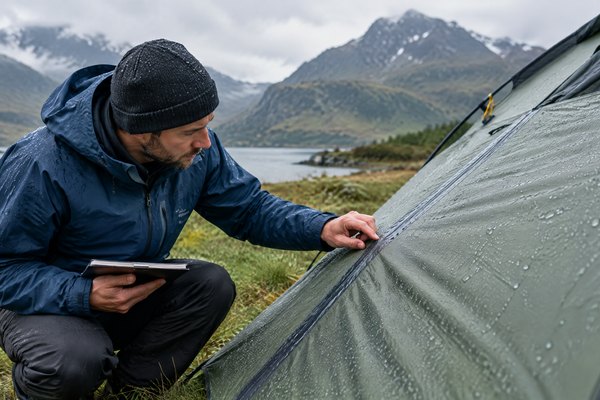
A useful sourcing decision starts with a written requirement that can be challenged, sampled, inspected, and approved.
Direct Answer Introduction
If you are sourcing bell tents for glamping sites wholesale, this guide lays out the purchase-preparation steps that matter: how to define product specifications, manage sample reviews, set realistic lead times, inspect factory testing and packaging, arrange shipping-ready documentation, and control post-order changes. Exact requirements depend on the tent model, target market, and order size; use the checklists below to translate your site needs into a clear supplier brief and to evaluate camping shelter wholesale options efficiently.
1. Define The Product Specification Up Front
A clear specification sheet saves time and prevents misunderstandings. For bell tents, your spec should combine performance requirements and commercial details.
Key elements to include:
- Model name and intended use case (e.g., luxury glamping, backcountry multi-night stays, family campsite). Primary keyword relevance: bell tents for glamping sites wholesale.
- Materials: canvas weight (gsm), PU or silicone coating, thread type, zipper ratings.
- Structural parts: pole material (aluminum, steel), stake type, guyline specs, connector types.
- Footprint, peak height, room layout and internal fittings (awning, inner divider, flooring option).
- Climate and fire-safety needs: water column rating, breathability, recommended seam-sealing method. Confirm the applicable requirement for fire performance with your destination market authority.
- Packaging and labeling requirements, including hangtags, barcode placement, and multilingual manuals.
- Marking, CE/UKCA/EN or other marking needs: specify that documentation should match destination market rules, and confirm the applicable requirement.
H3: Spec Template (Minimum Required Fields)
- SKU and tentative order size
- Tent model image or sketch
- Material and finishing spec (fabric gsm, coating type)
- Hardware spec (pole diameter, coating)
- Colorways and printing method
H3: Sizing And Site Planning
- Internal usable floor area vs external footprint
- Peak height and clearance for on-site furniture
- Door orientations for sun/wind exposure planning
H3: Packaging And Sustainable Options
- Inner packing (polybag, paper wrap), master carton size and weight
- Biodegradable or recycled material options
- Palletization preference and per-pallet unit count
2. Sample Review Workflow: From Pre-Production To Approval
A staged sample process reduces risk. For bell tents, expect at least three stages: prototype sample, pre-production sample (PPS), and production sample (PS).
- Prototype sample: used to validate design, fittings and fabric feel. This can be a single tent or a detailed mockup of seams and fittings.
- Pre-production sample (PPS): made to final spec with nominated materials and hardware; used for final sign-off before mass production.
- Production sample (PS): pulled from the production line to confirm ongoing quality.
H3: Managing A camping tent sample order
- Request clear labelling: sample version, date, and any deviations from the spec.
- Plan a physical onsite review or a live video inspection to look at seams, stitch density, zipper performance, and pole fit.
- Document all observations in a sample-review checklist and request corrective actions if tolerances are exceeded.
Practical tip: budget for multiple sample iterations. A well-specified PPS reduces costly change requests after production starts.
3. Quality Control, Factory Testing And Inspection
Buyers should set measurable acceptance criteria rather than general statements. Example criteria include seam strength, water column rating, sewing density per 10 cm, and pole bending resistance.
- Factory testing: confirm whether the supplier performs in-house tests (e.g., water spray, seam strength). Do not assume third-party certification unless provided.
- Third-party testing: for specific markets you may require independent lab tests. Confirm the applicable requirement before commissioning tests.
- Incoming material inspection: check fabric rolls, zippers, and poles against the spec upon arrival at the factory.
H3: Onsite Inspection Stages
- During production (inline inspection): sample tents are checked every certain quantity (e.g., per 50 units) to avoid systemic defects.
- Final inspection (AQL): agree the inspection standard and sampling plan (AQL level) in the contract.
- Packing inspection: check carton integrity, unit counts, labels and included manuals.
Change control: capture any approved deviations in a signed change notice. Small specification changes during a run should have documented cost and lead-time impacts.
4. Lead Time Planning And Production Scheduling
Understanding camping tent manufacturing lead time is crucial for planning installations and seasonal launches.
- Typical factors that affect lead time: raw-material availability (canvas, poles), order size, customization level (private label trims or printed logos), and factory queue.
- Provide your supplier with target ship date, but build in buffer time for sample approvals, material procurement, and shipping.
Practical timeline example (illustrative only; confirm for each order):
- Prototype/sample development: 2–4 weeks
- Pre-production sample and approval: 1–2 weeks
- Manufacturing run for medium orders (hundreds): 6–10 weeks
- Larger or highly customized orders: add 2–6 weeks depending on complexity
Explicitly ask for camping tent manufacturing lead time in your request for quotation; suppliers should provide a timeline tied to order milestones (material booking, production start, inspection, shipment).
5. Packaging, Labeling And Shipping Preparation
Packaging choices affect landed cost, on-site handling and guest experience. Your camping tent packaging supplier should be able to meet retail and wholesale needs.
- Individual unit packaging: typically a carry bag (fabric or reinforced PE), inner polybag, and instruction manual. For glamping, consider premium carry bags with logo printing and better closure systems.
- Master cartons: confirm units per carton, carton dimensions and gross weight to calculate volumetric freight.
- Palletization: specify whether you require stretch-wrapping, slip-sheeting or custom pallets for port handling.
H3: Documentation For Shipping
- Commercial invoice, packing list with SKU-level counts, and any required certificates or test reports.
- If the destination requires additional documentation (e.g., import licenses, product safety declarations), specify this early so the supplier can prepare.
H3: Working With A camping tent packaging supplier
- Request packaging mockups or samples to verify print accuracy and strength.
- If you plan retail placement, request retail-ready packaging options with UPC or EAN barcode placement.
Mid-Article CTA: Send Your Requirements
If you are evaluating bell tents for glamping sites wholesale, email info@camplume.com with your product category, selling market, estimated quantity, current specification and packaging brief. Ask for a documented reply that separates assumptions and deviations from the quotation.
6. Pricing, Quotations And Private Labeling
When you ask suppliers for a camping tent bulk order quotation, be precise so quotes are comparable.
Quote inputs you must provide:
- Exact spec and BOM (fabric gsm, pole specs, hardware list)
- Order quantity and target packaging configuration
- Lead time requirement and expected delivery port or EXW
- Any tests or labeling requirements
- Private-label requests: hangtags, printed carry bags, or sewn labels
H3: Evaluating A camping tent private label quote
- Ask suppliers to separate costs: unit manufacturing, printing/logo set-up, packaging, and sample charges.
- Clarify tooling or screen/set-up fees for printed fabrics or logos and whether those are one-time costs or amortized over the order.
- Confirm minimum order quantities for private-label trims or custom colorways.
H3: Negotiating Commercial Terms
- Clarify payment terms, deposit amounts, and release of final payment relative to inspection or shipping documents.
- Define responsibility for freight booking, insurance, and duties (Incoterms).
Comparison Table: Quick Buyer Decision Factors
| Decision Factor | Lower-Cost Option | Higher-Tier Option | Best For |
|---|---|---|---|
| Fabric | 8–10 oz canvas (lighter coating) | 10–14 oz canvas, PU/Silicone coat | Budget vs longevity/weather resistance |
| Poles | Galvanized steel | T6 aluminum | Portability vs durability |
| Packaging | PE carry bag | Branded canvas bag + box | Cost-sensitive vs retail-ready |
| Lead Time | Short run with stock fabrics | Custom colors/prints | Fast restock vs bespoke design |
7. Sample Costs, Returns And Change Control
Sample charges and policies vary. A typical camping tent sample order will include fees for fabric, labor and shipping; these may be refundable against a production order.
- Ask suppliers to list sample costs separately and state whether fees will be offset against the production invoice.
- Define a timeframe for sample approval and set a clear process for documented changes after approval.
Change control best practices:
- Use a simple change request form that specifies the change, effective unit cost impact, and revised lead time.
- Require written approval for any non-trivial change before implementation.
Mid-Article CTA — Request A Short Email Brief
If you want a quick, comparable quote, email sourcing@camplume.com with a one-paragraph brief: model(s) needed, target order quantity, desired delivery month, intended market (US/UK/DE/FR), and whether you need private-label printing. CampLume will respond with a checklist and an estimated camping tent bulk order quotation and typical camping tent manufacturing lead time for the request.
8. Product Application, On-Site Setup And After-Sales
Consider how tents will be used at the site and specify accessories accordingly.
- Site anchors and stake kits: some glamping sites prefer heavy-duty anchors or screw-in augers for windy locations.
- Flooring and platforms: specify whether tents will sit on gravel, deck, or grass; recommend protective ground sheets or integrated floor options.
- Accessory SKU planning: inner tents, furnishings, lighting points and ventilation accessories all affect packing and installation instructions.
After-sales service
- Agree on spare parts availability (poles, zippers, canvas patches) and lead times.
- For large sites, consider stocking a small spare-parts kit on-site to reduce downtime.
FAQ
Q1: What minimum order quantity should I expect for bell tents for glamping sites wholesale? A1: Minimums vary by supplier and customization level. Plain-stock models often have lower MOQs, while custom colorways, printed fabrics, or private-label trims increase MOQ. Ask suppliers to quote MOQ per SKU and for the whole line.
Q2: How long does a camping tent sample order usually take? A2: A standard prototype sample can take 2–4 weeks; a PPS typically 1–2 weeks once materials are available. Confirm with the supplier and factor in international transit time for physical samples.
Q3: What documents will I receive before shipment? A3: Expect a commercial invoice, packing list, and any pre-agreed test reports or declarations. If your market requires specific compliance documents, confirm these at RFQ stage so the factory can prepare them.
Q4: Can I get a camping tent private label quote without committing to production? A4: Yes—suppliers can provide a private label quote based on your spec. Expect separate line items for printing set-up and sample charges.
Q5: What should I inspect during a pre-shipment inspection? A5: Check unit counts, seam and stitch quality, fabric weight and coating consistency, hardware fitment, carton labeling, and packaging integrity. Use an agreed AQL standard in your contract.
Q6: How do I manage specification changes that occur after an order is released? A6: Use a formal change-control process: document the requested change, supplier impact assessment, cost and lead-time implications, and obtain written approval from both parties before implementing.
Final Conclusion and Next Steps
Sourcing bell tents for glamping sites wholesale requires precise specifications, staged sample approvals, clear quality acceptance criteria, and realistic lead-time planning. Use the spec checklist and sample workflow above to convert your site design into an actionable supplier brief. When requesting prices, always ask for a detailed camping tent bulk order quotation that separately lists unit costs, tooling or print set-up fees, and packaging costs.
Ready to proceed? Email sourcing@camplume.com with your brief (model, quantity, delivery month, target market, and private-label needs). CampLume, as an OEM/ODM camping gear manufacturer, will provide a tailored checklist, camping tent sample order options, and an initial camping tent private label quote and estimated camping tent manufacturing lead time so you can evaluate suppliers and plan your season with confidence.
Conclusion: Turn the Brief Into a Controlled Buying Decision
The practical aim of a bell tents for glamping sites wholesale programme is not to collect broad assurances; it is to connect the approved product configuration, sample, evidence, packaging, inspection and shipment release to the same buyer brief. That record helps the product, sourcing, quality and logistics teams resolve assumptions before they become a production or delivery problem.
Final CTA: Email info@camplume.com with the product category, target market, estimated quantity, current specification and packaging stage. Request a response that identifies assumptions, open evidence and the next approval gate.
Related CampLume resources
-
Read: Inflatable Tents vs Pole Tents: Which Format Fits Your Camping Product Range? for a connected sourcing decision.
-
Explore CampLume tents options to compare a relevant product platform.
-
See the CampLume buyer FAQ for concise guidance on samples, MOQ, quality control, compliance and shipment preparation.
-
Discuss an OEM or ODM brief with CampLume when product configuration, custom branding or packaging needs to be scoped.
Project discussion
Need to apply this guide to a product programme?
Send your product category, target market, estimated quantity, current specification and packaging stage. CampLume will continue the discussion by email.
Email info@camplume.comSources and further reading