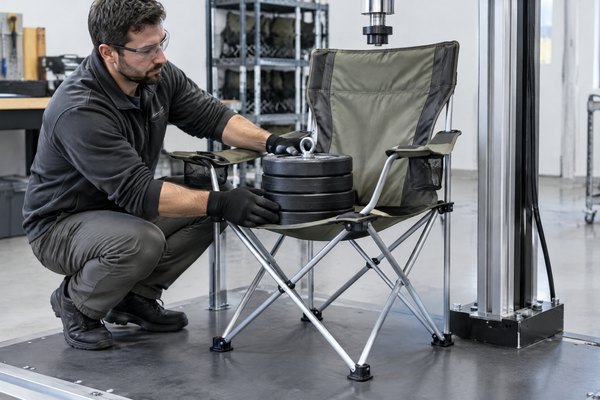
A useful sourcing decision starts with a written requirement that can be challenged, sampled, inspected, and approved.
Direct-answer introduction
If you are preparing to buy a camping chair and table set wholesale, the most important early decisions are clear product specifications, a defined sample review process, and a shipping and documentation plan tied to your chosen trade terms. Get specifications, sample approval, factory inspections, packaging and container loading right up front, and you reduce unexpected delays, cost overruns and quality disputes during the first production run.
Decide Product Specifications And Commercial Requirements
A tightly written product specification (spec) is the single best prevention for disputes. For camping chair and table set wholesale, your spec should include functional, dimensional and commercial requirements.
Key specification checklist
- Materials: fabrics (denier, coating), frames (aluminum grade or steel thickness), fasteners and foot caps.
- Dimensions and weight: folded/unfolded size, packed size, net/gross weights.
- Functional requirements: load rating per chair, leg spread and stability, locking mechanisms, table flatness and weight capacity.
- Finish and color tolerances: fabric color codes, powder coat or anodizing requirements.
Branding, packaging and accessories
Specify printed labels, hangtags, instruction leaflets, UPC/barcodes, carry bags, and any assembled accessories (cup holders, straps, tool kit). That level of detail affects lead time and unit cost.
Market compliance and certifications
Different markets have different requirements for labeling, chemical limits, or packaging waste. As an OEM/ODM camping gear manufacturer, CampLume can build to market requirements, but confirm the applicable requirement for your destination market and list it in the spec (e.g., required marking, restricted substances, recyclable packaging targets).
Sample Process And Evaluation
A formal camping furniture sample order and review process reduces iteration between prototypes and full production.
How to structure a camping furniture sample order
A camping furniture sample order should include: the finished sample (production-intent materials and coatings), a bill of materials (BOM), manufacturing drawings, and an inspection checklist. Label each sample with a unique sample ID and intended production date/version.
Sample review checklist
- Visual: seam quality, color match, branding placement.
- Fit and function: folding/unfolding, locking action, table levelness.
- Durability cues: weld quality, stress points, fabric bonding.
- Packaging mock-up: does the carry bag and box protect parts and meet retail requirements?
Pre-production vs. final sample
Request a pre-production sample after tooling is complete if the first sample required significant changes. A final pre-shipment sample (PSS) should match the production line output and be kept as the quality reference.
Factory Testing, Inspection And Change Control
Define which factory tests and inspection points you require before production and at shipment.
Factory testing and checks to request
- Functional load test for chairs and table (document the required load and number of cycles to run during testing).
- Material verification (check frame alloy and fabric specifications against BOM).
- Dimensional checks against drawings.
Do not treat factory testing as a substitute for independent inspection — use it to catch issues early.
Third-party inspection and pre-shipment inspection
Specify the scope of third-party inspections: sample acceptance level (AQL), critical defect list, and quantity check. Pre-shipment inspection should verify finished goods match the approved sample and packaging requirements.
Change control process
Include a written change-control clause in your purchase order: any material change after sample approval requires written approval of updated samples and may affect lead time and price.
Pricing Terms: camping furniture EXW vs FOB
Your choice of Incoterm changes who controls and pays for what. Common B2B options for camping furniture wholesale are EXW and FOB.
- EXW (Ex Works) means the seller makes goods available at the factory; the buyer arranges export clearance, carriage and insurance. Use EXW if you have freight forwarder and local export experience and want control of shipment.
- FOB (Free On Board) means the seller clears export and loads the goods onto the named vessel; the buyer pays ocean freight and insurance from the port of shipment. FOB is more common for buyers who want the supplier to manage factory-to-port movement.
Camping furniture EXW vs FOB affects cost allocation, responsibility for export documentation and who coordinates camping furniture container loading. State your preferred term and the named port in the order.
Packaging, Palletization And Camping Furniture Container Loading
Packaging and loading determine how many sets you fit in a container and the risk of in-transit damage.
Packaging strategy for chair and table sets
- Nested or modular packaging: can chairs be nested inside the table or stacked to save volume?
- Protective components: edge protectors, foam, poly bags to prevent abrasion.
- Retail vs bulk packaging: retail-ready packaging usually requires more space and protection.
Palletization and labeling
Use consistent pallet patterns and discrete pallet labels that match the packing list for faster port handling. Pallets should be strapped and shrink-wrapped; declare maximum pallet height to match container loading rules.
Camping furniture container loading notes
Work with your forwarder and the factory to develop a loading plan that maximizes carton count while avoiding point loads. For mixed cartons (chairs and tables packed separately), create a stowage plan and mark cartons with "Top" and "Fragile" where needed. Confirm whether palletized or floor-loaded arrangements affect unit protection.
| Decision Factor | Choose EXW If... | Choose FOB If... |
|---|---|---|
| Control of shipment | You want your forwarder to handle everything | You want the supplier to manage export and port handling |
| Experience with export | You have import/export team or agent | You prefer supplier to organize export clearance |
| Cost visibility | You want to control freight negotiation | You want a simpler supplier-managed process |
Shipping Lead Times And Import Documentation
Plan lead time from sample approval to goods on vessel, and confirm documentation requirements for import.
Typical camping furniture lead time breakdown
- Sample order: 2–4 weeks (prototype or production sample depending on complexity).
- Tooling and pre-production: 2–6 weeks for small tool changes; longer for new molds.
- Production run: depends on quantity but typically 3–8 weeks for sizeable wholesale orders.
- Packing and inspection: 3–7 days.
- Port booking and container loading: 3–7 days depending on port congestion.
These ranges are indicative; your precise camping furniture lead time depends on order size, customization, and seasonal factory load.
Camping furniture import documentation checklist
For most shipments you should expect to receive or arrange the following documents (confirm specifics with your customs broker):
- Commercial invoice with unit and total values.
- Packing list detailing carton dimensions, weight and content counts.
- Bill of lading or airway bill (issued by carrier).
- Certificate of origin if your tariff preference or buyer program requires it.
- Any product-specific documents required by destination customs or retailers (e.g., safety declarations, test reports).
If you choose EXW vs FOB, note that responsibility for export documents shifts; confirm who prepares the export documents and who pays associated fees.
Insurance and claims handling
Decide whether you will insure the cargo and on what terms (e.g., CIF buyer-arranged insurance or buyer purchasing marine cargo insurance). Clarify claims process and holdback provisions in the contract.
Managing A Successful First Wholesale Purchase
A clear workflow reduces risk: spec -> sample -> PO with terms -> production monitoring -> pre-shipment inspection -> container loading -> final documentation.
Purchase order and payment terms
Include exact spec references, approved sample ID, packaging instructions, incoterm (EXW/FOB), payment milestones and penalties for delivery delays. For initial orders, many buyers accept a deposit plus balance before shipping or against documents.
Production monitoring and inspection
Schedule in-line inspections during critical stages (first-article, mid-run) and a final pre-shipment inspection. Use photo reports and video where helpful.
Handling nonconforming goods and rework
Define acceptance criteria and remedies: rework at factory, discounted acceptance, or replacement. Include a mechanism for dispute resolution.
Pricing, MOQ And Camping Furniture Wholesale Considerations
Wholesale pricing is driven by materials, labor, packaging and logistics. MOQ influences tooling amortization and unit price.
Negotiation levers
- Standardize materials and finishes to reduce cost variability.
- Increase MOQ to lower unit price, but balance inventory risk.
- Simplify packaging for bulk shipments to save space and cost.
Forecasting and reorder cadence
Plan reorders around lead time and sales velocity, and maintain a safety stock to avoid stockouts. Consider phased shipments if you need to ship an initial quantity quickly and the remainder later.
Mid-Article CTA: How To Send A Clear Brief
To get a fast, accurate quote and sample plan from CampLume, email a concise brief to info@camplume.com. Include:
- Product name and short description (e.g., 2-piece folding chair + side table set)
- Target unit price and incoterm (EXW or FOB) and named port
- Target MOQ and annual forecast
- Intended market and any required certifications or labeling
- Required sample: production-intent vs prototype, and deadline for samples
- Packaging preference (bulk/palletized or retail-ready)
Expect an initial response with clarifying questions within 48 business hours.
FAQ
Q: What is a reasonable camping furniture lead time for a first OEM/ODM order? A: Typical total lead time from final sample approval to shipped container is commonly 6–12 weeks depending on quantity, customization and peak season. Shorter timelines are possible for repeat orders when tooling and materials are ready.
Q: When should I choose EXW vs FOB for camping furniture? A: Choose EXW if you want to use your freight forwarder and control export arrangements. Choose FOB if you prefer the supplier to manage export clearance and loading to the vessel. The right option depends on your logistics capability.
Q: What should a camping furniture sample order include? A: A sample order should include the finished sample, BOM, manufacturing drawings, packaging mock-up and an inspection checklist. Label samples clearly and tie them to the production PO.
Q: What documents are typically required for importing camping furniture? A: Prepare a commercial invoice, packing list, bill of lading or airway bill, and any market-specific documents (e.g., certificate of origin, safety declarations). Confirm exact requirements with your customs broker.
Q: How do I reduce damage during container loading? A: Use protective inner packaging, correct palletization, load plans that avoid point loading, and clear labeling. Also, require the factory to photograph loaded containers and secure appropriate lashing.
Q: Can I change specs after placing the PO? A: Changes after PO acceptance should follow your agreed change-control process. Expect cost and lead-time impacts; require written approval and a revised sample for material changes.
Conclusion and Next Steps
Buying a camping chair and table set wholesale requires disciplined specification, a formal sample and inspection workflow, and clarity about shipping terms and documentation. Early decisions about camping furniture EXW vs FOB, sample approval, packaging design and container loading shape cost, lead time and risk.
If you want a practical next step, email a brief to info@camplume.com with the items listed in the mid-article CTA. CampLume is an OEM/ODM camping gear manufacturer experienced in handling sample orders, production planning, container loading coordination and buyer documentation support—ready to prepare a quotation and sample plan once we receive your brief.
Final CTA: Email info@camplume.com with your product category, target market, estimated quantity, current specification and packaging stage. Request a documented response that identifies assumptions, open evidence and the next approval gate.
Related CampLume resources
-
Read: What Should Buyers Check Before Ordering Wholesale Camping Chairs? for a connected sourcing decision.
-
Explore CampLume furniture options to compare a relevant product platform.
-
See the CampLume buyer FAQ for concise guidance on samples, MOQ, quality control, compliance and shipment preparation.
-
Discuss an OEM or ODM brief with CampLume when product configuration, custom branding or packaging needs to be scoped.
Project discussion
Need to apply this guide to a product programme?
Send your product category, target market, estimated quantity, current specification and packaging stage. CampLume will continue the discussion by email.
Email info@camplume.comSources and further reading