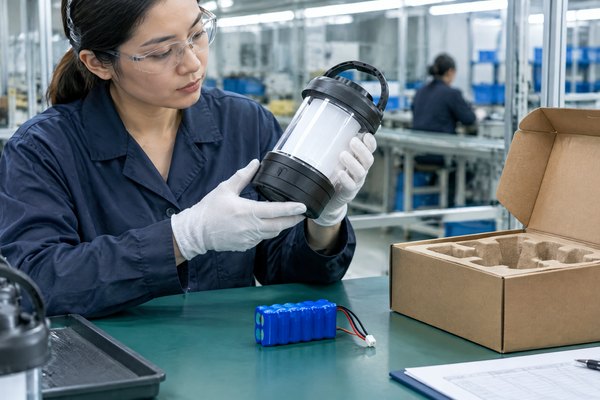
A useful sourcing decision starts with a written requirement that can be challenged, sampled, inspected, and approved.
Direct answer
To qualify a camping lantern supplier efficiently, use a staged validation process: define the product specification and target market, confirm factory capabilities for the required product family, request targeted samples, verify testing and inspection evidence for the destination market, review packaging and shipping readiness, and lock in documentation and change control before production. Requirements vary by product type (e.g., rechargeable LED vs. fuel lantern) and destination market; treat every item as a project with phased gates.
Why Supplier Qualification Matters for Camping Lanterns
A well-structured supplier qualification reduces launch time, avoids expensive recalls, and preserves brand equity. For outdoor lighting, risks include electrical safety failures, IP theft from poor tooling control, inadequate ingress protection for weather resistance, and packaging that fails during sea freight. When you evaluate a camping lantern supplier, focus on both product performance and the operational controls that keep production consistent.
Qualification Checklist: Stages and Outputs
- Stage 0 — Business Fit: NDA, commercial terms, sample lead times, and minimum order quantity (MOQs)
- Stage 1 — Technical Fit: capability to meet your specification (lumens, runtime, battery type, IP rating, weight)
- Stage 2 — Prototype & Sample Review: functional sample, EMC pre-test (if relevant), drop/water tests
- Stage 3 — Factory Capability & Test Evidence: on-line testing, calibration, batch records
- Stage 4 — Pack, Ship & Documentation: retail and bulk packaging, labelling for import, MSDS and user manuals
- Stage 5 — Pre-production and Change Control: sample approval, pilot run, agreed non-conformance remediation
Each stage should produce documented acceptance criteria signed by both buyer and supplier.
Technical Specification And Design (What To Define First)
Clear specs shorten iterations. For lanterns, a specification should include electrical, mechanical and user-experience metrics plus environmental requirements.
Electrical And Optical Specs
- Target lumen output (high / low / candle modes) and chromaticity (CCT)
- Battery chemistry, capacity, and charging method (USB‑C, solar, replaceable cells)
- Runtime at each output level and time-to-full-charge
- Driver type and dimming behaviour (PWM frequency if audible noise matters)
Mechanical And Environmental Specs
- Weight and packed dimensions
- Material and finish (ABS, aluminum, silicone seals)
- IP/IK ratings target or equivalent performance goals (describe test methods rather than a number alone if necessary)
- Operating temperature range and storage requirements
User Experience And Application
- Switch/interface type and tactile requirements
- Carrying options and hang points for glamping or group use
- Intended product application (backpacking ultralight vs. car-camping vs. emergency kit)
Defining these up-front helps you compare proposals from an outdoor LED light supplier versus an outdoor camping light manufacturer that specializes in heavy-duty metal housings.
Samples, Testing And Acceptance Criteria
A robust sample review process is the single most effective way to reduce surprises in mass production.
Sample Types To Request
- Proof-of-concept prototype (functional but not production quality)
- Production-intent sample (same components, tooling and labeling planned for mass runs)
- Stress sample (run a full soak/charge/discharge cycle and environmental exposure)
Sample Review Protocol
- Functional checklist: lumens, runtime, button response, charging behaviour
- Mechanical checklist: seams, lens fit, fastener torque, gasket compression
- Packaging checklist: shelf layout, barcodes, instruction quality
Third-Party And In-House Testing
Confirm which tests you will require from the supplier and which you will outsource. For example, simple runtime and waterproof checks can be done in-house while EMC or formal safety certification for a particular market may require accredited labs. Ask the supplier for test reports relevant to your destination market; remember test standards and acceptance thresholds depend on that market and the product's electrical class.
Factory Capability, Quality Systems And Inspections
Evaluating the factory is about processes, not just equipment. An outdoor camping light manufacturer may have CNC metalwork and anodizing lines; an outdoor LED light supplier might prioritize SMT and optical assembly. Match the supplier’s lines to your BOM.
Key Capability Questions
- Do they produce similar products in-house (injection molding, SMT, battery assembly)?
- Is tooling ownership clear and documented? Who pays for tool changes?
- Do they maintain calibration records for test equipment used in production testing?
On-Site Tests And Inspection
- Inspect the sample test stations: consistent test procedure, pass/fail logging, and fixture maintenance
- Confirm routine IQC for components (incoming inspection) and FQC for finished product
- Plan for a supplier audit covering quality management, traceability and sub-supplier control
If you need a factory that will act as your custom camping light manufacturer, validate their experience delivering prototypes into volume and ask for process flow diagrams showing bottlenecks and capacity.
Packaging, Labelling And Shipping Preparation
Packaging is frequently underestimated. Poor packaging causes damage and returns even when the product is solid.
- Define retail and bulk packaging specs: materials, drop test requirements, and thermal exposure limits
- Label content for destination market: CE/UKCA, recycling marks, and language requirements — confirm the applicable requirement for each target country
- Palletization and carton layout: optimize cartons per pallet to reduce freight costs and handling damage
Discuss responsibilities for packing lists, commercial invoices, and certificates of origin early. If you’re importing as a reseller, ensure the supplier understands your declared value and HS codes.
Product Application & Market Positioning
Different buyers need different product families. For example:
- An emergency preparedness lantern supplier focuses on long-term storage, easy operation and wide temperature range
- A glamping lighting supplier will prioritize aesthetic finishes, warm CCT, and integrated dimming for mood lighting
- An outdoor event portable lighting supplier needs modularity, quick deployment and often higher lumen output with durable housings
When qualifying suppliers, ask them to demonstrate case studies or examples in the exact application you care about. If the supplier is an emergency preparedness lantern supplier, request performance data relevant to long shelf-life and battery retention.
Pricing, Lead Times And MOQ Negotiation
Balance cost versus risk. Lower unit price often correlates with higher MOQs or longer lead times. Verify:
- Tooling amortization and how it affects the quoted price
- Lead time for a first commercial production run and for replenishment
- Supplier flexibility for buybacks or slow-moving inventory clauses
Include payment terms that align incentives: a small deposit for tooling, milestone payments for POs, and retention on final acceptance after inspection.
Buyer Decision Table (Quick Comparison)
| Supplier Type | Strengths | Risks | Best Use Case |
|---|---|---|---|
| Direct Outdoor Camping Light Manufacturer | Full control over tooling and QA | Higher MOQs and longer lead time | Own-brand production at scale |
| Trading Company / Middleman | Quick sourcing of varied SKUs | Limited production control, hidden margins | Quick market tests and small SKUs |
| Custom Camping Light Manufacturer (OEM/ODM) | Design support, tooling, and scale | Requires detailed spec management | Private-label products with custom branding |
Use this table when deciding whether to pursue a direct manufacturer, a trading partner, or a full custom camping light manufacturer relationship.
Mid-Article CTA — Brief Request
If you want a targeted supplier evaluation, email a 3-point brief to sourcing@camplume.com with these items:
- One-paragraph product description (including intended application: e.g., backpacking, glamping, emergency kit)
- Target markets (countries) and expected annual volumes
- Key must-haves (battery chemistry, lumen target, packaging specs, certifications required)
CampLume is an OEM/ODM camping gear manufacturer; provide these three items and we will respond with an initial capability summary and proposed next steps.
Documentation, Traceability And Change Control
Documentation must be actionable. Require the supplier to provide:
- BOM with approved sources and alternates
- Assembly instructions and in-line test procedures
- Batch records and non-conformance logs
Change control: agree a formal change-notice process for material substitutions, tooling changes, and firmware updates (if your lantern includes microcontrollers). No production changes should proceed without documented buyer approval. For complex products, require sample revalidation when a critical-component supplier changes.
Common Inspection Points Before Shipment
- Functional test: all modes and charging sequences verified
- Visual inspection: cosmetic standards per agreed AQL levels
- Labeling and manual check: language and safety text verified for each destination
- Packaging test: sealed carton integrity and pallet stability
Plan for pre-shipment inspection by an independent inspector or your own QA team for the first few POs.
FAQs
Q: What minimum tests should I ask for on an outdoor lantern? A: Start with functional runtime and charging, waterproof/ingress checks, drop tests, and a battery safety assessment. Add EMC or electrical safety lab testing as required by the destination market.
Q: How many samples are reasonable to request before P1 (production run 1)? A: Request at least three production-intent samples: one for your internal test lab, one for a third-party test house if needed, and one retained by the supplier. For firmware features, ask for multiple samples to assess consistency.
Q: How do I handle BOM component shortages or substitutions? A: Require pre-approval for component substitutions via a change-control form. Insist on equivalent or better spec and request a qualification sample when the change affects performance or compliance.
Q: Can a glamping lighting supplier also support emergency lantern designs? A: Possibly, but confirm their experience with long-term storage, battery retention, and simplified user interfaces. Different applications have different failure modes; validate with relevant samples.
Q: What documentation does an importer typically need? A: Commercial invoice, packing list, certificate of origin, safety or compliance certificates where required, and user manuals in the destination language. Confirm exact import documentation with your customs advisor.
Final Considerations And Conclusion
Qualifying a camping lantern supplier is a project: treat each SKU as a controlled process that moves through specification, sample review, factory verification, packaging review, and documented change control. Match supplier capabilities to product application: an outdoor LED light supplier may be ideal for high-efficiency rechargeable lanterns; an outdoor event portable lighting supplier suits large-format, high-lumen systems; while a dedicated emergency preparedness lantern supplier will understand storage lifecycles and user simplicity.
CampLume acts as an OEM/ODM camping gear manufacturer and can provide capability summaries once you supply a concise brief. For a rapid first assessment, email sourcing@camplume.com with a one-paragraph product description, target markets and expected volumes. We will outline recommended next steps, required tests and a sample plan so you can make an informed supplier selection.
Next step: prepare your product brief and define the single most important acceptance criterion for your lantern (e.g., 8‑hour runtime at mid-mode, IPX7 waterproof, or a 3-year battery shelf life). Send it to sourcing@camplume.com and request an initial capability and lead-time estimate tailored to your destination markets and launch timeline.
FAQ
What should be defined before sourcing a rechargeable camping light?
Set the intended use, brightness and runtime expectations, charging interface, battery configuration, ingress-protection target, accessories, retail packaging, target markets and documentary requirements in one controlled brief.
Can one battery document cover every lantern variation?
Only if its scope clearly matches the battery, electronics, configuration and shipment arrangement in question. Confirm document applicability before using it in a market or freight decision.
What should a pre-production lighting sample prove?
It should represent the proposed bulk configuration and allow review of operation, charge behavior, controls, labeling, accessories, pack-out and the documentation plan. Record approved and open points before mass production.
What is useful at final shipment inspection?
Verify the approved configuration, visible appearance, functional checks, packaging, barcodes and carton markings. Where batteries are involved, confirm that the agreed shipment documents and handling assumptions are in place.
Final CTA: Email info@camplume.com with your product category, target market, estimated quantity, current specification and packaging stage. Request a documented response that identifies assumptions, open evidence and the next approval gate.
Related CampLume resources
-
Read: What Should Buyers Check When Sourcing Rechargeable Camping Lanterns? for a connected sourcing decision.
-
Explore CampLume lighting options to compare a relevant product platform.
-
See the CampLume buyer FAQ for concise guidance on samples, MOQ, quality control, compliance and shipment preparation.
-
Discuss an OEM or ODM brief with CampLume when product configuration, custom branding or packaging needs to be scoped.
Project discussion
Need to apply this guide to a product programme?
Send your product category, target market, estimated quantity, current specification and packaging stage. CampLume will continue the discussion by email.
Email info@camplume.comSources and further reading