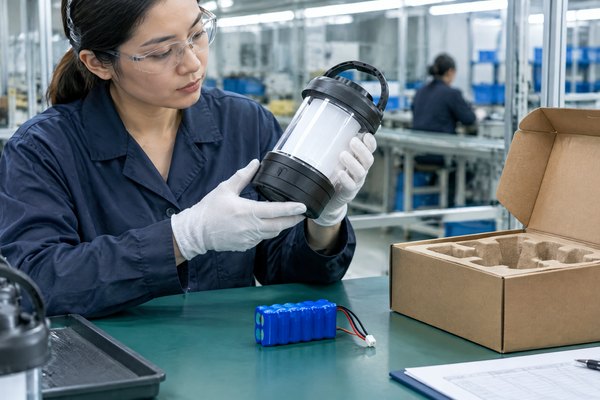
A useful sourcing decision starts with a written requirement that can be challenged, sampled, inspected, and approved.
Direct Answer Introduction
If you need an RV awning lights supplier, the most effective qualification combines a clear product specification, sample testing on intended RV platforms, factory capability checks for LED and battery assembly, and documented shipping controls for lithium batteries. For buyers importing to the US, UK, EU or other markets, confirm the applicable regulations for electrical safety, electromagnetic compatibility and transport of lithium cells; these requirements change by product and destination market.
1. What Buyers Need From an RV Awning Lights Supplier
Start by turning your concept into an unambiguous specification. That spec is the single most valuable document during supplier selection and keeps sample review, factory testing, documentation and change control aligned.
Product Specification Checklist
- Mechanical: housing dimensions, mounting method for the awning rail, ingress protection rating (IP), material and finish.
- Optical: lumen output per meter, beam spread, color temperature, CRI target, dimming levels and control method (switch, remote, app).
- Electrical: input voltage range (12V DC, 24V DC, or AC adapters), peak and continuous current, reverse-polarity protection.
- Power and battery options: integrated USB rechargeable lanterns, external USB-C power banks, or hardwired LED strips. Define whether the product is a primary fixed awning lamp or includes detachable lanterns.
- Safety and compliance: expected test marks (confirm the applicable requirement), labeling, and user manual languages.
- Packaging and accessories: mounting brackets, adhesive channels, cable lengths, screws, and any retail-grade blister or retail carton.
Application and End-Use Considerations
Document the RV contexts where the fixture will be used: over an open door, along a slide-out, near cooking appliance zones, or in wet climates. These use cases determine IP rating, heat dissipation needs, and whether the product requires additional protections such as thermal cutouts or specific gaskets.
2. Factory Capabilities To Verify
When you evaluate a camping LED light factory or camping lantern factory, look beyond capacity metrics. Focus on processes that matter for awning fixtures: precision extrusion or injection molding, LED binning and management, driver selection, and battery handling for rechargeable variants.
Production Processes and Equipment
- Injection molding and aluminum extrusion capabilities for housings and heat sinks.
- Automated SMT and LED binning lines for consistent color and lumen output.
- Driver assembly lines and burn-in ovens for early failure detection.
- Manual assembly stations for sealed products where torque control and seal application are needed.
Battery Handling and Shipping Control
If the supplier offers USB rechargeable lantern supplier services or assembles products with integrated lithium cells, confirm their procedures for cell sourcing, assembly, and pre-shipment testing. For any product with lithium batteries, shipping is a special control area. Ask the supplier whether they manage UN38.3 rechargeable camping lantern shipping documentation and packaging procedures, and whether they segregate battery and non-battery shipments if required by the carrier or destination.
3. Sample Review and Testing Workflow
Supplier qualification requires a staged sample program and a documented testing protocol.
Pre-Production Samples and Evaluation
Request functional pre-production samples that match your final BOM. Evaluate fit, finish, mechanical mounting to a representative awning rail, optical uniformity and electrical stability over the rated input range.
Factory Testing and Inspection Steps
- Incoming inspection for critical parts: connectors, LED bins, lenses, and batteries.
- In-process checks: torque on screws, seal compression, and proper potting or gasketing for IP-rated housings.
- End-of-line tests: power-on routine, LED output verification, thermal checks under rated input, and run-in to detect infant mortality.
- Documentation: request test reports and production lot traceability.
Third-Party and Market-Specific Testing
For final market compliance, confirm which external tests are required for your destination market and product scope. For example, some buyers will request independent verification of electrical safety or EMC; others will require transport testing for batteries. Confirm the applicable requirement rather than assuming a single universal standard.
4. Packaging, Labeling, and Shipping Preparation
Packaging affects retail presentation and safe transport. For portable options such as detachable LED lanterns and USB power banks, packaging and prep steps differ from fixed awning strips.
Packaging Options and Transit Considerations
- Bulk industrial packs for B2B installs versus retail cartons with printed instructions.
- Protective inserts to prevent vibration damage to LEDs or battery terminals.
- Separate packaging for cells when legal shipping constraints require cells to be removed or declared.
Documentation and Shipping Controls
- Confirm whether the supplier prepares the necessary shipping documentation for lithium batteries if you order integrated rechargeable products. For UN38.3 rechargeable camping lantern shipping, carriers will expect specific declarations and test evidence if cells or batteries are present.
- Verify labelling for CE/UKCA (where applicable), country-of-origin marks, and battery warnings.
5. Quality Management, Change Control, and Traceability
A camping lantern manufacturer should provide traceability from critical components to finished goods and a clear change control process.
Incoming Material Control and Traceability
Ask for a parts traceability policy that links LED bin codes, driver batch numbers and battery cell lot numbers to finished product serials or production lot codes. This makes field corrections and recalls manageable.
Change Control Process
Require a documented change-control procedure for any modification to BOM, process or supplier. Key elements you should expect:
- Written change request and impact analysis.
- Sample validation for any material or process change that could alter optics, thermal behavior or safety.
- Approvals requiring both manufacturer and buyer sign-off before mass production.
6. Supplier Audit and On-site Checks
A targeted factory audit shortens risk. You do not need a full auditor’s checklist on the first pass, but verify the items that directly affect product performance and shipping.
What To Inspect During A Visit
- Assembly areas for cleanliness and ESD controls where electronics are handled.
- Burn-in and environmental test rooms to verify the claimed capacity and process control.
- Battery assembly or storage areas and the supplier's policy for cell receipt, quarantine and testing.
- Final inspection procedures, sampling plans, and how nonconformances are handled.
Remote Audit Alternatives
If you cannot visit, request time-stamped video walkthroughs of critical operations, detailed SOPs for assembly and testing, and sample test records for recent batches.
7. Commercial Terms That Reduce Risk
Negotiate terms that match your tolerance for risk and cash flow:
- MOQ and staged ramping: start with a low-volume pilot production run for final verification.
- Payment terms: split payments tied to milestones—tooling, pre-production, and shipment.
- Warranty and returns: define acceptable failure rates and return logistics for installed awning fixtures.
- Lead times and capacity commitments: confirm seasonal impacts on production.
Decision Table: Supplier Type Comparison
| Criterion | OEM/ODM Camping Lantern Manufacturer | Trading Company | Local Assembler / Installer |
|---|---|---|---|
| Direct control of production | High | Low | Medium |
| Sample lead time | Moderate | Fast | Fast |
| Ability to change BOM | High | Low | Medium |
| Component traceability | High | Low | Variable |
| Price per unit at scale | Competitive | Variable | Higher |
| Best when | You need custom specs and traceability | You need fast sourcing | You need local fitting/service |
Mid-Article CTA: Request a Quick Sourcing Brief
To evaluate CampLume as a potential OEM/ODM partner, email a one-page brief to sourcing@camplume.com with these items:
- Target product type and primary use (fixed awning light, detachable USB lantern, integrated with USB-C power bank)
- Key specifications: length, lumen target, IP rating, power source
- Target destination market and expected compliance needs
- Forecasted first-year quantities and target lead time
- Request for samples or a production pilot
Expect a confirmation within 48 hours describing next steps for sample review and a suggested test matrix.
8. Special Considerations for USB Charging and Power Banks
Buyers sourcing combined solutions should qualify two distinct streams: the lighting electronics and the battery/power bank subsystem. If you plan to buy from a USB rechargeable lantern supplier or a USB-C power bank supplier, verify how the supplier handles interoperability and safety.
Interoperability and Cable Standards
Confirm USB charging specifications, cable types and negotiated power delivery (PD) profiles for USB-C power bank supplier components. Mismatches between power delivery expectations and cable rating can cause slow charging or thermal stress.
Battery Certification and Handling
Battery packaging, testing and shipping for powered products require attention. Even if your product uses a removable power bank, confirm the factory's mastery of battery labeling, safe packing, and documentation for UN38.3 rechargeable camping lantern shipping when batteries are shipped with finished goods.
9. Typical Supplier Qualification Timeline and Workflow
A standard qualification path looks like this:
- Specification and NDA: 1 week to two weeks depending on buyer response time.
- Quotation and BOM review: 1–2 weeks.
- Sample production and pre-production testing: 2–6 weeks depending on tooling and battery sourcing.
- Pilot production and inspection: 2–4 weeks.
- First mass production shipment: lead time as negotiated; allow buffer for compliance testing and ocean/air transport.
Document each step, store sample review reports and final test reports in your vendor folder, and require change notifications for any deviation.
FAQ
Q: How do I confirm a supplier is allowed to ship products with lithium cells? A: Ask for the supplier's shipping procedures and examples of completed UN38.3 rechargeable camping lantern shipping declarations. Confirm they work with carriers experienced in handling batteries. For final legal compliance, confirm the applicable requirement for your destination and carrier.
Q: Do I need separate suppliers for the awning strip and detachable lanterns? A: Not necessarily. A camping LED light factory or camping lantern manufacturer may offer both solutions. Decide based on technical compatibility, BOM simplicity, and which partner provides the best traceability and change control.
Q: What inspection standards should I require at final inspection? A: Use a combination of functional tests (power-on, lumen check), physical checks (mount fit, seals), and sampling for life or thermal tests. Require documented lot traceability and retained samples for a defined period.
Q: How should I handle firmware or app-controlled lighting from a supplier? A: Include firmware version control in your change-control process, require a secure mechanism for updates, and request a vulnerability disclosure and update policy from the supplier.
Q: Can a supplier also act as my logistics partner for battery shipments? A: Some suppliers offer packing and documentation for battery-containing products. If you require this, include it in the contractual scope and verify that they use carriers with battery-handling experience.
Conclusion and Final CTA
Qualifying an RV awning lights supplier requires a clear specification, staged sample review, verification of battery and LED assembly processes, and documented change control. Work with suppliers that provide traceability for LEDs, drivers and cells, and that understand UN38.3 rechargeable camping lantern shipping when batteries are involved. CampLume is an OEM/ODM camping gear manufacturer experienced in producing awning lighting, portable USB lanterns and power bank integration. To start a supplier qualification conversation, email sourcing@camplume.com with the one-page brief described above and state your preferred timing for sample review.
Related CampLume resources
-
Read: What Should Buyers Check When Sourcing Rechargeable Camping Lanterns? for a connected sourcing decision.
-
Explore CampLume lighting options to compare a relevant product platform.
-
See the CampLume buyer FAQ for concise guidance on samples, MOQ, quality control, compliance and shipment preparation.
-
Discuss an OEM or ODM brief with CampLume when product configuration, custom branding or packaging needs to be scoped.
Project discussion
Need to apply this guide to a product programme?
Send your product category, target market, estimated quantity, current specification and packaging stage. CampLume will continue the discussion by email.
Email info@camplume.comSources and further reading