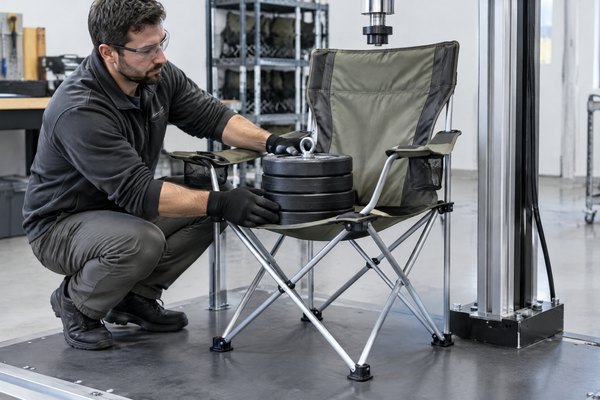
A useful sourcing decision starts with a written requirement that can be challenged, sampled, inspected, and approved.
Direct answer (quick): If you need to source a camping table and chair set for retail or private label, start by defining application, target markets, and performance targets (weight, packed size, load rating). Next, qualify suppliers for technical capability (frame welding, anodizing, fabric coating), confirm the applicable compliance/testing requirements such as EN 581 camping chair compliance or EN 581 camping table testing for EU distribution, and request structured samples + factory test reports before committing to tooling or production. Work with an experienced OEM/ODM camping gear manufacturer who documents specification changes, inspection plans, packaging, and shipping preparation.
What To Decide First (Discovery Stage)
You should make the following decisions before contacting suppliers. These reduce iteration and cost during supplier qualification:
Use Case And Application
- Will the set target car-camping, backpacking, or roadside/van life? A lightweight camping chair suitable for backpacking has different frame and fabric choices than a heavy-duty family chair for campsite socializing.
- Expected lifetime and warranty. Is this single-season disposable retail or a multi-year premium product?
Market And Compliance Targets
- Which destination markets (EU, UK, US, CA, Australia)? Confirm the applicable requirement for each market early — for example, some buyers must demonstrate EN 581 camping chair compliance for outdoor furniture sold in parts of Europe; others must manage California rules for chemical warnings on the US West Coast.
Commercial Constraints
- Target unit cost, target retail price, and expected annual volumes (by SKU/size).
- Packaging constraints (shelf-ready vs. bulk packed), and required shipping terms (FOB, EXW, DDP).
Technical Specification: What To Include In Your RFQ
A clear technical specification avoids misinterpretation and speeds sample review.
Frame And Mechanical Specs
- Materials (aluminum grade, steel type), tube diameters, wall thickness, welding vs. rivet joints.
- Finish: anodize thickness, powder coat specifications, or plated finishes.
- Load rating and safety margin (e.g., 150–250 kg design targets depending on market).
Table Tops And Surfaces
- Table top materials (plywood laminate, aluminum slat, HPL, molded plastic), edge treatments and water resistance.
- Top fixation method and folding mechanism durability.
Fabrics, Seams And Coatings
- Denier and weave type, PU coating weight (g/m²), UV and water resistance requirements.
- Sewing thread type, seam seam-seal expectations, and reinforcement at high-stress points.
Accessories And Packing
- Carry bags, straps, cup holders, leveling feet, and choice of zippers or buckles.
- Packaged dimensions and target gross/net weight for freight calculations.
Compliance And Testing Expectations
Regulatory and safety requirements affect laboratory testing, factory inspection, and documentation you should expect.
EN Standards (EU/UK)
- For the EU/UK market, confirm whether EN 581 camping chair compliance is required for your SKU. EN 581 family standards cover strength and stability of outdoor tables and chairs; buyers commonly request evidence of EN 581 camping table testing and chair performance tests.
- Ask suppliers for test reports or, if none exist for the exact design, for the factory test plan and proposal to complete those tests pre-production.
US And Chemical Compliance
- If you sell in the United States, plan for chemical compliance and labeling. For some products sold in California, confirm requirements related to California Proposition 65 camping chair warnings and whether materials or finishes need testing or substitution.
- Do not assume one test covers all products: textile treatments, flame retardants, or coatings can trigger specific analyses.
Other Tests Buyers Often Require
- Corrosion and salt-spray for metal finishes, UV exposure for fabrics, fatigue/cyclic load tests for hinges and joints, static load and tipping tests for tables and chairs.
- Insist that the supplier documents which tests were done in-house and which require accredited third-party labs; CampLume is an OEM/ODM camping gear manufacturer and can coordinate both prototype testing and third-party lab testing with buyer instruction.
Supplier Qualification Checklist (Supplier Qualification Stage)
When moving from discovery to supplier qualification, structure your evaluation. Below are practical gates to include in your process.
Capability And Capacity
- Evidence of similar product lines and manufacturing capacity for frames, fabric sewing, and packaging.
- Inspection of tooling capabilities for stamped or extruded parts if you plan custom crossbars, or injection molding for plastic parts.
Commercial Terms And MOQ
- Minimum order quantities for stocked designs vs. new tooling.
- Lead times for proto sample, pre-production sample, and mass production. Expect longer lead times for tooling or ODM customizations.
Samples And Prototypes
- Request functional prototypes followed by production-intent pre-production samples. The sample review process should include dimensional checks, load testing, and fit/finish review.
Audits And References
- On-site audit reports (fabrication, welding competence, paint/coating operations). If you require third-party social or environmental audits, include this in RFQ requirements.
Sampling, Factory Testing And Inspection Workflow
This section maps the workflow most professional buyers use during supplier qualification and early production.
Sample Review Process
- Proto sample: confirm mechanism, dimensions, and feel. Record detailed non-conformances in a sample review checklist.
- Production-intent sample (PPS): verify finished part with production processes, including labels, packaging, and printing.
Factory Testing
- Ask the factory to perform designated in-house tests (e.g., static load bench tests, cyclic hinge cycles) and provide raw data. For EN 581 camping table testing or chair testing destined for EN markets, arrange accredited lab tests where required.
- Document test procedures and acceptance criteria in the inspection plan.
Pre-Shipment Inspection And Documentation
- Perform third-party pre-shipment inspections (AQL sampling) to verify dimensions, welds, coatings, fabric defects, and pack counts.
- Require complete documentation: packing list, commercial invoice, certificate of origin, test reports, and if required by the buyer, copies of lab certificates related to specific regulations.
Packaging, Shipping Preparation And Labelling
Efficient packaging and clear shipping preparation reduce cost and transit damage.
Protective Packaging And Transit Testing
- Define packaging style: individual polybag + carry case + master carton + palletization. For fragile table tops, require edge protection and internal bracing.
- Consider drop-testing or vibration testing for ocean freight if the product has delicate parts.
Shipping Documentation And Customs
- Specify required shipping documents and labeling: country of origin, product identifiers, and any consumer-facing warnings (e.g., California Prop 65 language where applicable). Confirm the exact text required with your legal/compliance team.
Warehouse And Retail Prep
- Ask whether the supplier can provide shelf-ready packaging, barcode application, hangtags, and retail-ready pallet builds.
Cost Drivers, Lead Time Drivers, And Change Control
Understanding what moves cost and time helps you negotiate and set realistic launch dates.
Primary Cost Drivers
- Material choice (aluminum vs. steel), surface finish, custom tooling for parts, and fabric coating levels.
- Packaging format and whether accessories (bags, cup-holders) are included.
Lead Time Stages
- Prototype phase (2–6 weeks), tooling (4–10 weeks dependent on part complexity), production run (4–12 weeks depending on volume), plus testing and shipping time.
Documented Change Control
- Require a written change control system: revised drawings, a revision log, sample sign-off requirements, and an agreed timeline for implementing any design change. This reduces disputes and ensures consistent quality across lots.
Buyer Decision Table: Quick Comparison
| Buyer Priority | Shortlist Criteria | What To Ask For From Supplier |
|---|---|---|
| Speed to Market | Existing tooling, available samples | Lead time for PPS, MOQ, air-freight option |
| Low Unit Cost | Simple frame, standard fabrics | Cost breakdown: materials, labor, tooling amortization |
| Premium Performance | Higher-grade alloys, reinforced joints | Data: fatigue tests, load ratings, production QA plan |
| Compliance-Sensitive | EN/Prop 65 target markets | Lab reports, supplier test plan, labeling strategy |
Mid-Article CTA (Email Brief Request)
If you want a tailored supplier response, email sourcing@camplume.com with a short brief containing:
- Product name/description and target SKU count
- Target market(s) and required standards (e.g., EN 581 camping table testing for EU)
- Target unit price and annual volume forecast
- Packaging and labeling requirements
- Desired lead time and any budget for tooling CampLume is an OEM/ODM camping chair and table manufacturer and will reply with capability notes, estimated lead times, and a template RFQ checklist.
Frequently Asked Questions (FAQ)
Q: What minimum documentation should I get before production?
A: At minimum, get a signed technical specification (drawings + tolerances), pre-production sample approval (PPS), an inspection and test plan, and evidence of any required lab testing for your market.
Q: How do I verify EN 581 camping chair compliance claims?
A: Request the exact scope and test reports. If reports are missing for the specific design, require the supplier to run the applicable tests (or mandate a third-party lab) and provide a clear timeline and budget for that testing.
Q: How should I manage California Proposition 65 camping chair requirements?
A: Confirm whether any materials or processes in your product trigger Prop 65 listings. If so, ask the supplier for material declarations and lab testing for the listed chemicals where applicable, and include warning label text in your packaging spec if necessary.
Q: What's the difference between an ODM camping chair manufacturer and an OEM camping tables supplier?
A: An ODM camping chair manufacturer offers ready-to-adapt designs where you can private-label with limited engineering, reducing development time. An OEM camping tables supplier typically manufactures to buyer-specific designs and tooling. Decide based on your time-to-market, design ownership, and MOQ tolerance.
Q: What inspection level should I require before shipment?
A: Typically buyers use AQL 2.5% for critical items, but set acceptable AQL by defect severity in the inspection plan and define rework, reject, and remedial actions in the contract.
Conclusion And Next Steps
Sourcing a camping table and chair set requires early clarity on application, compliance (for example, EN 581 camping table testing for EU, or California Proposition 65 camping chair concerns for the US), and realistic commercial parameters. Use a structured supplier qualification process: clear RFQ/spec, prototype and production-intent samples, documented factory testing or third-party lab testing, formal pre-shipment inspection, and a written change-control practice.
If you want an initial capability and quotation package from CampLume (OEM/ODM camping gear manufacturer), email sourcing@camplume.com with the brief requested above. Include drawings or intended retail price points where available — these details produce faster, more accurate responses and sample plans.
Thank you. We can provide a detailed RFQ template and a sample-review checklist after you send the email brief.
Final CTA: Email info@camplume.com with your product category, target market, estimated quantity, current specification and packaging stage. Request a documented response that identifies assumptions, open evidence and the next approval gate.
Related CampLume resources
-
Read: What Should Buyers Check Before Ordering Wholesale Camping Chairs? for a connected sourcing decision.
-
Explore CampLume furniture options to compare a relevant product platform.
-
See the CampLume buyer FAQ for concise guidance on samples, MOQ, quality control, compliance and shipment preparation.
-
Discuss an OEM or ODM brief with CampLume when product configuration, custom branding or packaging needs to be scoped.
Project discussion
Need to apply this guide to a product programme?
Send your product category, target market, estimated quantity, current specification and packaging stage. CampLume will continue the discussion by email.
Email info@camplume.comSources and further reading