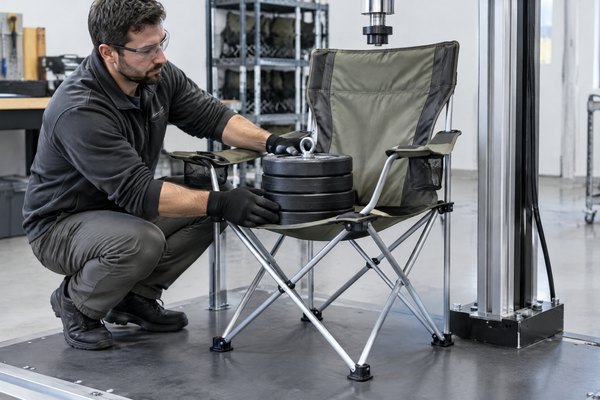
A useful sourcing decision starts with a written requirement that can be challenged, sampled, inspected, and approved.
Direct Answer
There is no single, universal camping table MOQ. The correct camping table MOQ for your order depends on design complexity, materials, required tooling, custom artwork, destination market requirements, and your target unit price. As an OEM/ODM camping gear manufacturer, CampLume evaluates each project and proposes an MOQ that balances tooling and setup costs against your price and timing targets.
Why this guide
This buyer guide is aimed at product managers, buyers, private-label brands and importers evaluating camping tables and related camp furniture. It covers the practical trade-offs you’ll make at the Evaluation and Purchase Preparation stages: materials, OEM vs ODM camping furniture decisions, packaging choices (including custom camping chair packaging), sample and testing workflows, and logistics for finished units such as an RV camping kitchen table.
1. How To Evaluate The Right Camping Table MOQ
For Evaluation and Purchase Preparation, focus on the levers you can control to lower or justify an MOQ.
Key factors that drive MOQ decisions
- Design complexity: bespoke joints, built-in storage, integrated stoves or sinks increase setup and assembly time. Simple folding tops and standard hardware reduce MOQ pressure.
- Materials and hardware: exotic or heavy raw materials often require minimum batch purchases from suppliers, which affect the factory’s MOQ for finished units.
- Tooling and dies: injection-molded parts or custom aluminum extrusions require upfront tooling investment that must be amortized over production volume.
- Packaging and labeling: custom packaging such as branded cartons, printed inner trays, or custom camping chair packaging raises minimum purchase amounts for cartons and die-cut inserts.
- Destination market requirements: specific testing or paperwork for EU, UK, US or other markets can increase pre-production costs and minimal order sizes.
Practical evaluation checklist (for internal use)
- Target retail price and margin expectations
- Acceptable lead time and earliest retail deadline
- Required certifications or test reports for destination market (confirm the applicable requirement with your compliance advisor)
- Will you require custom logo options (custom logo camping chairs) or fully bespoke designs?
- Preferred materials (see MDF vs aluminum camping table section)
2. Materials: MDF vs Aluminum Camping Table
Material choice strongly affects cost, weight, durability, and manufacturing setup. Use the MDF vs aluminum camping table comparison below when deciding.
MDF tops: cost, finish, and limitations
- Pros: Easy surface finishing (veneer, laminate, printed patterns), stable flat surface for food prep, often lower raw-material unit cost in sheet form.
- Cons: Heavier than aluminum options, moisture sensitivity unless fully sealed, not ideal for extended wet outdoor use without protective coating or sealing.
Aluminum frames and tops: weight and corrosion resistance
- Pros: Lightweight, corrosion-resistant when properly finished, good for mobile applications like an RV camping kitchen table where weight and packing volume matter.
- Cons: Higher tooling and material cost, potential for creasing or denting on thin panels, requires expertise in extrusion and finishing if you want integrated features.
When to choose one over the other
- Choose MDF when the priority is a cost-effective flat work surface with high-quality printed or laminated finishes and the product will be used in protected or intermittently wet conditions.
- Choose aluminum when weight, corrosion resistance, and long-term outdoor exposure are primary concerns, especially for travel-focused products such as an RV camping kitchen table.
3. OEM vs ODM Camping Furniture: Which Path Fits Your Brand?
Choosing between OEM vs ODM camping furniture affects timeline, cost, and intellectual property control.
OEM (Original Equipment Manufacturer)
- Best when you have a finished design or specification and want the supplier to produce it under your brand.
- Workflow emphasis: detailed product specifications, component sourcing lists, strict sample approval, and change control.
ODM (Original Design Manufacturer)
- Best when you want to license or adapt a factory design to reduce development time; can lower R&D costs but requires negotiation on exclusivity and customization level.
- Workflow emphasis: collaborative design input, prototype iterations, and agreed customization limits.
Practical decision points
- If you already have a proven design that only needs production and branding (custom logo camping chairs, proprietary folding-table mechanism), OEM is usually faster to market.
- If you lack engineering resources or want a faster concept-to-market pipeline, an ODM route with limited customization (custom camp kitchen station adaptations, color and fabric variations) may reduce development time but can affect differentiation.
4. Design, Sample Review, Testing, And Change Control Workflow
A predictable workflow reduces risk in the Evaluation and Purchase Preparation stages.
Product specification and drawing approvals
- Create a Bill of Materials (BOM) that lists materials, coatings, hardware part numbers, and critical dimensions.
- Provide manufacturing drawings or 3D CAD files and indicate tolerances for moving parts and interfaces.
Prototype and sample review
- Expect a design-prototype phase (concept, functional sample, pre-production sample). Each sample round should be signed off with clear comments.
- Use photos, measurement reports and video of functional tests (setup/pack, stability test, load test) as part of your sample acceptance.
Factory testing and inspection
- Agree on production inspection milestones: first-article inspection, during-production checks, and pre-shipment inspection. Define acceptance criteria for dimensional checks, finish quality, and functional tests.
Change control and engineering revisions
- Implement a simple change-control form: change description, reason, technical drawing revision, schedule impact, and cost impact. All changes require written approval from both buyer and factory.
Mid-Article CTA: Send Your Requirements
If you are evaluating camping table MOQ, email info@camplume.com with your product category, selling market, estimated quantity, current specification and packaging brief. Ask for a documented reply that separates assumptions and deviations from the quotation.
5. Packaging, Labeling And Customization Options
Packaging choices influence MOQ as carton suppliers and insert die-cutters set order minimums. Consider custom camping chair packaging for chair lines and protective carton design for folding tables.
Custom logo and branding requirements
- If you plan custom logo camping chairs or branded tables, provide print-ready artwork and color codes. Confirm Pantone or CMYK references and where the logo will appear (fabric, powder coat, tabletop decal).
Protective packaging and retail-ready packs
- Decide between bulk carton pallets for wholesale, retail-ready box designs with graphics, or clamshell/inner-box protection for high-end consumer SKUs.
- Custom camping chair packaging often requires inner foam trays or die-cut kraft inserts—these have their own MOQs.
Sustainable packaging options
- If you want recyclable or reduced-plastic packaging, ask suppliers for material certificates and confirm recyclability in your destination market. These options may come with different lead times.
Mid-article CTA — Request A Short Sourcing Brief
To evaluate feasible MOQ and a realistic timeline, email a short sourcing brief to sourcing@camplume.com with this minimum information:
- Product type and target annual units
- Target retail price or landed cost range
- Preferred materials and finishes (e.g., MDF tabletop with laminate, anodized aluminum frame)
- Any required certification or test standard for your market
- Artwork files for branding (or note if you require artwork services)
- Target ship date and destination port
We will respond with a clear list of next steps, likely tooling needs and a sample plan.
6. Sample Costs, Factory Testing, And Inspection Details
Sample costs and factory testing are predictable parts of purchase preparation.
- Samples: separately quoted. There are usually costs for prototype, engineering changes, and expedited sample shipping.
- Factory testing: plan for functional tests (weight capacity, stability), finish inspections and, if requested, environmental tests. Confirm the applicable requirement for the destination market with your compliance advisor.
- Third-party inspection: many buyers appoint an inspection agent to perform pre-shipment checks; define AQL thresholds and which tests are mandatory.
7. Logistics, Shipping Preparation, And Documentation
Final-stage preparation affects landed cost and timing; consider how packaging and product dimensions affect pallet optimization and freight class.
- Shipping prep: confirm pack quantity per carton, cartons per pallet, and stacking rules. For folding tables and RV camping kitchen table variants, pack the most compact, damage-minimizing orientation.
- Documentation: commercial invoice, packing list, COO (if required), and any test reports. Confirm required documentation for your import process and destination market.
Buyer-Decision Table
| Decision Factor | Lower MOQ Strategy | When Higher MOQ Is Preferable |
|---|---|---|
| Design Complexity | Simplify features; use standard hardware | Add-integrated features or bespoke tooling |
| Material Choice | Use standard aluminum extrusions or MDF sheet sizes | Use custom extrusions, special alloys, or premium veneers |
| Packaging | Use standard cartons and generic inner packs | Use retail-ready printed boxes or custom camping chair packaging |
| Branding | Apply simple decals or sewn tags (lower setup) | Full custom logo camping chairs or printed tabletop graphics |
| Time to Market | Approve a basic pre-production sample quickly | Multiple prototype iterations and compliance testing |
8. Common Price And MOQ Negotiation Levers
- Consolidate SKUs: ordering fewer variations reduces the required production setup and can lower the effective MOQ per SKU.
- Commit to phased purchase orders: agree to a larger total commitment across 2–3 production runs with smaller individual shipments.
- Share tooling costs: negotiate amortization of tooling over a number of units or accept a tooling charge on the first PO.
- Adjust packaging: use standard cartons for initial launch to avoid carton MOQs, then switch to custom packaging in a later run.
FAQ
Q: Will ordering a custom camp kitchen station always increase my MOQ?
A: Not always. A custom camp kitchen station that uses common subcomponents and standard fasteners can be produced with lower MOQ than a fully bespoke unit that requires unique tooling. The final MOQ depends on how much is custom vs off-the-shelf.
Q: How do I compare MDF vs aluminum camping table costs effectively?
A: Compare total landed cost per usable unit, not just raw-material cost. Include surface finishing, expected warranty replacements, weight-related freight costs, and any additional protective coatings for MDF.
Q: Can I get a small pilot run of custom logo camping chairs?
A: Many factories can run a pilot run if you accept higher per-unit costs, or if you agree to a phased commitment. Provide clear artwork and approve pre-production samples to avoid revisions that would increase costs.
Q: What documentation should I expect for an RV camping kitchen table shipment?
A: Typical documents include a commercial invoice, packing list, and any requested test reports. Confirm specific regulatory or certification requirements for the vehicle or RV accessory market with your compliance advisor.
Q: How do I manage change control after the first production run?
A: Use a formal change-request process: document the proposed change, impact on cost and timing, revised drawings, and signed approvals from both the buyer and factory before implementing.
Q: Should I inspect every shipment?
A: Inspecting every shipment is a risk-management choice. For proven workflows, many buyers move to sampled inspections with agreed AQL criteria. For new suppliers or new designs, full or higher-frequency inspections reduce risk.
Conclusion and Next Steps
There’s no single camping table MOQ that fits every project. The right approach is to map your product choices (materials such as MDF vs aluminum camping table options, branding like custom logo camping chairs), packaging needs (including custom camping chair packaging), and market entry plan before asking suppliers for hard quotes. If you need help evaluating OEM vs ODM camping furniture options or want a realistic sample and MOQ plan, email a short brief to sourcing@camplume.com with the details listed in the mid-article CTA. CampLume will provide a project-level checklist and an initial scope estimate so you can decide on design, tooling and MOQ with confidence.
FAQ
What should a camping furniture sample review include?
Review the approved frame, fabric or tabletop, folding action, fasteners, measurements, stability, carry bag or accessories, labels and packaging. Record any accepted deviations in writing before bulk production.
How can a buyer compare two furniture quotations fairly?
Map both quotations to the same product configuration, material specifications, packaging, inspection plan, delivery term and quantity tier. A lower unit price may not cover the same scope.
When should a load or stability check be defined?
Define it during product specification and sample planning, based on the intended user, product type and target-market requirements. Agree the acceptance method and report format before production release.
What is useful evidence at pre-shipment stage?
A product-specific inspection record, measurement and function checks, approved packaging evidence, carton data, label checks, packing photos and a documented release or hold decision are practical controls.
Conclusion: Turn the Brief Into a Controlled Buying Decision
The practical aim of a camping table MOQ programme is not to collect broad assurances; it is to connect the approved product configuration, sample, evidence, packaging, inspection and shipment release to the same buyer brief. That record helps the product, sourcing, quality and logistics teams resolve assumptions before they become a production or delivery problem.
Final CTA: Email info@camplume.com with the product category, target market, estimated quantity, current specification and packaging stage. Request a response that identifies assumptions, open evidence and the next approval gate.
Related CampLume resources
-
Read: What Should Buyers Check Before Ordering Wholesale Camping Chairs? for a connected sourcing decision.
-
Explore CampLume furniture options to compare a relevant product platform.
-
See the CampLume buyer FAQ for concise guidance on samples, MOQ, quality control, compliance and shipment preparation.
-
Discuss an OEM or ODM brief with CampLume when product configuration, custom branding or packaging needs to be scoped.
Project discussion
Need to apply this guide to a product programme?
Send your product category, target market, estimated quantity, current specification and packaging stage. CampLume will continue the discussion by email.
Email info@camplume.comSources and further reading