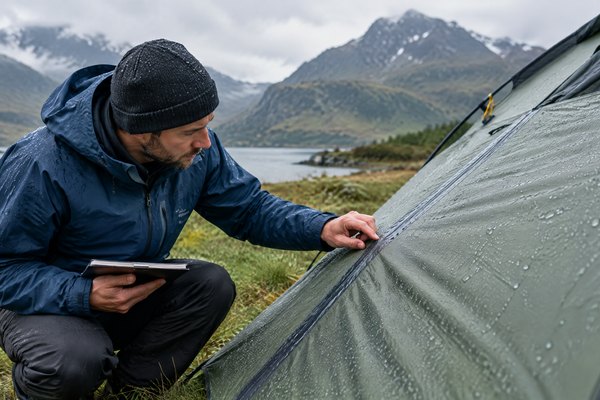
A useful sourcing decision starts with a written requirement that can be challenged, sampled, inspected, and approved.
Direct answer (what this guide delivers)
This guide explains what B2B buyers must check during supplier qualification when camping tent instruction manual packaging is a critical deliverable. It covers the documentation and records you should require (including the camping tent technical file EU and camping tent traceability label EU), how to assess a factory's capability and MOQ, how to run prototype and waterproof testing (including an inflatable tent waterproof test), and how to approve packaging and labeling for private label glamping tents.
Why Supplier Qualification Matters for Instruction Manual Packaging
Instruction manuals and packaging are not just marketing — they are safety, compliance and logistics documents. For tents destined to regulated markets, the manual and label content can be part of the technical file or traceability requirements. A weak supplier qualification process exposes you to nonconformances at customs, expensive rework, or brand damage when user instructions are wrong or incomplete.
Key risks tied to instruction manual packaging:
- Missing mandatory warnings or language for the destination market
- Poor print quality that obscures assembly diagrams
- Materials that delaminate when exposed to moisture (important for inflatable tents)
- Incorrect traceability data that breaks EU importer obligations
Key Documents and Records To Request
You should request specific records from a prospective OEM/ODM camping tent manufacturer. Exact requirements depend on the product and destination market; use this list as a starting point for supplier discussions.
Camping Tent Technical File EU
If you are importing tents into the EU, confirm what goes into the camping tent technical file EU for your product. Typical elements to request from a supplier include:
- Product specification and drawings (materials, dimensions, fastening details)
- Test result summaries or certificates (e.g., flammability, UV, seam strength) — confirm applicable requirement
- Risk assessment or safety analysis for intended use
- Label and manual samples that will appear in the final packed unit
- Manufacturing process description and quality control points
Ask the supplier to identify which documents they own and which you must provide (branding, importer identity, certain test reports).
Camping Tent Traceability Label EU
For EU importers, a camping tent traceability label EU may be required to show the importer, brand, batch/lot number and basic safety information. During qualification ask the supplier for examples of their label formats, and verify they can:
- Apply permanent and readable batch/lot codes at scale
- Include multilingual content as required by your markets
- Support batch-level traceability for recalls
Confirm whether serialization will be applied to boxes, inner bags, or the product itself and how that data will be recorded.
Camping Tent Instruction Manual Packaging
Insist on reviewing final-layout artwork and a production sample of the manual and its packaging. Issues commonly caught at this stage include:
- Missing assembly diagrams or unclear steps
- Wrong metric/imperial units
- Incorrect brand marks or copyrighted icons
- Packaging inserts that fall out during handling
Verify the materials (e.g., coated paper, water-resistant inserts or polyethylene sleeves) and binding method (stapled, glued, or loose leaf) so the manual survives warehouse and field use.
Assessing Manufacturer Capabilities and MOQ
Buyers need to match the supplier's capabilities to the product complexity and their sourcing strategy (OEM, ODM, private label). Ask detailed questions rather than relying on generic sales claims.
Production Equipment and Capacity
Confirm: tent pole bending/forming capacity; fabric welding or sewing lines; inflatable bladder production and heat-sealing equipment for inflatable tent models; and printing/binding capacity for manuals. If packaging is outsourced, confirm vendor relationships and lead times.
Camping Tent Manufacturer Minimum Order Quantity
Minimum order quantity varies by product complexity, tooling needs and whether any custom printing or molding is required. For example, designs that require custom pole tooling, a specific branded zipper, or custom-printed fabric can increase the MOQ. During qualification ask for:
- MOQ by SKU and by total shipment frequency (monthly/quarterly)
- Breakpoints where unit price improves
- Lead times for small-batch or pilot runs
Do not accept a single MOQ number without context; ask for a written MOQ schedule in the supplier's quotation.
Custom Tent Prototype Manufacturer
If you require a custom tent prototype manufacturer, evaluate their prototype process: how they convert your spec into a working sample, the iteration cycles, and sample cost policy. Good questions:
- How many prototype revisions are included and what charges apply after?
- What materials will be used for prototypes (production-grade or mock-up)?
- Can they produce fit-for-test samples (e.g., a fully seam-taped inflatable tent for waterproof testing)?
Confirm timeline for prototype, in-line approvals, and the sample-to-production transition plan.
Testing and Quality Assurance
Testing is a core element of supplier qualification. Decide which tests you require pre-shipment at the factory and which require third-party labs.
Inflatable Tent Waterproof Test
For inflatable tents you should define an inflatable tent waterproof test protocol prior to sample approval. Options include factory water-column tests, spray tests, and third-party hydrostatic head testing. Ask the supplier for:
- Their factory test method and equipment calibration records
- Sample sizes used for internal acceptance
- Historical results for similar product constructions (descriptive, not numerical claims)
Specify acceptance criteria in your purchase order and include independent lab testing where your market requires third-party verification.
Factory vs Third-Party Testing
Factory testing is useful for production control (e.g., each batch undergoes seam-check and pressure hold tests), but regulators or clients often demand accredited third-party testing for the technical file. During supplier qualification, map which tests will be factory-performed and which will be third-party, and who pays for re-test after failures.
Sample Review Checklist
When you receive a physical sample review for the tent and its instruction manual packaging, use a checklist that includes:
- Dimensional verification against drawings
- Material verification (fabric denier, coatings, poles)
- Stitching and seam reinforcement checks
- Instruction manual: completeness, multiple language presence, graphic clarity
- Packaging: configuration, labels, inner/outer protection, palletization logic
Document each nonconformance and require corrective action plans before moving to production.
Packaging, Labeling and Shipping Preparation
Packaging is where instruction manuals and traceability intersect with logistics. For private label glamping tents, packaging often serves a premium retail or rental market and must meet both aesthetic and functional requirements.
Packaging points to qualify:
- How the manual is fixed inside the package (glued, bagged, box-insert)
- Carton strength and palletization plan for sea freight
- Label placement and permanence (are traceability labels applied to cartons and seals?)
- Export packing: plastic-wrapped pallets, carton markings, pallet tags with GTINs and lot numbers
For private label glamping tents, verify print quality and color matching on outer cartons and hang tags. Confirm the supplier accepts packaging art proofs and can provide pre-production digital mock-ups and a physical pre-production sample.
Buyer-Decision Table
| Supplier Type | Best For | Design Control | Typical MOQ Considerations | Packaging Control |
|---|---|---|---|---|
| OEM (manufacture to buyer drawings) | Buyers with final designs | Full control by buyer | MOQ depends on parts and tooling; flexible for repeat runs | Buyer-provided artwork; factory executes |
| ODM (supplier provides design) | Buyers wanting faster development | Shared; supplier owns some design | Usually lower MOQ for standard models; custom branding may increase MOQ | Supplier offers standard packaging; customization possible |
| Private label glamping tents | Retail or premium brand launches | Buyer brand on supplier design | MOQ higher for boutique finishes and custom inserts | High branding control; requires pre-production samples |
Mid-Article CTA — Email Brief Request
To evaluate CampLume as your OEM/ODM camping tent partner, email a brief to sourcing@camplume.com with the following:
- Product name and reference images or sketches
- Target market(s) and required languages on manual/labels
- Annual and per-shipment target volumes
- Required tests (e.g., inflatable tent waterproof test) and any certification expectations
- Packaging preferences (retail carton, inner bag, manual format)
- Prototype needs (custom tent prototype manufacturer required?) and timeline
CampLume will respond with a list of required files, an initial capability statement and suggested next steps for samples and testing.
Change Control, Nonconformance and Corrective Actions
A qualified supplier must have a documented change-control process. During qualification ask for a description of how they handle:
- Engineering change requests (ECRs) and engineering change orders (ECOs)
- Notification timelines for component or material substitutions
- Sample re-approval steps and any cost implications
- Nonconforming material segregation and return/credit policies
Insist that any agreed change in the instruction manual packaging or traceability data is communicated and approved in writing prior to shipment.
Practical Supplier Qualification Checklist (Step-by-step)
- Issue a Request for Quotation (RFQ) with detailed product spec, expected tests, and packaging requirements.
- Request capability evidence: factory photos, equipment list, sample policies, references.
- Request sample(s) including the camping tent instruction manual packaging and any applied traceability label examples.
- Define tests: factory checks and third-party tests (include inflatable tent waterproof test if applicable).
- Review sample using the checklist; document nonconformances and require corrective plans.
- Agree MOQ, lead times, and tooling responsibilities; secure written MOQ schedule.
- Verify documentation to include in your camping tent technical file EU and label samples for traceability.
- Approve pre-production sample and formalize the change control process in the purchase order.
- Schedule a pre-shipment inspection and agree re-test responsibilities for failed lots.
- Confirm shipping, palletization and EDI/ASN requirements.
FAQ
Q: How detailed must an instruction manual be for EU imports? A: The level of detail depends on the product hazards and applicable EU requirements. Ask the supplier for a manual draft and identify any missing safety warnings or language requirements for your importer obligations.
Q: Should I accept factory waterproof test reports for inflatable tents? A: Factory tests are valid for production control but consider accredited third-party tests for the technical file or market claims. Define acceptance criteria and re-test plans in your contract.
Q: How do I manage camping tent manufacturer minimum order quantity when launching multiple SKUs? A: Negotiate tiered MOQs, consolidate shared components across SKUs, or start with a pilot run and agree a ramp schedule. Request a written MOQ matrix from the supplier.
Q: Can the supplier produce a custom tent prototype manufacturer quality sample I can test? A: Reputable OEM/ODM manufacturers provide production-grade prototypes for testing. Confirm the number of allowed revisions, sample costs, and lead times in writing.
Q: What information should appear on the camping tent traceability label EU? A: Typical elements include brand/importer ID, batch/lot number, production date, and product reference. Confirm the applicable legal requirements for your market.
Conclusion and Next Step
Supplier qualification for camping tent instruction manual packaging requires a structured approach: define documentation needs (camping tent technical file EU and traceability label EU), verify factory capability, require representative samples and defined tests (including an inflatable tent waterproof test where relevant), and formalize MOQ and change control. For private label glamping tents, give extra attention to packaging quality and artwork approval.
To take the next step, email a one-page brief to sourcing@camplume.com with the product sketch, target market, expected annual volume, required tests and packaging notes. CampLume, as an OEM/ODM camping gear manufacturer, will respond with a capability statement and a recommended sample and testing plan tailored to your project.
Final CTA: Email info@camplume.com with your product category, target market, estimated quantity, current specification and packaging stage. Request a documented response that identifies assumptions, open evidence and the next approval gate.
Related CampLume resources
-
Read: Inflatable Tents vs Pole Tents: Which Format Fits Your Camping Product Range? for a connected sourcing decision.
-
Explore CampLume tents options to compare a relevant product platform.
-
See the CampLume buyer FAQ for concise guidance on samples, MOQ, quality control, compliance and shipment preparation.
-
Discuss an OEM or ODM brief with CampLume when product configuration, custom branding or packaging needs to be scoped.
Project discussion
Need to apply this guide to a product programme?
Send your product category, target market, estimated quantity, current specification and packaging stage. CampLume will continue the discussion by email.
Email info@camplume.comSources and further reading