A useful sourcing decision starts with a written requirement that can be challenged, sampled, inspected, and approved.
Direct answer — what this guide delivers
If you are at the supplier-qualification stage for a CPSIA kids camping chair, this guide tells you exactly what to specify in an RFQ, how to review samples and test data, what to audit on-site, which documents to require for US/UK/EU destinations, and how to set up packaging, shipping preparation and change control. The workflows and checklists below are practical steps a product manager, quality manager or importer can use to decide whether to onboard an OEM/ODM camping furniture partner.
What Supplier Qualification Should Cover
Supplier qualification for kids camping furniture is a multi-discipline task. At minimum, you must confirm:
- Regulatory capability (children’s product compliance and market-specific rules).
- Technical capability (materials, load ratings, welds, fabric finishes, corrosion protection).
- Process maturity (quality plan, testing, inspection, change control).
- Commercial terms (MOQ, lead time, cost targets) and packaging strategy for retail or bulk use.
H3: Who needs to own what
- Buyer/Product Manager: final spec, market destination, acceptance criteria.
- Supplier/OEM/ODM: technical confirmation, pre-production samples, factory test runs.
- Quality Manager/Third-Party Inspector: sample testing and in-line inspection.
H3: Typical deliverables for approval
- Approved product specification and drawings.
- Pre-production sample and testing reports (chemical and mechanical).
- Factory audit report and corrective action plan.
- Packaging artwork and drop-test results.
Product Specification: What To Include in Your RFQ
A complete RFQ reduces iterations. For a CPSIA kids camping chair include:
H3: Materials & finishes
- Frame: grade and finish (e.g., aluminum 6061-T6 with powder coat; stainless grade if required).
- Fasteners: specify stainless or corrosion-resistant grade and coating.
- Seating fabric: fiber type, weight (gsm), fire retardancy if needed, surface treatments (PU, PVC, water repellents).
- Plastic components: polymer grade, UV-stabilizer requirement, color tolerance.
H3: Dimensions, load ratings and use cases
- Seat height, folded size, footprint and maximum dynamic/static load rating (for intended child age range).
- Safety margins and assembly/locking mechanism torque if relevant.
- Use case notes: backyard, campground or packaged as part of children’s camping sets.
H3: Compliance & testing requirements
- State that the product is a children’s product under CPSIA if the target market is the US and require lead, phthalate and CPSIA-relevant testing. Use the phrase CPSIA kids camping chair in your RFQ so the supplier understands the compliance path.
- For EU/UK markets, state if you expect REACH checks or other market-specific regimes (see the compliance section below).
- Specify accelerated life and corrosion testing requirements (see the camping chair corrosion resistance test subsection).
Sample Review and Pre-Production Testing
Samples are the first objective proof a supplier can meet your spec.
H3: Prototype assessment
- Verify material match against spec (frame wall thickness, fabric GSM, fastener grade).
- Functional checks: folding/unfolding cycles, locking integrity, pinch points, assembly torque.
H3: Functional and mechanical testing
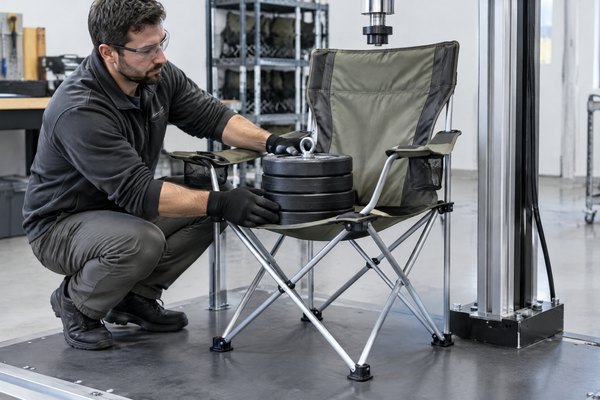
- Static and dynamic load tests to your specified safety margin.
- Joint and weld pull tests, rivet shear tests and hinge cycle counts.
H3: camping chair corrosion resistance test
- Define a corrosion test method in the RFQ: e.g., neutral salt spray (ASTM B117) for painted/metal parts and cyclic corrosion if the chair will be used outdoors in coastal or campground environments. State the required exposure hours and pass criteria (visual rating, adhesion retention, no perforation).
- For zinc-coated or stainless components, ask for pass/fail criteria tied to your maintenance expectations (seasonal use vs. daily campground furniture).
H3: Chemical testing for children’s products
- Require accredited lab test reports for lead, phthalates and other applicable CPSIA analytes on any component that could result in mouthing or prolonged contact.
Factory Assessment: Audits and Capability Checks
A structured audit will identify manufacturing gaps before you place bulk orders.
H3: camping chair factory audit
- Perform a factory audit that covers production capacity, process flow for frame fabrication, surface treatment booths, sewing/assembly, testing stations and storage of chemical records.
- Focus audit checklists on: supplier quality management system, incoming material controls, first-article inspection processes, in-process inspection points, final inspection, and non-conforming material handling.
H3: Manufacturing capability points to verify
- Welding and frame bending jigs that match your tolerances.
- Dedicated corrosion-control processes (e.g., cleaning, pretreatment, powder-coating bake profiles).
- In-house or subcontracted lab testing; review labs’ accreditation and test scope.
H3: Social and environmental considerations
- Confirm local labour, health & safety and environmental controls that matter to your brand. If you are selling in France, also discuss packaging responsibilities under France furniture EPR camping chairs rules as part of your commercial due diligence.
Mid-article CTA — Request a brief by email
To evaluate a specific CPSIA kids camping chair project quickly, email oem@camplume.com with this brief:
- Target market(s) and destination countries (US/EU/UK).
- Expected annual volume and MOQ constraints.
- Target retail price or factory FOB target.
- Key compliance requirements (CPSIA, UK REACH camping furniture supplier expectations, EPR for France, etc.).
- Preferred materials, color and packaging format (retail carton vs. bulk pallet).
- Any required testing or special finishes (e.g., marine-grade corrosion resistance).
We will reply with initial capability confirmation, estimated lead time for samples, and a suggested audit/testing plan.
Mid-Article CTA: Send Your Requirements
If you are evaluating CPSIA kids camping chair, email info@camplume.com with your product category, selling market, estimated quantity, current specification and packaging brief. Ask for a documented reply that separates assumptions and deviations from the quotation.
Compliance and Market-Specific Requirements
Regulatory obligations depend on the exact product design and destination market. Ask suppliers to provide complete documentation rather than relying on claims.
H3: US market — CPSIA expectations
- For a product positioned as a child’s item in the US, require documented lead and phthalate testing from an accredited lab and a Children’s Product Certificate (CPC) based on those tests. Label claims and care instructions should be finalized before mass production.
H3: UK and EU expectations
- If you plan to sell in the UK or EU, require documentation demonstrating REACH checks for SVHCs and any labeling or safety requirements for textiles or outdoor furniture. Use the keyword UK REACH camping furniture supplier in your internal checklist to flag suppliers for chemical-policy competency.
H3: France-specific packaging and EPR
- If your product will enter France, include France furniture EPR camping chairs in your commercial evaluation. Confirm who will register for EPR fees and how packaging footprint and materials are reported.
H3: Documentation checklist you should request
- Test reports (mechanical and chemical) from accredited labs.
- Material declarations and supplier traceability for metals, polymers and textiles.
- Factory audit report and corrective action plan.
- Production control plan (PCP) and inspection checklist.
Packaging, Shipping Preparation and Product Application
Think through packaging and shipping before production to avoid delays at the end of the line.
H3: Packaging options by channel
- Retail-ready: color box with UPC/GTIN, hang-tag safety labels, and printed care instructions.
- Bulk for campground suppliers: bulk cartons per pallet, with master carton markings and handling labels tailored for campground picnic furniture supplier customers or park procurement.
- Flat-pack vs. assembled shipping: include a packing-confirmation sample that undergoes drop and vibration testing.
H3: Logistics, labeling and customs prep
- Confirm country-of-origin marking, HS codes, and any material declarations that customs or retailers require.
- For larger orders destined to outdoor parks or resorts, document pallet configuration, stackability and shrink-wrap standards.
H3: Change control and product iterations
- Establish a formal change-control process: all changes to materials, finish, dimension or production site must be approved in writing, with an impact assessment on test results and lead time.
- Maintain revision-controlled specification documents and require re-sampling if the supplier changes material spec or process.
H3: ODM opportunities
- If you also need tables or complementary items, evaluate the supplier as an ODM camping table supplier to reduce vendor count and ensure matching finishes and pack-outs across product families.
Decision Matrix: Quick Comparison Table
| Decision Factor | Pass Criteria | Red Flag |
|---|---|---|
| Regulatory testing | Accredited lab reports for CPSIA and destination market tests | No test reports or non-accredited lab |
| Corrosion protection | Specified B117 or cyclic corrosion with agreed pass criteria | No corrosion method or unspecified coating grade |
| Factory controls | Documented inspection points and corrective action plan | No documented QC process or lot traceability |
| Sample accuracy | Pre-production sample matches spec ± tolerance | Sample differs on critical safety dimensions |
| Packaging readiness | Drop test and pallet plan provided | No pack plan or unclear labeling for destination market |
FAQ — Practical Questions During Supplier Qualification
Q: How many pre-production samples should I request?
A: Ask for at least three: one for destructive testing, one for functional and user testing, and one to remain as a reference sample at the supplier. If multiple colorways or materials are used, request a sample for each variant.
Q: Can a supplier self-declare compliance for CPSIA?
A: Self-declaration is not sufficient for children’s product testing in many buyer programs. Require lab reports from an accredited third-party lab and a CPC where applicable; confirm the applicable requirement with your legal/compliance team.
Q: What inspection frequency should I plan for first orders?
A: For initial bulk orders, schedule 100% incoming inspection for critical components or increased AQL verification (e.g., 2.5% AQL for safety-critical items) plus a production line audit near the end of the run.
Q: How do I verify a supplier can meet corrosion requirements for outdoor use?
A: Include a specified corrosion test method and pass criteria in the RFQ and require test reports on actual finished parts. Observe the surface treatment process on a factory audit and confirm environmental controls and pretreatment records.
Q: If I also need tables for the same line, how should I approach sourcing?
A: Evaluate suppliers that can act as an ODM camping table supplier so you can harmonize design language, finishes and pack-out strategies, reducing complexity and freight costs.
Q: What documents are essential to keep for customs and market audits?
A: Keep test reports, material declarations, factory audit summary, QA inspection records, packing lists and bills of lading. For France and other EU markets, retain EPR registration or invoices showing who paid the EPR fees.
Final Recommendation and Next Steps
To qualify a supplier for a CPSIA kids camping chair, follow a staged workflow: finalize a detailed RFQ and specification, request targeted pre-production samples, require accredited lab testing (including mechanical and chemical testing), perform a camping chair factory audit, confirm packaging and logistics, and formalize change-control procedures.
If you want CampLume to prepare a supplier-capability reply and audit/testing plan for your project, email oem@camplume.com with the brief described above (target market, volumes, target price, compliance requirements and preferred materials). We will respond with a capabilities statement, sample timeline and an estimated quotation for samples and a factory audit.
Conclusion
Supplier qualification is the point where risk control, compliance and product performance converge. Use detailed specifications, insist on accredited test reports, audit production capability, and lock down packaging and change control before you approve production. For a tailored capability statement and next-step checklist for your CPSIA kids camping chair project, send the project brief to oem@camplume.com and we will outline sample timing, test scope and a recommended audit checklist.
Final CTA: Email info@camplume.com with your product category, target market, estimated quantity, current specification and packaging stage. Request a documented response that identifies assumptions, open evidence and the next approval gate.
Related CampLume resources
-
Read: What Should Buyers Check Before Ordering Wholesale Camping Chairs? for a connected sourcing decision.
-
Explore CampLume furniture options to compare a relevant product platform.
-
See the CampLume buyer FAQ for concise guidance on samples, MOQ, quality control, compliance and shipment preparation.
-
Discuss an OEM or ODM brief with CampLume when product configuration, custom branding or packaging needs to be scoped.
Project discussion
Need to apply this guide to a product programme?
Send your product category, target market, estimated quantity, current specification and packaging stage. CampLume will continue the discussion by email.
Email info@camplume.comSources and further reading