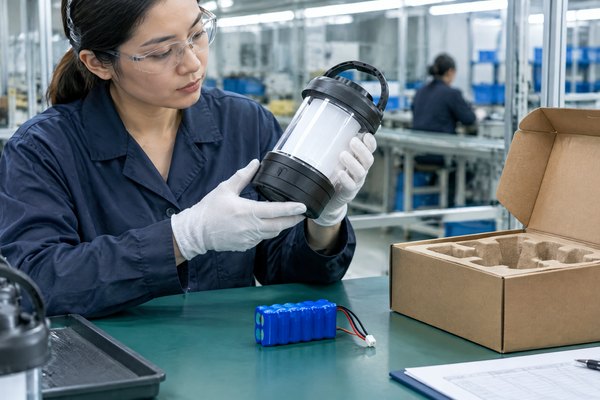
A useful sourcing decision starts with a written requirement that can be challenged, sampled, inspected, and approved.
Direct Answer — What this guide helps you decide
If you need a DC power adapter for camping lights, this guide helps you evaluate compatibility, ingress protection, charging options (USB-C PD, car chargers, solar) and supplier workflows so you can move from specification to a compliant sample and production. The right adapter depends on the lamp's input voltage/current, environment (wet vs splash), destination market electrical rules, and your packaging and labeling plans.
Quick Evaluation Checklist (Decision-First)
- Confirm lamp electrical input (e.g., 12 V DC, 5 V USB-C).
- Choose IP rating appropriate for intended use (see IPX4 vs IP65 camping light section).
- Decide charging architecture: integrated DC-only, USB-C PD power bank vs standard USB camping approaches, or hybrid (solar + USB-C).
- Confirm connector and polarity standard (barrel DC, coax, USB-C) and any locking or strain relief.
- Define test and documentation needs for the target market (safety, EMC, RoHS-like declarations).
- Specify packaging and shipping requirements (retail boxed vs wholesale bulk) and label language.
Use this checklist as the evaluation gate before requesting a production sample.
Power Options And Compatibility
Choosing a 12 V DC power adapter for camping lights is common for higher-output fixtures, but many modern lanterns and task lights use USB-C for convenience. Below are the practical compatibility and architecture considerations for evaluation.
Voltage, Current And Connector
- Confirm nominal voltage and minimum/maximum tolerance (for example, 12 V ±5%). Record in the product specification the steady-state current draw at each light mode (low/medium/high). Specify inrush current for LEDs driven by switching drivers.
- Specify connector type and pin/polarity diagram. For DC barrel plugs, include outer diameter, inner diameter, and center polarity. For USB-C, specify whether it is downstream-only (device), or supports power delivery.
USB Architectures: Why It Matters
- USB-C PD power bank vs standard USB camping power banks: PD allows controlled higher voltages and faster charging for USB-C–native lights or powering active driver circuits; standard USB-A 5 V banks are limited to lower power and may be sufficient for small lanterns but not high-output fixtures.
- USB-C car charger for camping: if your design relies on car power while driving or at a base camp, confirm the car charger profile and whether the lamp supports PD negotiation or only simple 5 V USB power.
Practical Interoperability
- If the lantern accepts both DC barrel input and USB-C, design an internal power management board that prevents backfeeding (battery → adapter) and supports safe switchover.
- Test adapters with the worst-case load and under undervoltage conditions to verify dimming behavior and thermal performance.
Ingress Protection And Outdoors Use
Choosing an IP65 camping light vs an IPX4 model is an application decision. IP ratings define how well the product resists dust and water; the rating you choose affects enclosure design, venting, connector selection and testing scope.
What IP Codes Mean Practically
- IPX4 vs IP65 camping light: IPX4 means splash resistance from all directions and is acceptable for occasional rain under covered or semi-protected use. IP65 means dust-tight and protected against low-pressure water jets — appropriate for exposed use or where the light may be subjected to spray, cleaning or dusty environments.
- If the light has openings for heat dissipation or a removable battery/adapter compartment, plan sealing features (gaskets, O-rings) and connector caps for rated ingress protection.
Connector and Adapter Considerations for IP Ratings
- For outdoor DC adapters, prefer sealed cable glands and IP-rated connectors. A DC power adapter for camping lights intended for IP65 use should use a sealed inline adapter or ensure the mating point is protected by the light’s sealed compartment.
- If using USB-C, choose waterproof USB-C inlet assemblies rated for the target IP level, and design away from exposed ports if IP65 is required.
Testing Expectations
- Define the test sequence: dust chamber (if applicable), water jet or spray test, and thermal cycling. These are factory tests that should be included in your inspection plan; confirm the applicable requirement for your destination market and product claims.
Electrical Safety, EMC And Factory Testing
Safety, EMC and performance tests should be defined in the product specification before sample production. CampLume as an OEM/ODM manufacturer can perform internal functional tests and manage third-party testing if you require formal certification.
Essential Electrical Tests To Specify
- Dielectric strength, insulation resistance and leakage current where applicable.
- Over-current protection and short-circuit behavior for the adapter and lamp driver.
- Thermal tests on adapter housings and on the lamp at maximum steady-state.
EMC And Market Requirements
- If you will sell in regulated markets, confirm whether EMC or radio immunity testing is required for the class of appliance. These requirements depend on the destination market; confirm the applicable requirement with your compliance team.
Factory Testing And Inspection Workflow
- Product specification: include electrical limits, mechanical tolerances, IP rating target, and labeling text.
- Pre-production sample: evaluate performance and complete a formal sample review report.
- Factory testing: include a defined test protocol covering electrical, functional and IP checks. Ask the factory for inspection evidence (test reports, photos, serial logs) and include random functional tests in your AQL inspection plan.
- Change control: require written approval for any material, component, firmware or supplier changes. Maintain a change log with versioned drawings and BOM.
Sample Review And Acceptance Criteria
A strong sample review separates subjective aesthetic checks from objective functional acceptance criteria.
What To Include In Your Sample Review
- Mechanical: enclosure fit, gasket compression, seam tolerances, and connector fit.
- Electrical Functional: measured output voltage and ripple under each mode, runtime tests on battery models, and adapter voltage under load.
- Performance: luminous flux per mode, beam pattern, and photometric consistency across samples.
Acceptance Criteria Examples (use numbers in your spec)
- Output voltage within ±5% at rated load.
- Run time at high mode ≥ specified minutes within ±10%.
- Ingress protection verification: no water ingress after specified spray test for IP65 claim.
Managing Nonconformances and Change Control
- Issue a corrective action request for failed samples, require root cause analysis, and approve reworked samples before production.
- Lock BOM and tooling until sign-off; any post-sign-off change must route through formal engineering change notice (ECN).
Mid-Article CTA: Send Your Requirements
If you are evaluating DC power adapter for camping lights, email info@camplume.com with your product category, selling market, estimated quantity, current specification and packaging brief. Ask for a documented reply that separates assumptions and deviations from the quotation.
Packaging, Labeling And Shipping Preparation
Packaging and shipping preparation influence landed cost, retail presentation, and compliance. Specify packaging at the design stage.
Packaging Options And Considerations
- Retail boxed: includes printed manual, technical label, and single-piece retail pack — specify carton dimensions, void-fill, and minimum crush strength.
- Bulk wholesale: palletized inner cartons with protective spacing; negotiate inner carton quantities with your camping light wholesale distributor.
- Include packaging tests: vibration, drop, and compression relevant to sea or air freight.
Labeling And Documentation
- Packaging must carry regulatory markings required for the destination market and your brand labels. Include multilingual manuals where required by market.
- Prepare a packing list template and include SKU and barcode information, country of origin, and any MSDS or battery-handling instructions.
Sourcing, MOQ, Lead Time And Supply Chain Practicalities
Sourcing decisions tie directly to lead times, MOQ and logistics. Whether you plan to buy through a camping light wholesale distributor or order directly from an OEM/ODM, clarify these items early.
Commercial Terms To Negotiate
- Minimum order quantities (MOQ) by SKU and for accessory SKUs (DC power adapter for camping lights sold separately).
- Lead time for first samples and for production runs (including tool lead time if a new mold is required).
- Spare parts and accessory stocking strategy.
Logistics And Shipping Preparation
- Define Incoterms, preferred carriers, and packing unitization to optimize container loading.
- If batteries are included, specify UN/DG handling and documentation.
Choosing Between Distribution Models
- Direct OEM/ODM purchase: closer control over BOM and change control, but requires logistics capability.
- Use a camping light wholesale distributor: can reduce lead time to market in your target territory; expect higher per-unit cost but lower inventory and import handling burden.
| Decision Factor | DC Adapter (Dedicated) | USB-C PD Power Bank | Solar + USB Hybrid |
|---|---|---|---|
| Typical Use Case | Fixed base camp power, high output | Portable charging, multi-device | Off-grid, low-to-moderate output |
| Max Practical Output | High (depends on adapter) | High with PD, regulated | Lower, weather-dependent |
| Weatherproofing | Easier to seal | Requires waterproof inlet | Modules must be ruggedized |
| Complexity | Low to moderate | Electronic negotiation (PD) | Adds charge controller |
Mid-Article Brief Request (Quick OEM Inquiry)
If you want an evaluation quote and sample plan from CampLume, email a short brief to oem@camplume.com with these essentials:
- Target product name and intended application (e.g., 12 V lantern for base camp),
- Electrical spec: input voltage range, max current, connector type,
- Intended IP rating (e.g., IPX4 or IP65),
- Expected annual volume or MOQ, target markets (country list),
- Packaging preference (retail box or bulk), and
- Any mandatory test or marking requirements.
Expect a response that outlines a recommended architecture, sample plan, and a list of documents required to proceed (spec, testing scope, and lead times).
Product Application And After-Sale Considerations
Design choices affect field performance and post-sale support.
Field Serviceability And Repairs
- If you expect field servicing, design for replaceable modules (battery pack, fuse, driver board) and provide spare parts SKUs.
- Document repairability in the technical manual and offer component-level test points for troubleshooting.
Warranty, Returns And Traceability
- Define warranty period and conditions in your product spec. Include serial number or batch tracing for warranty claims and quality investigations.
- Establish an RMA workflow with the factory for repairs/replacements with clear service-level expectations.
FAQ
Q: Do I always need a certified adapter for camping lights? A: Requirements depend on the destination market and your product claims. For many markets, safety and EMC rules apply; confirm the applicable requirement and include necessary tests in your specification.
Q: Can I use a USB-C car charger for camping to power high-output lights? A: Only if the lamp supports PD negotiation or the charger supplies the required voltage and current. Specify PD profiles in the product spec and confirm in sample testing.
Q: What should I ask a camping light wholesale distributor about adapters? A: Ask about accessory SKUs, minimum buy quantities for adapters, compatibility confirmation, and returns policy for defective batches.
Q: How do I choose between USB-C vs solar camping lantern options? A: Evaluate usage profile: if users need reliable power in cloudy conditions, USB-C or DC adapters are better. Solar is good for prolonged off-grid use but requires more conservative runtime estimates and a charge controller.
Q: Is IP65 overkill for all camping products? A: Not always. IPX4 is often sufficient for sheltered camping. Choose IP65 when exposure to heavy spray, dust or washdown is expected.
Q: How should I handle change control with an OEM/ODM? A: Require written ECN procedures, freeze approved samples and BOM, and require sign-off on any supplier or component change. Track versions and test impacted units after changes.
Conclusion — Next Steps And CTA
For evaluation-stage buyers, start by locking the electrical spec (voltage, current, connector), target IP level and preferred charging architecture (DC adapter, USB-C PD power bank vs standard USB camping options, or hybrid). Request a pre-production sample and a factory test plan that includes the functional, thermal and IP checks you require. If you want CampLume to prepare an evaluation quote and sample plan, email the brief outlined above to oem@camplume.com. Include target volumes and markets so the response can address testing and documentation needs for your destination.
CampLume is an OEM/ODM camping gear manufacturer and can support specification development, sample builds, factory testing and volume production. Provide a clear spec and we will provide a sample timeline, test scope and packaging options for your review.
Conclusion: Turn the Brief Into a Controlled Buying Decision
The practical aim of a DC power adapter for camping lights programme is not to collect broad assurances; it is to connect the approved product configuration, sample, evidence, packaging, inspection and shipment release to the same buyer brief. That record helps the product, sourcing, quality and logistics teams resolve assumptions before they become a production or delivery problem.
Final CTA: Email info@camplume.com with the product category, target market, estimated quantity, current specification and packaging stage. Request a response that identifies assumptions, open evidence and the next approval gate.
Related CampLume resources
-
Read: What Should Buyers Check When Sourcing Rechargeable Camping Lanterns? for a connected sourcing decision.
-
Explore CampLume lighting options to compare a relevant product platform.
-
See the CampLume buyer FAQ for concise guidance on samples, MOQ, quality control, compliance and shipment preparation.
-
Discuss an OEM or ODM brief with CampLume when product configuration, custom branding or packaging needs to be scoped.
Project discussion
Need to apply this guide to a product programme?
Send your product category, target market, estimated quantity, current specification and packaging stage. CampLume will continue the discussion by email.
Email info@camplume.comSources and further reading