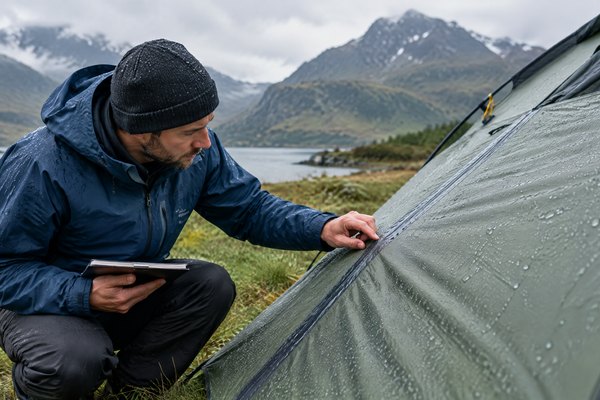
A useful sourcing decision starts with a written requirement that can be challenged, sampled, inspected, and approved.
Direct answer (what this guide delivers)
If you need a dependable inflatable glamping tent manufacturer for retail, wholesale or private-label programs, this guide tells you exactly what to specify, which tests and documents buyers usually require, and how to qualify suppliers from first contact through production. Read on for practical checklists, a buyer-decision table, a sample-request brief you can email, and an inspection-ready workflow.
Why Choose a Specialist Inflatable Glamping Tent Manufacturer (Discovery)
Inflatable tents use air-beam structures instead of metal poles. For glamping, the requirements include larger enclosed volumes, heavier textiles, integrated windows/doors, and higher finish/fit standards than backpacking tents. Choosing a specialist reduces iterations on seams, air valves and integrated fittings.
H3: Typical Use Cases
- Glamping sites and resorts (seasonal or year-round)
- Event or VIP hospitality spaces
- Retail-ready private-label collections for outdoor lifestyle brands
H3: How this differs from an outdoor canopy tent manufacturer
An outdoor canopy tent manufacturer typically focuses on event awnings and pop-ups where metal frames, quick-connect legs and lighter fabrics dominate. If you plan to sell both product lines, confirm whether your supplier can handle the heavier textiles, integrated liners and sewn-in glazing used in inflatable glamping tents.
H3: Materials and air-structure basics
Key elements to evaluate: textile denier and coating (PU, TPU, or PVC), seam construction (taped, welded, welded+tape), bladder construction and valves (self-draining designs), and glazing materials for large windows. Performance choices affect weight, pack volume, durability and supply cost.
Define Critical Product Specifications (Discovery → Specification)
Before contacting suppliers, create a one-page specification that clearly lists: footprint and internal layout, peak height, door/window locations, season rating, target weight, intended retail price band, and accessory list (floor, mattress, heater vents, electrical passthroughs).
H3: Structural and performance specs
- Inflatable frame pressure and required pump type (manual/electric)
- Design wind and snow load targets (express in m/s or kPa)
- Number and serviceability of bladders/valves
H3: Textile, coatings and finishes
Specify fabric base (e.g., polyester or cotton blend), coating type, waterhead (mm), UV resistance target and visible finish. If you have specific chemical limits (e.g., for EU markets), note them now — this affects supplier selection and testing scope.
H3: Packaging and retail requirements
State retail carton size, labelling, barcode placement, manual languages, and whether you need a retail-ready display box. Packaging often drives carton count and pallet optimization which affects shipping costs.
Regulatory and Compliance Considerations (Market-Specific)
Regulatory needs vary by destination market and product type. CampLume is an OEM/ODM camping gear manufacturer and can help prepare documentation, but you should confirm the applicable requirement for your exact product and market.
- US: Confirm whether ASTM F3431 camping tent or other voluntary standards apply to your use case; some retailers require third-party test reports to specific ASTM or NFPA standards for camping tents or accessories.
- EU: Consider the General Product Safety Regulation — in this guide we use the term EU GPSR camping tents to describe safety responsibilities under EU law (producer/importer obligations include risk assessment and technical documentation).
- France: If you plan large-volume sale into French retail or wholesale channels, request paperwork that demonstrates France camping tent wholesale EU compliance (declaration of conformity, lab reports and CE-relevant evidence where applicable).
- Germany: For chemical compliance, ask your Germany camping tent supplier REACH documentation — specifically supplier statements and test reports for restricted substances that can be present in coatings, plasticizers and dyes.
Do not assume a single certificate covers all markets. Confirm the applicable requirements with your legal or compliance team for the destination and retail channel.
Supplier Qualification Checklist (Supplier Qualification)
This checklist is designed to move a supplier from initial contact to a qualified vendor for production.
- Company details and manufacturing scope: verify they are an OEM/ODM camping tent manufacturer and which parts are in-house vs subcontracted.
- References and product samples: request finished product samples and similar models for quality benchmarking.
- Production capacity and lead times: verify the number of units per month and peak-season constraints.
- Quality systems and inspection: request evidence of an internal QC process, in-line checks and final AQL sampling.
- Materials traceability and test reports: ask for material data sheets (MDS) and recent lab reports for water resistance, UV aging and restricted substances.
- Factory audit or virtual walkthrough: verify sewing capacity, heat-welding equipment, bladder production and valve assembly areas.
H3: Sample Process and Review
- Prototype: supplier provides a fit-for-purpose prototype based on your spec.
- Lab testing: agree on which tests (e.g., seam strength, air-holding, waterproofing) will be third-party verified.
- Fit & finish sample: approve trims, zippers, glazing, and logo/branding placement before tooling or bulk cut files are finalized.
H3: Factory Testing and Pre-Production Inspection
Insist on documented factory tests: air-hold duration under defined pressure, seam tensile tests and a pre-production sample run inspected against the approved sample.
H3: Change Control
Agree contractually on a change-control process for material substitutions, tooling changes or design alternations. Require notification timelines and re-approval samples before implementation.
Product Development Workflow With an OEM/ODM Camping Tent Manufacturer
Working with an ODM camping tent manufacturer shortens time-to-market for custom designs because many components (valves, bladders, pumps, fabrics) may already be sourced. Still, follow a clear workflow.
- Step 1: One-page brief and target retail price
- Step 2: Technical specification and critical dimensions
- Step 3: Prototype and internal review (1–3 iterations typical)
- Step 4: Laboratory testing and on-site factory verification
- Step 5: Pilot run or pre-production batch
- Step 6: Production, AQL inspection and packed sample approval
- Step 7: Shipping preparation, export documentation and tracking
H3: Packaging, Shipping Preparation and Labelling
Clarify carton dimensions, unit-per-carton, pallet stacking pattern and labeling (including any language or safety text required by the destination market). If you require DDP, FOB or EXW price quotes, specify now.
H3: Documentation and Traceability
Ask for a packlist, commercial invoice, export declarations, materials declarations (e.g. MDS), test reports and a production lot number linked to inspection records.
Quality, Testing and On-Site Inspections
A robust QC plan for inflatable glamping tents should combine factory tests with third-party lab verification for critical parameters.
- Factory tests: air-hold, seam visual and tensile checks, valve leak inspections, and prototype stress tests
- Third-party lab tests: waterproof ratings, UV-resistance (accelerated weathering), and chemical screening if required by the market
- On-site inspection: pre-shipment AQL, packaging verification, and random functional checks on pumps and valves
Typical inspection checklist items: correct part counts, presence and quality of repair kits, correct pump type, intact bladders, and accurate labeling. For buyers shipping to Germany or the EU, retain the test reports that demonstrate conformity with the requested chemical and safety parameters.
Pricing, Lead Times and Cost Drivers
Major cost drivers for inflatable glamping tents:
- Fabric and coating type (TPU/PVC/PU) and weight
- Bladder quality and valve design
- Number of windows and custom glazing
- Branding, printed materials, and retail packaging
- Accessories such as removable floors, liners or furniture
Typical lead times (indicative): prototype 4–8 weeks; pilot run 2–4 weeks after approval; mass production 6–12 weeks depending on capacity and seasonal demand. MOQs depend on model complexity — discuss options for staggered orders or initial pilot runs with your ODM camping tent manufacturer.
Buyer-Decision Table (concise)
| Decision Factor | Standard ODM Model | Custom OEM/ODM | Sourcing From Multi-Product Supplier |
|---|---|---|---|
| Upfront cost | Lower (using existing designs) | Higher (tooling & design fees) | Variable |
| Time to market | Faster | Slower | Fast for canopies, slower for glamping tents |
| Customization | Limited | Full | Good if supplier supports both inflatable tents and awnings |
| Sample controls | Standard | Tight change control required | Ensure separate QC for different product lines |
Mid-article CTA (email brief request)
To get a realistic quote and timeline, email a one-page brief to sourcing@camplume.com with this minimum information:
- Target market (country/retail channel)
- Basic floorplan and peak height
- Target annual quantity and initial pilot qty
- Preferred fabric/coating and any required certifications (e.g., ASTM F3431 camping tent test, EU GPSR camping tents documentation)
- Target FOB/landed price and desired ship date
A clear one-page brief cuts 2–3 weeks off the early discovery cycle.
Practical Tips for Importers and Product Managers
- Early chemical screening saves costly rework. If you will sell into Germany, explicitly request Germany camping tent supplier REACH statements and recent test data for coatings and plastics.
- For French wholesale pipelines, ask suppliers to include France camping tent wholesale EU compliance documentation up front — distributors often require it at onboarding.
- If you also sell event shelters, confirm whether your partner is an outdoor canopy tent manufacturer or has lines that can be shared; the tooling and sewing stations differ.
- Ask for production run photos and videos, not only lab reports; visual verification of bladder installation, valve routing and seam consistency reduces misunderstandings.
FAQ
Q: How many prototype iterations are typical for an inflatable glamping tent? A: Expect 1–3 iterations for structure and fit, plus an additional round for glazing/branding. Complexity and new features increase iterations.
Q: Do I need third-party lab testing? A: Many retailers and EU importers require independent test reports. For example, buyers sourcing into the US may request ASTM F3431 camping tent-related tests; confirm the retailer’s requirements.
Q: What documentation should I insist on before shipping? A: Minimum: inspection report (AQL), packlist, commercial invoice, materials declarations (MDS) and any agreed lab reports for performance or chemical limits.
Q: Can I source an inflatable glamping tent and a pop-up canopy from the same supplier? A: Sometimes. Verify whether the vendor operates both inflatable and frame-based sewing/welding lines. Ask for separate samples from both product lines.
Q: How do I manage change control after initial production? A: Include a contractual change-control clause specifying notification periods, production holds, and sample re-approval requirements. Require traceable lot numbers for any approved change.
Final Conclusion and CTA
Sourcing inflatable glamping tents requires clear specs, market-specific compliance checks (for example ASTM F3431 camping tent considerations in the US and EU GPSR camping tents responsibilities in Europe), and a disciplined supplier-qualification process. For buyers entering French wholesale or German retail channels, request France camping tent wholesale EU compliance and Germany camping tent supplier REACH documentation early to avoid delays.
If you want a tailored evaluation, email a one-page brief to sourcing@camplume.com with the details listed above. CampLume is an OEM/ODM camping gear manufacturer that can provide prototypes, pilot runs and production planning support — we will reply with an estimated timeline, suggested test plan and a transparent sample/production cost breakdown.
Final CTA: Email info@camplume.com with your product category, target market, estimated quantity, current specification and packaging stage. Request a documented response that identifies assumptions, open evidence and the next approval gate.
Related CampLume resources
-
Read: Inflatable Tents vs Pole Tents: Which Format Fits Your Camping Product Range? for a connected sourcing decision.
-
Explore CampLume tents options to compare a relevant product platform.
-
See the CampLume buyer FAQ for concise guidance on samples, MOQ, quality control, compliance and shipment preparation.
-
Discuss an OEM or ODM brief with CampLume when product configuration, custom branding or packaging needs to be scoped.
Project discussion
Need to apply this guide to a product programme?
Send your product category, target market, estimated quantity, current specification and packaging stage. CampLume will continue the discussion by email.
Email info@camplume.comSources and further reading