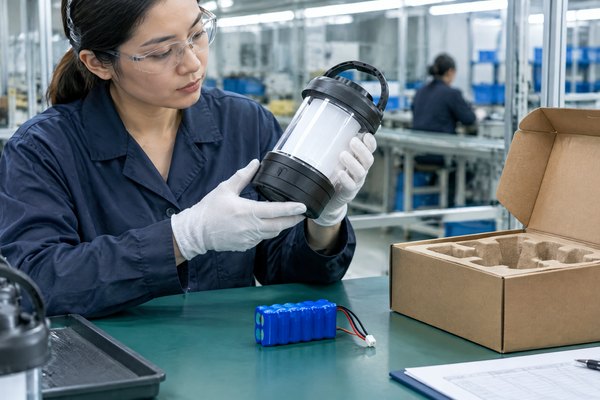
A useful sourcing decision starts with a written requirement that can be challenged, sampled, inspected, and approved.
Direct answer (short): If your camping lantern contains lithium cells or an internal lithium battery, you will need the correct lithium battery shipping documents for camping lantern shipments and the supporting information required by carriers and customs. Exact document names, test reports and labeling depend on battery chemistry, watt‑hours (Wh), whether cells are installed or separable, and the destination market—confirm the applicable requirement for each shipment.
What You Need To Know About Lithium Battery Shipping Documents For Camping Lantern
Buyers commonly ask: what papers and workflow are needed so a container of camping lanterns moves from the factory to a US, UK or EU warehouse without hold-ups? Key elements to plan and verify:
- Battery identification: chemistry, cell count, nominal voltage and Wh rating per battery. This determines whether the battery is subject to dangerous-goods rules.
- Test reports: UN 38.3 is typically required for lithium cells/batteries shipped by air or sea. For some sea shipments additional IMO/IMDG packaging rules apply for certain packagings.
- Shipping declaration: a Dangerous Goods (DG) declaration when required, and correct UN numbers and proper shipping names.
- Labeling and markings: battery handling labels, lithium battery mark, package orientation and cargo aircraft restrictions where applicable.
- Transport mode and carrier requirements: air (IATA/ICAO), sea (IMDG), road (ADR), and parcel carriers (each has separate processes).
As an OEM/ODM camping gear manufacturer, CampLume can prepare documentation packages based on the battery and final configuration, but you must confirm the exact requirements for the destination and your chosen carrier.
Technical Choices: COB vs LED Camping Lantern
The lighting technology you choose affects brightness, battery runtime, cost, and packaging decisions. When comparing COB vs LED camping lantern options, consider:
Light Quality and Beam
- COB (Chip On Board) produces a uniform field of light with fewer visible hotspots—preferred for area lighting and reading inside a tent.
- Discrete LEDs create more directional beams; multiple small LEDs enable adjustable beam patterns and higher apparent lumen outputs in spot modes.
Efficiency and Thermal Management
- COB modules can be efficient at mid-range outputs but often require careful heat-sinking in a compact lantern housing.
- High-efficiency discrete LEDs (with quality drivers) extend runtime and simplify thermal paths.
Durability and Cost
- COB parts simplify assembly but can be sensitive to thermal stress; replacements require board-level changes.
- Standard LEDs are easier to source and replace; they commonly reduce long‑term BOM risk for private-label runs.
Buyer decision point: if you want a soft, uniform glow for family camping, COB may be preferable. If you prioritize high lumen output, selectable modes, or targeting off‑grid users with spot functions, discrete LEDs are often better.
Comparison Table: Choosing The Right Lantern Type
| Primary Use | COB Lantern | Discrete LED Lantern | Suggested Buyer Decision |
|---|---|---|---|
| Tent / ambient light | Soft, even light; good for close quarters | Can be diffused, but may show hotspots | COB if uniform glow is priority |
| Task/spot lighting | Limited focused output | Superior spot and high-beam options | LED for multi‑mode lanterns |
| Thermal/compact design | Requires heat management | Easier to cool in segmented design | LED for compact, high-output units |
| Price and serviceability | Lower assembly complexity | Easier parts replacement | LED for long-term supply reliability |
Product Types, Market Positioning, and Wholesale Options
Understand which SKU groups you need before you ask for quotes. Common B2B categories we manufacture and supply include:
- wholesale camping lights: mainline lanterns and headlamps for retailers and distributors.
- rechargeable outdoor lights wholesale: models with integrated Li‑ion batteries, USB-C input, and power-bank functionality.
- off-grid camping lights wholesale: lanterns and lamps optimized for long runtime, solar input, or with detachable battery packs.
Decide the product matrix you want: basic lantern, lantern + powerbank, lantern + panel kit, or lantern + accessory bundle (hooks, stakes, carabiners). Each affects packaging size, shipping volume and the required paperwork for batteries.
Private Labeling And Packaging: Private Label Camping Light Retail Box
Brand presentation is often decided at the retail-box stage. For a private-label run request a private label camping light retail box spec that includes:
- Visual layout and dieline approval cycle.
- Mandatory on-box declarations: battery warnings, handling icons, country of origin, importer contact and any market-specific statements.
- Barcode, UPC/EAN placement, and SKU labeling for distribution systems.
- Inner protection and accessory pockets to reduce transit damage.
Workflow notes: finalize the retail box graphic and approve a dieline before pre-production samples. Factory-managed packaging die samples and pre-shipment photo packs should match the approved artwork. Any late changes to the retail box triggers a change-control review and may extend lead time.
Factory Workflow: Specification, Sample Review, Testing, Inspection, And Change Control
As an OEM/ODM camping gear manufacturer, CampLume follows an ordered workflow you should confirm with your product manager. Typical stages buyers control:
Product Specification
- Agree on BOM: LEDs or COB module, battery cell model and capacity, charging protocol (USB‑C PD or standard), housing material and ingress rating.
- Specify required test standards and targeted markets—this determines labeling, voltage limits, and testing scope.
Sample Review
- First Article Samples (FAS): review mechanical fit, light output, mode operation and initial packaging.
- Functional evaluation: runtime tests, charging behaviour and any claimed power-bank output metrics.
Factory Testing And Inspection
- Production-line checks: incoming material inspections, mid‑run QC, and final visual/function tests.
- Independent inspection options: pre-shipment inspection (PSI) by a third party can be arranged. The buyer defines sampling plans and acceptance criteria.
Change Control
- Any change to battery supplier, LED binning, charger IC or housing material requires a formal change notice. Changes that affect test outcomes (Drop, IP, or UN 38.3 data) must be retested or at least risk-assessed.
Document exchange: keep a structured folder with BOM, accepted FAS photos, test summary, label art and packaging dieline to avoid confusion during handovers.
Mid-article CTA (email brief request): To get a tailored quote and exact documentation checklist, email sourcing@camplume.com with this brief: product type, battery chemistry and Wh, target market (US/EU/UK), desired annual quantity, retail-box dieline (if available), and any required standards or tests. We reply with a sample and documentation plan.
Mid-Article CTA: Send Your Requirements
If you are evaluating lithium battery shipping documents camping lantern, email info@camplume.com with your product category, selling market, estimated quantity, current specification and packaging brief. Ask for a documented reply that separates assumptions and deviations from the quotation.
Shipping Preparation, Documentation, And Compliance
Preparing shipments of battery-powered lanterns for export requires both paperwork and physical packaging steps.
- Documentation package: typical papers include packing list, commercial invoice, battery test report (UN 38.3 when required), MSDS (material safety data sheet) for the battery, DG declaration (if carrier requires it), and HAZMAT labels. Remember that parcel carriers often need different documentation than FCL ocean freight.
- Package marking: battery handling mark and cargo aircraft restriction label (if applicable), plus orientation and fragile labels when needed.
- Export packaging and inner protection: select packaging that meets drop-test expectations and secures battery compartments to prevent accidental activation.
- Customs and importer responsibilities: the importer or the consignee often needs to confirm they can accept battery shipments; some warehouses reject them. Plan warehouse acceptance ahead of shipment.
Special note on wholesale portable power accessories: when your order includes power banks, solar charge controllers or external battery packs, treat them as separate DG items. They often require their own UN numbers, test reports and packaging rules. Combining these items in the same carton with lanterns can complicate declaration—discuss the packing plan with the manufacturer.
Carrier rules change: always confirm the carrier’s latest guidance and the destination country's import controls. CampLume will prepare the typical documentation but cannot substitute for carrier or customs advice.
Pricing, MOQ, Lead Times, And Supplier Selection
Procurement decisions balance price, quality and supply reliability.
- MOQ and tooling: private-label box printing and custom molds might raise minimums. Ask for tiered pricing—CNY-based FOB and DDP options if needed.
- Lead time: typical lead times include sample (2–4 weeks), pre-production run (2–6 weeks depending on components), and production (4–8+ weeks). Batteries and LED chips are often the longest lead‑time items.
- Warranty and after-sales: define warranty terms, return or repair workflows, and spare-parts availability. Agree how warranty returns are handled and whether repaired units are shipped back or disposed of.
Risk mitigation: when buying wholesale camping lights or rechargeable outdoor lights wholesale, order a pilot batch for in-market testing before a full seasonal buy. This lets you validate labeling, packaging and actual runtime performance.
FAQ
Q: Do all lithium-powered camping lanterns need UN 38.3 tests? A: UN 38.3 applies to most lithium cells and batteries shipped as cargo or packed with equipment. Whether you must supply a UN 38.3 report depends on battery type, Wh rating and transport mode—confirm the exact requirement for each product and shipment.
Q: Can I mix lanterns with power banks in the same carton? A: You can, but mixing increases documentation complexity. Power banks often have separate UN numbers and packaging restrictions; confirm with your manufacturer and carrier before final packing.
Q: What should be in the private label camping light retail box to avoid customs issues? A: Include clear importer contact, country of origin, battery warnings and any market-specific notices. For batteries, include basic battery data and handling icons on or inside the box. Final content depends on the destination market.
Q: How do I evaluate a factory’s testing capability? A: Ask for factory test lists, examples of test records, standard operating procedures (SOPs), and whether they can provide pre-shipment photos and batch test summaries. For critical tests you may request third-party testing or PSI.
Q: What’s the difference between off-grid camping lights wholesale and standard rechargeable outdoor lights wholesale? A: Off‑grid models are optimized for extended runtime and may include solar input, detachable battery packs or very large-capacity cells. Rechargeable outdoor lights wholesale covers a broader set including commuter or backyard lights with shorter runtimes.
Q: Who is responsible for the lithium battery shipping documents camping lantern imports—the buyer or the factory? A: Responsibility is negotiated: the factory prepares the documents if agreed in the contract, but the importer must ensure the paperwork matches the carrier and customs requirements. Clarify responsibilities in the purchase order.
Conclusion and Next Steps
Buyers must treat battery documentation, product specs and manufacturing controls as integrated decisions—not separate tasks. Start by finalizing the battery chemistry and Wh rating for each SKU, select the lighting technology (COB vs LED camping lantern tradeoffs), and request a sample that includes the proposed retail box. Confirm which documents you require for your destination and carrier (UN 38.3, DG declarations, MSDS), and include any power accessories in the documentation plan.
For a concise, actionable quote and documentation checklist, email sourcing@camplume.com with this brief: product model or type, battery chemistry and Wh, target market(s), expected annual quantity, and packaging requirements. CampLume, as an OEM/ODM camping gear manufacturer, will respond with a sample plan, estimated lead times, and a documentation matrix tailored to your requested markets.
Final CTA: Email info@camplume.com with your product category, target market, estimated quantity, current specification and packaging stage. Request a documented response that identifies assumptions, open evidence and the next approval gate.
Related CampLume resources
-
Read: What Should Buyers Check When Sourcing Rechargeable Camping Lanterns? for a connected sourcing decision.
-
Explore CampLume lighting options to compare a relevant product platform.
-
See the CampLume buyer FAQ for concise guidance on samples, MOQ, quality control, compliance and shipment preparation.
-
Discuss an OEM or ODM brief with CampLume when product configuration, custom branding or packaging needs to be scoped.
Project discussion
Need to apply this guide to a product programme?
Send your product category, target market, estimated quantity, current specification and packaging stage. CampLume will continue the discussion by email.
Email info@camplume.comSources and further reading