A useful sourcing decision starts with a written requirement that can be challenged, sampled, inspected, and approved.
Direct answer (what this guide delivers)
If you are qualifying a new partner for OEM outdoor furniture for camping, this guide gives a practical, step-by-step checklist for supplier qualification at the specification, sample, testing and inspection stages. It focuses on what a product manager, buyer or quality lead needs to verify on a site visit or in document review so you can accept production samples and move to series production with minimal surprises.
What Supplier Qualification Covers (Quick Overview)
Supplier qualification is not a one-off audit. It is a sequence: define the product spec, prototype and review samples, confirm factory testing and quality control, settle packaging and shipping, and put a change-control process in place for future revisions. The requirements depend on the exact product and destination market — confirm the applicable requirement for regulations such as REACH, CPSIA, or EN standards.
Key workflow elements you will use during qualification:
- Product specification and drawings (materials, tolerances, coatings, labels)
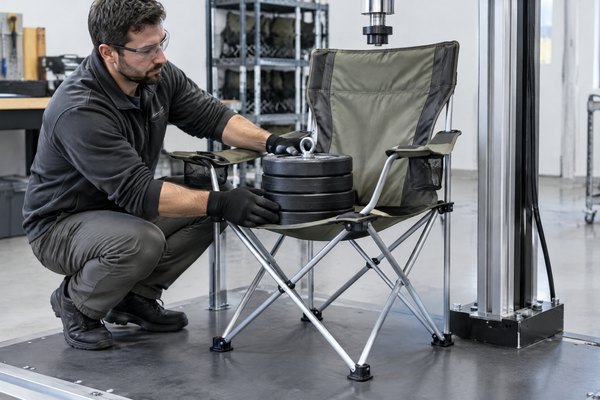
- Sample review and functional testing (e.g., camping chair load test)
- Factory testing and in-line quality control checks (camping chair quality control inspection)
- Packaging, documentation and shipping preparation
- Change control, corrective actions and continuous inspection
CampLume is an OEM/ODM camping gear manufacturer; this guide describes practical checks and expectations, not legal advice or lab certification.
Product Specification: Turning Design Into Buyable Details
A clear, enforceable product specification reduces rounds of rework. For outdoor furniture that will be used in mixed climates and stored between seasons, specs must cover structural design, fabrics or surface treatment, fasteners, labelling and packaging.
What a complete specification should include
- Bill of Materials (BOM) with supplier part numbers and alternatives
- Detailed drawings (exploded views, tolerances, weld symbols, screw sizes)
- Material grades (e.g., 6061-T6 aluminium, 304 stainless fasteners) and finish processes
- Functional requirements: weight capacity, fold/unfold cycles, locking mechanism force
- Label and documentation content: care instructions, warranty text, country-of-origin marking
When buyers request REACH compliant camping furniture, state which substances are restricted and whether you require supplier declarations or third-party test reports. For some EU destinations you will need documented evidence; for others, a supplier Declaration of Conformity and incoming material controls may be sufficient. Always confirm the applicable requirement for your destination market.
Product family notes
If you plan a camp kitchen station product line, involve the camp kitchen station manufacturer early so plumbing, stove mounts and countertop materials are specified together. Co-locate design for cook surfaces and support frames to avoid mismatched load capacity.
Prototyping and Sample Review
The sample review stage is where engineering intent meets real parts. Use objective pass/fail criteria and a documented sample approval form that becomes part of the PPAP (or equivalent) packet.
Functional testing to require
- Camping chair load test: specify static load, dynamic impact and fatigue cycles, and the exact fixtures used for testing.
- Outdoor fabric tests: UV fade exposure and water repellency tests where applicable.
- Mechanism cycle test: hinge and locking mechanisms should be cycled to a defined number.
For products that must demonstrate REACH compliance, include chemical testing of paint, coatings, and plastic parts as part of the sample plan.
Field trials and user feedback
Arrange a small field trial in the intended use conditions. Document real-world observations (comfort, folding speed, dirt ingress, stability on uneven ground). Field failures are often due to regulatory or practical use cases not captured in lab tests.
Sample approval process
- Pre-production prototype (visual/ergonomic check)
- Engineering sample (to complete drawing tolerances and functional tests)
- Production sample (made on final tooling and production processes)
- Sign-off document: include photos, test reports, deviations and corrective actions
Factory Testing, Quality Control, and Inspections
Your supplier should have documented factory tests and a quality control process. For chairs and other load-bearing products, camping chair quality control inspection and documented load tests are essential acceptance criteria.
Typical factory tests and checkpoints
- Incoming Material Inspection (IMR): verify material certificates and dimensional checks
- In-process inspection (IPQC): weld quality, powder coat thickness, seam integrity
- Functional tests: load and fatigue testing for frames and locking components
- Final product inspection (FQC): visual defects, assembly completeness and labelling
A camping chair load test should specify test apparatus, load increment steps, dwell times and acceptance criteria. If your specification requires a verified test report, state whether factory internal test records suffice or if you need a third-party laboratory test.
Using third-party inspection
For critical launches or first production runs request a third-party pre-shipment inspection. The inspector will use your checklist to confirm the camp furniture meets the sample standard. Include camping chair quality control inspection points and pass/fail levels on the checklist.
Sample QC checklist items (example)
- Frame weld continuity (no cracks, uniform fillet)
- Fastener torque and locking verification
- Fabric seam strength and water resistance where required
- Label and packaging accuracy
Mid-Article CTA: Send Your Requirements
If you are evaluating OEM outdoor furniture for camping, email info@camplume.com with your product category, selling market, estimated quantity, current specification and packaging brief. Ask for a documented reply that separates assumptions and deviations from the quotation.
Packaging, Labelling and Shipping Preparation
Packaging protects product integrity in transit and is a compliance point for some retailers. Define packaging standards early to avoid packaging-driven product damage.
Key packaging elements:
- Inner protective materials (foam, corner protectors, polybags for fabrics)
- Carton specification (bursting strength, double-wall where needed)
- Pack configuration (units per carton, masters per pallet, orientation)
- Marking and documentation (packing list, manual, compliance labels)
Shipping preparation should include a documented packing list and export documentation checklist. For cross-border shipments that include chemical-treated fabrics, include references to REACH or other destination-specific requirements in the paperwork.
Supplier Capabilities: What To Verify On-Site or In Audit
When you visit a camping furniture OEM ODM partner, verify capability across processes, not just final assembly. Check whether the factory has the tooling and management systems required for your product family.
Production processes to confirm
- Frame fabrication: tube bending, CNC cutting, welding jigs and fixtures
- Surface finishing: powder coat booths, curing ovens and paint labs
- Soft-good production: cutting tables, sewing machines and sample rooms
- Injection or moulding operations if you use hardware or plastic parts
Also evaluate production flow: is the sample shop separated from production? Are critical tests performed on the line or in a central test lab?
Supplier and distribution relationships
If you work through a camping furniture distributor supplier, verify responsibilities: who handles returns, warranty claims, or recalls? Confirm SLAs and communication pathways. If you require production for a camp kitchen station manufacturer network, confirm upstream component suppliers (hinges, burners, stainless parts) and traceability.
Certificates and records
Request records, not just certificates. For example, instead of accepting a generic compliance note, ask for batch test reports, incoming material certificates and calibration records for test equipment. For REACH obligations, ask for supplier declarations and test reports relevant to restricted substances, but always confirm the applicable requirement for your market.
Commercial Terms, Change Control and Ongoing Quality
Agreeing commercial terms is part of qualification. MOQ, tooling amortization, payment terms, lead times and penalty clauses for late delivery or quality failure should be documented.
Change control
Create a simple change-control policy: any changes to materials, process, tooling or packaging must be submitted in writing with impact analysis and approved samples before implementation. Include revision numbers and a shelf-life for approved samples to force periodic re-qualification.
Warranty, returns and corrective action
Define warranty windows, acceptable return rates and a root-cause process for failures. For recurring quality issues, require the supplier to produce a corrective action plan that includes containment actions and preventative measures.
Buyer Decision Table (concise)
| Decision Item | Aluminium Frame | Steel Frame | Wicker / Wood Frame |
|---|---|---|---|
| Typical Use | Lightweight travel chairs | Heavy-duty campsite furniture | Aesthetic & campsite furniture |
| Durability | Corrosion-resistant if anodized | Very strong, needs coating | Weather-sensitive, requires protective finish |
| Weight | Low | Higher | Medium-high |
| Buyer Concerns | Frame stiffness, weld quality | Rust protection, weight | UV/weather protection, fungal resistance |
Mid-article CTA
If you are ready to brief suppliers, email a concise project brief to sourcing@camplume.com. Include:
- Product type(s) (e.g., folding chair, camp kitchen station)
- Target market(s) and required compliance (for example: REACH compliant camping furniture for EU)
- Anticipated annual volume and desired MOQ
- Target price/FOB or DDP expectation
- Request for samples and any required tests (e.g., camping chair load test)
Provide drawings (CAD or PDF), photos of reference products, and a contact for technical questions. CampLume will respond with capability notes, an estimated tooling lead time and a sample plan.
FAQ
Q: What is the difference between OEM and ODM for camping furniture? A: OEM outdoor furniture for camping means you provide the design or spec and the factory produces to that design. An ODM supplies design and manufacturing; the factory owns product design and offers off-the-shelf models you can rebrand. Assess whether you need a custom spec or prefer faster time-to-market with an ODM model.
Q: How do I verify REACH compliance for furniture components? A: Ask for material declarations and, where necessary, third-party test reports for restricted substances. For components like finishes and plastics, request batch-level documentation and supplier declarations. Always confirm the applicable requirement for your target market.
Q: What should a camping chair load test include? A: Your test protocol should specify static load levels, impact/dynamic loads, cycle counts for fatigue, fixture configuration and acceptance criteria. Include test setup photos and equipment calibration records with the report.
Q: When is a third-party inspection recommended? A: For first production runs, large initial orders, or complex products (e.g., camp kitchen station manufacturer items with gas fittings), third-party pre-shipment inspection reduces risk. Also use third-party labs for chemical tests tied to regulatory compliance.
Q: How do I manage packaging changes after production starts? A: Use your change-control procedure: supplier submits proposed packaging change, provides production samples and a risk assessment, and you approve before the change is implemented.
Conclusion and Next Steps
Supplier qualification for camping furniture is a sequence of well-documented steps: lock the specification, verify samples with defined tests (including camping chair load test where relevant), confirm factory QC (camping chair quality control inspection) and packaging, and formalize change control and commercial terms. For products sold in regulated markets, build chemical and lab-testing requirements — for example to demonstrate REACH compliant camping furniture — into the specification and sample plan.
If you want a tailored next step, email sourcing@camplume.com with the brief described above (product type, target market, volumes, required tests). CampLume is an OEM/ODM camping gear manufacturer and can outline capability, sample lead time and an initial inspection checklist so you can move from qualification to production with confidence.
Final CTA: Email info@camplume.com with your product category, target market, estimated quantity, current specification and packaging stage. Request a documented response that identifies assumptions, open evidence and the next approval gate.
Related CampLume resources
-
Read: What Should Buyers Check Before Ordering Wholesale Camping Chairs? for a connected sourcing decision.
-
Explore CampLume furniture options to compare a relevant product platform.
-
See the CampLume buyer FAQ for concise guidance on samples, MOQ, quality control, compliance and shipment preparation.
-
Discuss an OEM or ODM brief with CampLume when product configuration, custom branding or packaging needs to be scoped.
Project discussion
Need to apply this guide to a product programme?
Send your product category, target market, estimated quantity, current specification and packaging stage. CampLume will continue the discussion by email.
Email info@camplume.comSources and further reading