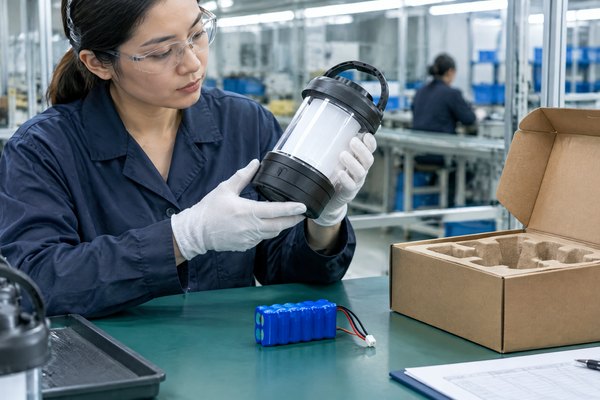
A useful sourcing decision starts with a written requirement that can be challenged, sampled, inspected, and approved.
Direct answer
If you need an outdoor lighting private label supplier, focus first on an OEM/ODM partner that understands camping-use requirements (IP, battery safety, dimming and mounting), has clear sample and testing workflows, and can match your branding, packaging and shipping requirements for your destination market. Requirements vary by product and country; define technical specs and volume, then qualify suppliers on capability, process controls and battery handling.
Why This Guide Matters
Private-label outdoor lighting for campsites, backpacking or backyard use combines electronics, plastics or metalwork, battery chemistry and packaging constraints. Buyers who move too quickly can miss critical items: shipping rules for lithium batteries, inadequate ingress protection for rainy use, or packaging that fails retail or fulfilment checks. This guide walks product managers and buyers through purchase preparation and supplier qualification so you reduce launch risk for tent lights, lanterns and rechargeable outdoor lamps.
Purchase Preparation: Define What You Actually Need
Start with a concise product brief you can use during supplier outreach. That brief should include:
- Target application: tent lighting, campsite lantern, backpacking headlamp, or a multipurpose rechargeable outdoor light.
- Target user and use-case: weight-sensitive backpacking vs family-camping durability and brightness.
- Required electrical specs: lumen ranges, run-time at defined modes, battery type (Li-ion cell count, capacity), charge method (USB-C PD, solar, proprietary) and charging time goals.
- Environmental targets: IP rating, operating temperature range, drop height.
- Mechanical materials and finishes: housing material, lens type, suspension or mounting method.
- Branding and packaging expectations: printed/embossed logos, hang-sell retail pack vs bulk cartons, UPC/barcode needs.
- Regulatory/destination constraints: confirm the applicable requirement for CE/UKCA, FCC, RoHS, REACH, UN38.3 for batteries and country-specific labelling.
A clear brief saves time for both you and the supplier. It also helps a private-label team obtain accurate tooling, sample and freight estimates.
Create a Spec Checklist
Turn the brief into a one-page spec checklist that you and the supplier will use through prototyping, sample review and production sign-off. Include acceptance criteria (e.g., "2,000 lm maximum white, 6 hours runtime at 300 lm") so tests are unambiguous.
Estimate Volumes and Pricing Targets
Be realistic about initial MOQ and forecasted annual quantity. Suppliers who serve retailers will price differently than small-batch ODMs. If you plan to order bulk camping lanterns for retail rollout, state seasonal peaks and replenishment frequency — this affects lead time and tooling amortization.
Defining Technical Specs and Materials
Good product specs reduce iteration. Key items:
- Optics and LEDs: specify lumen output, color temperature, CRI (if color rendering matters), and beam pattern.
- Power and charging: list battery chemistry, cell supplier preference if any, protection circuits, charging interface (USB-C, micro-USB, solar input), and fast-charge requirements.
- Mechanical design: materials (ABS, PC, aluminum), expected mechanical life, clip/hook or tripod interfaces and waterproof seals.
- Controls and UI: switch types, dimming steps or continuous control, lock modes to prevent accidental activation.
Mentioning a portable power accessories manufacturer or portable power accessories supplier early helps if you want integrated power banks, external USB outputs or accessory packs.
H3 — Battery Safety And Transport Constraints
Lithium batteries trigger transport and certification requirements. Decide whether batteries will be shipped inside finished products, separately, or supplied by your logistics partner. The approach affects packaging, documentation and cost.
H3 — Serviceability And Replacement Parts
If your product will be sold to outdoor retailers, clarify whether batteries or glass/plastic parts are replaceable. Define how spares will be ordered (SKUs, MOQ) and the expected lead time for spare shipments.
H3 — Sustainability And Materials
If you require recycled plastics, specific packaging recyclability or reduced hazardous substances, add these requirements to the spec. These constraints affect supplier choice and cost.
Supplier Qualification: What To Ask and Verify
When evaluating an outdoor lighting private label supplier, collect information in these categories:
- Product experience: do they have OEM/ODM experience with rechargeable outdoor light manufacture, tent lighting or lantern lines?
- Manufacturing scope: in-house injection molding, PCB assembly (SMT), battery pack assembly, final assembly and packing.
- Minimum order quantities (MOQ) and typical lead times for tooling and production runs.
- Quality processes: incoming material inspection, in-line testing, final inspection and corrective-action records.
- Testing capability: thermal, IP, drop, burn-in and electrical safety tests — or whether they coordinate with local test labs.
- Battery handling: UN38.3 testing support, cell sourcing policies and packing for air transport.
- Traceability and documentation: lot traceability, production records and sample retention policy.
- References and sample history: ask for comparable product samples and their market context (not customer names).
CampLume is an OEM/ODM camping gear manufacturer; when you ask us for capabilities, we provide process maps and sample workflows rather than legal or testing guarantees. Confirm specific regulatory requirements for the target market with your compliance advisor.
Sample Review, Prototyping and Factory Testing
The sample phase is where most design decisions lock in.
- Concept sample: 3D-printed or low-volume sample to check size, ergonomics, fit and finish.
- Engineering sample: functional electronics with near-final firmware for performance checks (lumens, run-time, charging behavior).
- Pre-production sample (PPS): produced with final tooling and production processes. Use PPS for packaging fit-check and label proofing.
Factory testing you should expect or request:
- Functional testing (on/off, modes, charging/discharging behavior).
- Burn-in or extended runtime validation.
- IP and sealing checks (for wet environments).
- Mechanical tests: drop, hinge-cycle, connector life.
If you plan to purchase bulk rechargeable lanterns, specify acceptance sampling and AQL levels before production begins.
Mid-article CTA — Email Brief Request
To get a tailored response from CampLume, email a one-paragraph product brief to info@camplume.com with: product type (e.g., "rechargeable tent lantern"), target lumens and run-time, desired battery type, estimated first-order quantity, and destination market. We will reply with a recommended sample plan and a supplier qualification checklist.
Mid-Article CTA: Send Your Requirements
If you are evaluating outdoor lighting private label supplier, email info@camplume.com with your product category, selling market, estimated quantity, current specification and packaging brief. Ask for a documented reply that separates assumptions and deviations from the quotation.
Packaging, Labeling, Documentation and Shipping Preparation
Your packaging decisions affect freight, cost and retail acceptance.
- Retail vs Bulk Packaging: Retail-pack dimensions, hang-tag orientation, blister vs box, and retail UPC requirements. For tent lighting bulk supplier orders you may choose bulk cartons packed by unit count to simplify retailer receiving.
- Inner pack and master carton specs: units per inner, inner per master carton, carton size and weight limits for sea freight or courier.
- Battery shipping statements and paperwork: depending on whether batteries are installed, you may need to mark cartons for road/air restrictions and provide specific declarations for carriers.
- Customs documentation: commercial invoice, packing list, and any requested supplier declarations (origin, material content).
If you expect to import large quantities of bulk camping lanterns, share palletization and carton stacking preferences during RFQ. This avoids last-minute freight adjustments and inaccurate quotes.
Quality Assurance, Inspections and Change Control
Quality is process-driven. Build inspection and change control into the contract.
- Incoming inspection (IQC): raw materials, PCBs, LEDs, battery cells and enclosures.
- In-line checks: test boards, assembly torque checks, and intermittent sampling.
- Final random inspection (FQA): functional test and cosmetic check per agreed AQL.
- Third-party inspection: option to hire an independent inspector during mass production and pre-shipment.
Change control workflow
- Any change to approved tooling, BOM, component vendor or firmware should follow a documented change request. That request must include impact analysis on cost, lead time and compliance.
- Hold a sample validation step for any change that affects performance, safety or fit. Keep versioned production records and retain sign-off samples.
Buying Scenarios And Decision Table
Below is a concise table to help choose the right supplier type for common buyer profiles.
| Buyer Profile | Typical MOQ | Customization | Lead Time (tooling + first production) | Supplier Type Recommended |
|---|---|---|---|---|
| Small startup private label | 500–2,000 units | Logo, packaging, basic color options | 8–14 weeks | Smaller ODM with flexible tooling |
| Retail chain buying bulk camping lanterns | 5,000+ units | Customized features, UPC, stringent QA | 10–20 weeks | High-capacity OEM with QC systems |
| Outdoor brand needing integrated power | 1,000–10,000 units | Integrated power bank, accessory integration | 12–18 weeks | Supplier that is a portable power accessories manufacturer |
Use the table to align your expectations with supplier capabilities. If you need both lighting and battery packs, include a portable power accessories supplier in supplier qualification to avoid mismatched interfaces.
H3 — Common Cost Drivers
- Component choice (high-CRI LEDs, metal housings).
- Battery cell quality and protection circuitry.
- IP rating and sealing complexity.
- Tooling complexity for bespoke enclosures.
H3 — Typical Pitfalls To Avoid
- Underestimating battery transport paperwork.
- Not locking a firmware baseline before mass production.
- Failing to specify cosmetic tolerances for visible surfaces.
FAQ
Q: What is a reasonable lead time for a first production run? A: Typical tooling plus first production runs are 8–20 weeks depending on tooling complexity, whether custom PCBs are needed, and scheduled factory capacity. Confirm timeline in writing and include milestones for samples and tooling completion.
Q: What MOQs should I expect for bulk rechargeable lanterns? A: MOQ varies with complexity. Simple packs with standard components can start at a few hundred units; fully custom product lines often require 1,000–5,000 units. Ask suppliers for tiered pricing so you understand cost at different volumes.
Q: Can I ship products with batteries by air? A: Shipping batteries by air is allowed under regulated conditions but requires specific packaging, labeling and documentation. Whether allowed depends on battery size (Wh rating) and whether the battery is installed in the product. Confirm carrier rules and applicable regulations for your destination market.
Q: How do I verify a rechargeable outdoor light manufacturer’s quality processes? A: Request process documentation, sample production records, and photos of test setups. Arrange for a factory visit or a third-party inspection, and require pre-shipment inspection as a contractual term.
Q: Do suppliers handle barcode/packaging design and retail compliance? A: Some OEM/ODM partners provide packaging artwork and barcode assignment services, others expect you to supply print-ready files. Clarify responsibilities early and include packaging approvals in the sample sign-off process.
Q: What documentation should accompany an order for tent lighting bulk supplier shipments? A: Standard documents include commercial invoice, packing list, bill of lading/airway bill, and any required regulatory declarations. If batteries are present, provide the required transport documentation per the carrier and destination.
Final Checklist Before Signing an RFQ
- One-page product brief completed and shared.
- Clear MOQ, pricing tiers and payment terms.
- Sample schedule and acceptance criteria defined.
- Written change control and inspection terms.
- Shipping responsibilities and battery handling agreed.
Conclusion and Clear CTA
Selecting an outdoor lighting private label supplier is a project in technical specification, regulatory planning and production control. Start with an unambiguous brief, verify supplier processes and testing, and build inspection and change control into your contract to reduce launch risks. CampLume is an OEM/ODM camping gear manufacturer that works with private-label brands on tent lighting, bulk rechargeable lanterns and integrated power solutions. To start, email your one-paragraph brief to info@camplume.com (product type, target lumens/run-time, battery choice, estimated first-order quantity, destination market). We will respond with a recommended sample plan and a supplier qualification checklist tailored to your product.
Conclusion: Turn the Brief Into a Controlled Buying Decision
The practical aim of a outdoor lighting private label supplier programme is not to collect broad assurances; it is to connect the approved product configuration, sample, evidence, packaging, inspection and shipment release to the same buyer brief. That record helps the product, sourcing, quality and logistics teams resolve assumptions before they become a production or delivery problem.
Final CTA: Email info@camplume.com with the product category, target market, estimated quantity, current specification and packaging stage. Request a response that identifies assumptions, open evidence and the next approval gate.
Related CampLume resources
-
Read: What Should Buyers Check When Sourcing Rechargeable Camping Lanterns? for a connected sourcing decision.
-
Explore CampLume lighting options to compare a relevant product platform.
-
See the CampLume buyer FAQ for concise guidance on samples, MOQ, quality control, compliance and shipment preparation.
-
Discuss an OEM or ODM brief with CampLume when product configuration, custom branding or packaging needs to be scoped.
Project discussion
Need to apply this guide to a product programme?
Send your product category, target market, estimated quantity, current specification and packaging stage. CampLume will continue the discussion by email.
Email info@camplume.comSources and further reading