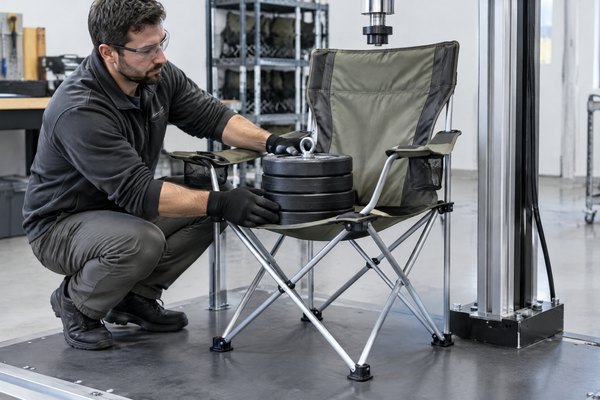
A useful sourcing decision starts with a written requirement that can be challenged, sampled, inspected, and approved.
Direct answer introduction
For brands and retailers sourcing private label camping tables, focus first on the user application (campsite dining table, camp kitchen setup table, or integrated family campsite furniture set), then lock the specification (materials, load rating, pack size), prototype and test samples, and formalize packaging and change-control with your OEM/ODM partner. The supplier’s ability to run controlled sample reviews, factory testing and documented pre-shipment inspection is as important as the table design itself.
Quick Buyer Decision Framework
Decision steps for a fast go/no-go:
- Confirm the target application: dining, kitchen prep, or multi-piece campsite set. This determines top material, height, and stability requirements.
- Choose the form factor: roll top camping table, folding table, or rigid campsite dining table. Each has trade-offs for weight, packed size and perceived value.
- Define the spec sheet: dimensions, load capacity, frame material, finish, assembly method, branding area, and pack count.
- Request samples and a production trial run. Include functional tests (load, stability, corrosion) in the sample review.
- Finalize packaging design and shipping prep with the supplier, and lock a written change-control and spare-parts plan.
Below is a concise buyer-decision table to compare common table types.
| Type | Advantages | Limitations | Best For |
|---|---|---|---|
| Roll top camping table | Compact roll-up surface; lightweight; flexible pack length | Slightly lower lateral stiffness; requires secure fastening | Backpacking, compact car camping, camp kitchen setup table for portability |
| Folding camping table | Quick set-up; good stability; lower cost | Larger packed footprint; hinges are wear points | Campsite dining table, family campsite furniture set, car-camping |
| Hard-top campsite dining table | High stiffness and premium feel; easy cleaning | Heavier; larger pack size; higher cost | Basecamp, family campsite furniture set, beach or car-camping dining |
Key Product Types and Features
Choosing the right table form and features starts with the intended user experience and the retailer’s positioning (value, mid-market, premium).
Roll Top Camping Table
A roll top camping table uses a slatted or corrugated top (usually aluminium slats or TPU-coated fabric) that rolls around a transverse tube. Advantages are compact packed length and low weight. Consider the tolerance of the slat connections, end-caps to prevent rattling, and a secure roll fastener. For private label camping tables, specify branding options on the carry bag and one-piece top printing limits early in the tech pack.
Roll Top vs Folding Camping Table
This is a core trade-off buyers face. Roll top vs folding camping table decisions should be driven by expected retail use:
- If minimal packed volume and lower shipped cubic meters matter, roll top designs usually win.
- If retail buyers expect a rigid tabletop and higher load capacity, folding frames with hard tops are preferable.
In specification, quantify acceptable deflection under a given load (e.g., mm per kg) and define hinge fatigue cycles for folding designs.
Campsite Dining Table and Camp Kitchen Setup Table
A campsite dining table is typically wider and designed for seated meals; a camp kitchen setup table will prioritize surface area, tool mounts, and ventilation for stoves. For camp kitchen setup table designs, specify heat-resistant top materials, integrated wind guards, and attachment points for utensils or shelf modules. Think through accessory compatibility: cookware hangers, cutting-board inserts, or side-shelf attachments.
Design And Specification Checklist (What To Put In Your Tech Pack)
A clear tech pack avoids rework. For private label camping tables, the spec should include:
- Exact dimensions (open and packed), tolerances, and net/horizontal heights for dining vs kitchen use.
- Materials for tabletop (aluminium slats, composite board, laminated MDF for bulk products, or coated fabric for roll tops) and frame (aluminium alloy grade, steel tube gauge with coating).
- Load ratings and test protocols: static load at center, lateral stability, and hinge fatigue cycles.
- Finish and coatings: powder coat colour codes, anodised finish class, anti-scratch top layer description, and UV resistance expectations.
- Fasteners and assembly: screw types (metric size and torque), rivet vs bolt choices; if sold as a kit include required tools or tool-free expectations.
- Packaging dimensions, inner protective components, labelling artwork and retail-ready hanger or gift-box options.
- Branding rules: logo files, placement area (print size), embroidery color codes for bags, and hang-tag wording.
- Compliance and documentation: request a list of applicable standards for the destination market and the documentation your importer requires (e.g., test reports, material declarations). Confirm the applicable requirement with your compliance team.
Sample Development, Review And Approval Workflow
A practical sample process reduces time-to-market:
- Preliminary sample (digital + engineering drawing): confirms dimensions and materials.
- Functional prototype: used for in-field testing, including a cook-top test for camp kitchen setup table or multi-seat stability for campsite dining table.
- Pre-production sample (PPS): made on the intended production line with production materials and finishing.
- Pilot run: small batch with full packaging and labelling for final retail photos and barcodes.
For each stage document: expected lead time, acceptance criteria, and who signs off. During sample review include product application trials (sit, lean, load with gear, heat exposure) and document defects and corrective actions. For example, test a roll up-and-down cycle count for roll top camping table slats, and hinge torque retention for folding designs.
Factory Testing, Inspection And Quality Control
A robust QA plan covers factory testing, inspection checkpoints and final acceptance:
- In-line inspection: frame welding quality, anodising uniformity, and torque checks in assembly.
- Functional tests: static load test, lateral stability check, hinge fatigue cycle, and top deflection measurement.
- Environmental tests: corrosion testing for hardware if the product will be used in marine or coastal areas; for fabric tops include UV and water-resistance testing.
- Pre-shipment inspection (PSI): full carton inspection, random sample testing and photo evidence of packaging and palletization.
When you brief an OEM/ODM partner like CampLume, include the exact tests and sampling sizes you require in the purchase order. Confirm the applicable requirement for certifications in your destination market; the factory can run tests to your instruction but your importer or compliance partner should confirm which certificates you must hold.
Mid-Article CTA: Send Your Requirements
If you are evaluating private label camping tables, email info@camplume.com with your product category, selling market, estimated quantity, current specification and packaging brief. Ask for a documented reply that separates assumptions and deviations from the quotation.
Packaging, Shipping Preparation And Logistics
Packaging affects landed cost, retail presentation, and damage rates. For private label camping tables, plan these elements:
- Retail-ready packaging vs bulk export cartons: which SKUs require printed full-colour boxes and which ship in plain cartons with folded hang tags.
- Inner protection: foam inserts, corner guards, anti-scratch films for aluminium tops, and poly bags for small parts (bolts, tools).
- Pack count and palletization: cartons per pallet, carton weight limits for warehouse handling, and optimal carton dimensions to minimize air freight cubic meters.
- Instruction manual and barcode placement: include clear assembly instructions with exploded diagrams, torque specs, safety warnings and spare-parts list.
Include shipping preparation in the initial tech pack and request factory photos of packed cartons before loading. Specify whether the supplier will handle FOB consolidation or deliver DDP if you prefer landed pricing.
Mid-Article CTA (Email Brief Request)
Ready to get a tailored quote or prototype timeline? Email product-brief@camplume.com with a short brief: target retail price, desired FOB or EXW, tech pack (CAD or PDF), preferred materials, branding options, target launch date, and estimated first-run quantity. Include any mandatory tests you need for your destination market. Expect a structured reply with proposed MOQ, estimated tooling needs, sample lead times and a preliminary cost breakdown.
Sourcing For Sets, Accessories And Private-Label Integration
Many buyers want a coordinated look: a family campsite furniture set including a campsite dining table, matching chairs (including options like a rocking camping chair), and a camp kitchen setup table. When sourcing sets:
- Decide on a single material family and finish to reduce tooling complexity (same anodised aluminium and powder-coating color across table and chair frames).
- Define compatible dimensions (table height and chair seat height) to ensure ergonomic fit across assembled furniture.
- Plan accessory modularity: detachable cup holders, attachable side shelves, or integrated cooler pockets that can be standardized across SKUs.
- Packaging strategy for sets: options include nested boxed items for lower shipping cost or separate retail boxes for each item to sell both as a set and separate items.
For a family campsite furniture set, include a bill of materials that lists interchangeable parts; this simplifies spare parts inventory and long-term warranty service.
Change Control, Documentation And After-Sales Support
Locking down a process for changes avoids disputes and delays:
- Change control process: require a written change notice (engineering change order) for design, material or packaging changes, with defined impact analysis on cost, lead-time and tooling.
- Documentation package on delivery: final drawings, material certifications (as required), inspection reports, batch numbers, and an assembly manual in the required languages.
- Spare parts and repair instructions: list fasteners, replacement slats for roll top camping table, and hinge assemblies. Specify minimum spare-part availability windows (e.g., 24 months after last shipment).
- Warranty and returns handling: define responsibilities for defects detected on arrival versus defects found in field use. The OEM/ODM should document root-cause analysis procedures and corrective actions.
Practical Pricing And MOQ Considerations
Private label camping tables are price-sensitive and MOQ-dependent. Typical levers suppliers use to manage unit cost:
- Material selection: thicker aluminium or steel increases cost; anodising vs powder coat changes finish pricing.
- Tooling: hard-top moulds or custom hinge dies raise initial tooling, so larger initial orders or shared tooling amortize cost.
- Pack optimization: better carton utilization reduces freight cost per unit.
Ask suppliers for a tiered FOB pricing schedule and the cost break-down (materials, labour, tooling amortization, packaging) so you can model retail margins accurately.
FAQ
Q: What minimum documentation should I include in a product brief? A: Include target retail price, target market, tech pack (drawings or CAD), desired materials and colours, expected annual volume, target launch date, and any mandatory tests for the destination market.
Q: How long are sample and tooling lead times for a new table SKU? A: Lead times vary by design complexity. Expect prototype samples in 2–6 weeks for simple designs; tooling for hard tops can add 4–8 weeks. Confirm timelines with the supplier for each stage.
Q: Can I source a family campsite furniture set with mixed designs (e.g., rocking camping chair plus dining table)? A: Yes. Align materials and finishes across items, consolidate BOMs, and plan packaging to support both set and single-item sales. Specify ergonomic dimensions so chairs and tables work together.
Q: What tests should I request from the factory? A: At minimum, request static load tests, hinge fatigue cycles, corrosion checks for hardware, and durability tests for fabric surfaces. Confirm which additional certifications you need for your market.
Q: How do you handle change requests during production? A: Require an engineering change order process that documents the change, impact on cost and schedule, and a sign-off by both buyer and factory before implementation.
Q: What packaging information do I need before approving a pilot run? A: Final carton dimensions, pack count, barcodes and retail artwork, inner protective materials, palletization plan, and pre-shipment photos from the factory.
Conclusion and Next Steps
Private label camping tables succeed when product design, specification, testing and packaging are coordinated from the start. Decide the primary use case (campsite dining table, camp kitchen setup table, or a family campsite furniture set), finalize a clear tech pack, and enforce a disciplined sample and factory-test schedule. For integrated private-label projects that include items like a rocking camping chair in the set, plan common materials and spare-part lists to simplify logistics.
To begin a project with CampLume as your OEM/ODM partner, email product-brief@camplume.com with your tech pack, target FOB, desired materials, branding details, and launch timeline. CampLume will respond with a sample plan, estimated tooling needs, MOQ guidance and a proposed QA checklist tailored to your destination market.
Conclusion: Turn the Brief Into a Controlled Buying Decision
The practical aim of a private label camping tables programme is not to collect broad assurances; it is to connect the approved product configuration, sample, evidence, packaging, inspection and shipment release to the same buyer brief. That record helps the product, sourcing, quality and logistics teams resolve assumptions before they become a production or delivery problem.
Final CTA: Email info@camplume.com with the product category, target market, estimated quantity, current specification and packaging stage. Request a response that identifies assumptions, open evidence and the next approval gate.
Related CampLume resources
-
Read: What Should Buyers Check Before Ordering Wholesale Camping Chairs? for a connected sourcing decision.
-
Explore CampLume furniture options to compare a relevant product platform.
-
See the CampLume buyer FAQ for concise guidance on samples, MOQ, quality control, compliance and shipment preparation.
-
Discuss an OEM or ODM brief with CampLume when product configuration, custom branding or packaging needs to be scoped.
Project discussion
Need to apply this guide to a product programme?
Send your product category, target market, estimated quantity, current specification and packaging stage. CampLume will continue the discussion by email.
Email info@camplume.comSources and further reading