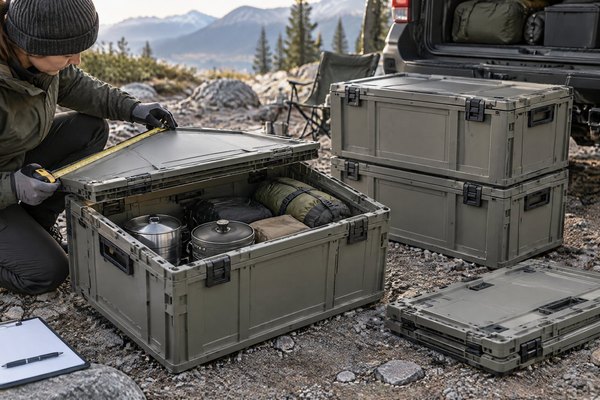
A useful sourcing decision starts with a written requirement that can be challenged, sampled, inspected, and approved.
Direct Answer
A camping tool storage box is a purpose-built container for organizing, protecting and transporting camp tools and small gear. For evaluation-stage buyers the fastest path to a purchase decision is to compare construction (materials, welds or seams, lid fit), portability (handles, stackability), environmental resistance (UV, water, abrasion), and supply-chain requirements (MOQ, lead time, packaging). Use a clear specification checklist, validated samples, and documented change-control to avoid surprises in production and shipping.
Why Evaluate the Camping Tool Storage Box Carefully
Buyers often treat tool boxes as low-risk parts of an assortment, but poor decisions create returns, warranty claims and extra logistics. A camping tool storage box must satisfy mechanical performance, retail presentation, and transport durability simultaneously. Early evaluation prevents late-stage redesigns that lengthen time to market.
Key commercial risks to check at evaluation stage:
- Product does not survive transit stacking or pallet loads.
- Lid or closure tolerances cause rattles or leaks.
- Materials fail UV or cold-temperature expectations in the destination market.
- Packaging damages the product or increases landed cost.
Key Features and Why They Matter
- Structural strength: wall thickness, ribbing and corner reinforcement determine load capacity and stackability.
- Lid system: snap-fit, latch, or hinged with internal stops affects usability and retail demoability.
- Handles and carrying ergonomics: fixed or foldable handles impact packing density and shelf display.
- Water and dust resistance: gasketed lids or lab-tested closures are necessary if the target application includes wet environments.
- Modularity: partitions, removable trays and clip-in dividers improve organization; confirm tolerances so accessories fit reliably across runs.
Material and Construction Options
Different materials and constructions match different buyer priorities. Document the expected performance in your product specification so suppliers know which tests and inspection points are mandatory.
Injection-Molded Thermoplastics
Most heavy-duty camping tool storage box designs use polypropylene (PP) or high-density polyethylene (HDPE). These materials balance toughness, UV resistance (with additives), and recyclability. Key points:
- Specify nominal wall thickness and minimum rib heights.
- Ask for material grade and UV-stabilizer content if the product will be used outdoors regularly.
Thermoformed/Blow-Molded Options
For larger one-piece totes with integrated lids, blow-molding reduces seams and leaks. Specify tolerances for lid co-molded gaskets and hinge durability cycles.
Textile and Reinforced Soft-Side Constructions
Collapsible or foldable models commonly use coated polyester or PVC tarpaulin with internal frames. These are lighter and pack smaller but need reinforced base panels for tool loads. If you specify a camping tote with lid in soft-side construction, require a removable rigid base with clear load rating.
Multiple-Component Assemblies
Combination designs (hard-base + soft walls, detachable lids) require documented assembly steps and torque or rivet specs. Include acceptable fastener types and threadlocker requirements in the spec.
Common Types and When To Specify Each
- Rigid Tool Boxes: Best when heavy tools or stacking is required.
- Camping Tote With Lid: Useful for mixed gear where quick access is needed; specify lid retention and handle ergonomics.
- Clear Camping Storage Bins: Use when product visibility is important for retail; verify optical clarity and scratch resistance.
- Collapsible Camping Storage Box: Specify when folding for storage is a priority; require minimum fold/unfold cycles and dimensional accuracy when deployed.
- Fold Flat Camping Storage Bin: Select for minimal return-shipment volume and retail displays that ship flat.
- Foldable Camping Storage Box: A broader category — confirm base stiffness and joint reinforcement.
- Folding Storage Crate For Camping: Typically plastic ribbed crates; choose for inventory systems and when totes must integrate with vehicle cargo racks.
When specifying these types, add the intended product application (e.g., car-camping tools, bike repairs, family camp kitchen) so the supplier can recommend materials and accessory compatibility.
Specification Checklist (What To Put In The RFQ)
Include measurable items and pass/fail criteria in the RFQ to reduce ambiguity.
- External dimensions (L×W×H) and volume in liters.
- Deployed internal dimensions and usable volume.
- Lid closure type and required retention force in N.
- Load rating (static stack load and live load) in kg.
- Material: polymer grade or fabric spec, color tolerance, UV-stabilizer requirement.
- Wall/base thickness and rib geometry.
- Handles: fixed/foldable, pull strength test value.
- Accessories: dividers, trays, labels, locks, drainage holes.
- Packaging: retail-ready or bulk, inner/outer pack counts, protective film requirements.
- Environmental tests: UV exposure hours, cold/heat cycle limits (specify if required).
- Markings: logo pad-print or injection-molded boss position and artwork dimensions.
- Regulatory/labeling requirements: confirm the applicable requirement for each destination market (e.g., material labeling, CE/UKCA considerations).
Sample Review, Factory Testing and Inspection Workflow
Evaluating samples and agreeing test methods early prevents rework.
Sample Review Steps
- Request pre-production samples: functional prototype and a production-intent sample.
- Verify critical dimensions with a drawing and a calibrated caliper; record variance.
- Check assembly fit (lid-to-body, handle recesses) and surface finish.
Recommended Factory Testing (Specify in RFQ)
- Drop test: single-item drop from 1 m, or higher if required by use case.
- Stack test: static stacking load for specified hours.
- Lid cycle test: open/close cycles to the buyer's expected lifecycle (e.g., 5,000 cycles).
- UV exposure: per accepted test method for outdoor products; require documentation from the supplier.
- Temperature shock: if the product will be used in sub-zero environments.
Ask the OEM/ODM to provide test method descriptions and acceptance criteria rather than a blanket statement that tests were performed.
Factory Inspection and Pre-Ship
- Incoming material inspection (raw material certificates and visual checks).
- In-line process checks: critical dimensions, torque checks for fasteners.
- Final random inspection (AQL): define sample size and critical/non-critical defect definitions.
- Pre-shipment inspection: confirm packaging, count, labeling and that palletization meets your importer or retailer pallet guidelines.
Document these expectations in the purchase order and include right-to-audit clauses where appropriate.
Mid-Article CTA: Send Your Requirements
If you are evaluating camping tool storage box, email info@camplume.com with your product category, selling market, estimated quantity, current specification and packaging brief. Ask for a documented reply that separates assumptions and deviations from the quotation.
Packaging, Shipping Preparation and Retail Presentation
Packaging affects landed cost and first-impression quality. Provide clear packaging specs in the RFQ to avoid surprises.
- Determine whether the product ships assembled or knocked-down (flat pack). For a fold flat camping storage bin, specify reassembly instructions and the acceptable time for an untrained user to set up.
- Retail-ready requirements: hang tabs, barcode placement, UPC/GTIN label locations, shelf-ready trays.
- Protective packaging: corner guards, separator sheets, and adhesive films to prevent abrasion during bulk transit.
- Palletization: cartons per layer, maximum pallet height, and stretch-film method.
- Shipping preparations: export documentation needs, preferred Incoterm, and any special marking for hazardous shipments (if applicable).
Include a pack plan drawing and require photographic evidence of actual packed cartons before shipment.
Change Control And Documentation
A clear change-control process avoids unapproved engineering or material substitutions.
- Require written approval for changes to material, color masters, mold cavities, tooling, or component suppliers.
- Define minor vs major changes and a sign-off workflow (buyer engineering, sourcing, QA).
- Ask the supplier to maintain a versioned technical file: drawings, material certificates, test records, and packaging specs.
For a CampLume OEM/ODM partnership, confirm how the factory implements change control and how records will be provided during the product lifecycle.
Supplier Selection Workflow And Commercial Terms
Evaluate suppliers on technical fit, manufacturing capacity, quality systems, and commercial terms.
- Request tooling strategy: shared vs dedicated tooling, amortization schedule, and expected tool life.
- Understand MOQ vs unit pricing trade-offs and how MOQ affects storage and cashflow.
- Seek clarity on lead times for tooling, sample iteration, and production runs.
- Confirm warranties and after-sales protocols for manufacturing defects.
CampLume is an OEM/ODM camping gear manufacturer. If you need a specification review or a production-intent sample, prepare a 1-page brief and email it to sales@camplume.cn with: target market, preferred materials, critical dimensions, expected annual volume, lead-time target, packaging preference, and any required tests. We will respond with a suggested development timeline and an outline estimate.
Buyer-Decision Table (Concise Comparison)
| Priority | Rigid Injection Molded | Foldable Fabric-Based | Clear Plastic Bin | Folding Storage Crate | Collapsible Hard-Sided |
|---|---|---|---|---|---|
| Best for durability | High | Medium | Low–Medium | Medium–High | Medium–High |
| Pack-down size | Low | High | Low | Medium | High |
| Retail visibility | Medium | Low | High | Medium | Medium |
| Typical unit cost | Higher | Lower | Medium | Medium | Medium |
| Recommended when | Heavy tools/stacking | Save return volume | Show contents on shelf | Logistics/ERP integration | Mix of deployable strength |
Use this table to match a candidate design to your distribution and application needs.
Product Application Examples and Fit
- Car-camping gear organizer: prioritize stackability and robust latching; prefer rigid or folding crates.
- Camp kitchen utensil box: require clear camping storage bins or transparent lids for quick visual inventory on-site.
- Emergency roadside toolkit: demand high-impact resistance and secure latches; injection-molded boxes win.
- Family day-pack camp box: a lightweight camping tote with lid or foldable camping storage box can reduce carry weight.
Describe the intended in-field workflow to suppliers: frequency of use, exposure to weather, maximum expected load, and how the product will be stored or transported.
FAQ
Q: How do I choose between a rigid box and a foldable camping storage box? A: Base the decision on load needs, frequency of use, retail constraints and return logistics. If stacking and heavy tools are required, choose rigid; if storage volume and low transport cost are priorities, choose foldable.
Q: What minimum tests should I request from the factory? A: At evaluation stage, request lid cycle, drop, and stack tests plus UV and cold-temperature tests if the product will see outdoor exposure. Specify acceptance criteria.
Q: Can the same tooling produce a camping tote with lid and other tote sizes? A: Possibly, but verify with the OEM about mold family designs and expected tolerance changes between cavities. Ask for a tooling plan in the RFQ.
Q: How should I specify branding and packaging for a clear camping storage bins SKU? A: Provide artwork files with color codes, exact logo placement, and a sample of the retail pack. Specify whether stickers, pad-print or direct injection marking is allowed.
Q: What lead time should I plan for a new fold flat camping storage bin design? A: Lead time depends on tooling complexity and sample cycles. Typical timelines range from 8–16 weeks for tooling and validation plus production lead time — confirm with the supplier for exact schedules.
Q: How do I control cost while keeping acceptable quality? A: Optimize by clarifying must-have vs nice-to-have features, choosing appropriate materials, and consolidating SKUs where possible to reduce tooling and packing variations.
Conclusion and Next Steps
For evaluation-stage buyers, the recommended next steps are: finalize a measurable specification, request production-intent samples, agree test methods and inspection criteria, and define packaging and change-control expectations before issuing a purchase order. If you want an initial feasibility review or a sample quote from an OEM/ODM manufacturer experienced with camping storage solutions, email a one-page brief to sales@camplume.cn with target market, critical dimensions, preferred material, target volumes and lead-time target. CampLume can provide a development timeline and a scope estimate to help move your project from evaluation to production.
Final CTA: Email info@camplume.com with your product category, target market, estimated quantity, current specification and packaging stage. Request a documented response that identifies assumptions, open evidence and the next approval gate.
Related CampLume resources
-
Read: How to Source Outdoor Storage Boxes for a Private-Label Camping Range for a connected sourcing decision.
-
Explore CampLume storage options to compare a relevant product platform.
-
See the CampLume buyer FAQ for concise guidance on samples, MOQ, quality control, compliance and shipment preparation.
-
Discuss an OEM or ODM brief with CampLume when product configuration, custom branding or packaging needs to be scoped.
Project discussion
Need to apply this guide to a product programme?
Send your product category, target market, estimated quantity, current specification and packaging stage. CampLume will continue the discussion by email.
Email info@camplume.comSources and further reading